Many cats are interested in string because its movement can invite the stalking, chasing and pouncing used in prey-like play. Interest varies: some cats follow a moving line, some bat at it, and others try to chew it. Attraction does not make loose string a suitable toy.
The useful distinction is between a cat pursuing an object and that cat getting a swallowable length of material into the mouth. You can offer movement and a physical target without leaving yarn, sewing thread or ribbon available for the cat to investigate.
Movement helps explain the appeal
A line that shifts across a surface or changes direction can become an inviting target. Cats Protection's play guidance describes games that encourage stalking, chasing, pouncing and batting, including fishing-rod toys that move a target like prey. This helps explain why a moving string may draw attention.
It does not tell us exactly what a particular cat imagines. We cannot conclude that every string looks like a mouse, worm or snake to every cat, or that the cat needs a specific color or fiber. Observe the response rather than treating a possible explanation as a rule.
Nor does following string necessarily mean hunger or a problem behavior. The immediate action may be pursuit or play. Chewing, swallowing or repeatedly seeking non-food material is a different concern to describe to your veterinarian.
Loose household line and a complete toy need different decisions
| Object or situation | What to do |
|---|---|
| Loose yarn, ribbon, sewing thread or floss | Keep it out of reach rather than offering it as a play object. |
| A cat toy with a line joining the handle and target | Check the complete toy and its instructions, supervise its use and put it away afterward. |
| A cat that concentrates on biting the joining line | End use of that toy and choose an alternative without a loose line to chew. |
| A toy with fraying, a damaged attachment or loose pieces | Prevent further access; replace the damaged item rather than continuing the session. |
| Possible swallowed string | Contact your veterinarian immediately; do not wait for a symptom checklist. |
Cats Protection lists household string as a hazard because a cat may eat it and it can become stuck in the gut. Its play guide also warns against leaving a cat alone with toys that can be shredded, eaten or cause entanglement. A purpose-made toy still needs inspection and management; the word “toy” is not a guarantee.
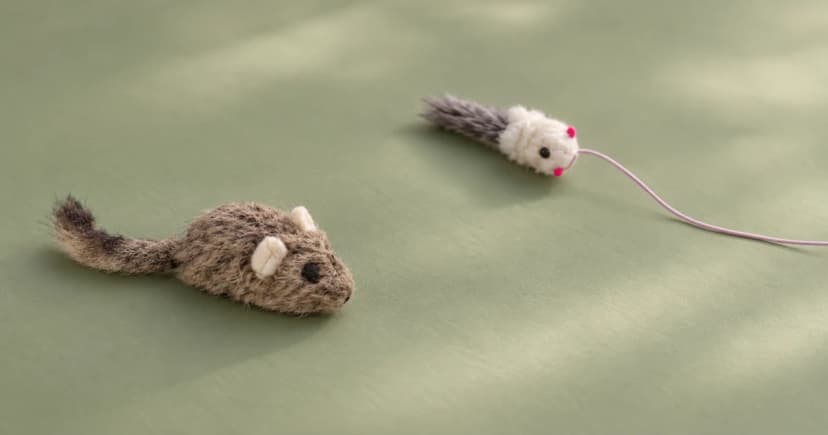
If you compare wand and teaser toys, look at where the target attaches and what the cat can reach. The purpose of a handle is to let you operate the target, not to justify letting your cat chew the line. A cat that persistently goes for the cord may be better served by a different object.
Keep the target, change the risky material
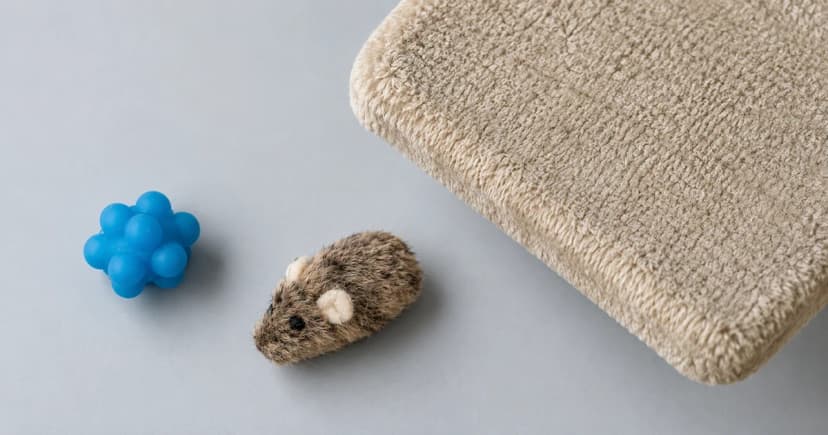
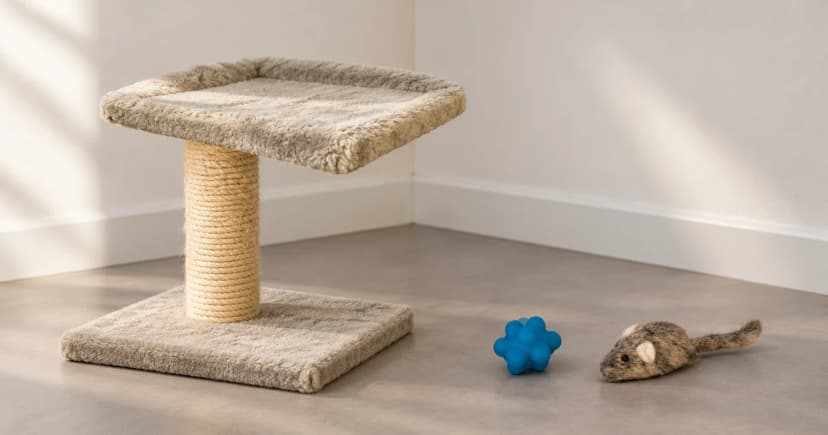
You do not have to reproduce the household object your cat first noticed. Compare a solid, manageable play object or a plush mouse or kicker toy with the cat's preferences. Check the individual item's construction and instructions, including small attachments and damage; these categories do not certify that every item suits every cat.
Keep the distinction between chasing, batting, holding and chewing visible while you supervise. If the cat starts working at a loose part, stop using that item. Avoid tying craft string onto a damaged toy as an improvised repair: that introduces another unverified attachment and a new length of loose material.
For other options, explore cat toys and enrichment while choosing objects you can inspect and manage. You are matching a play opportunity to the individual cat, rather than proving that string is necessary.
Put loose materials away before and after play
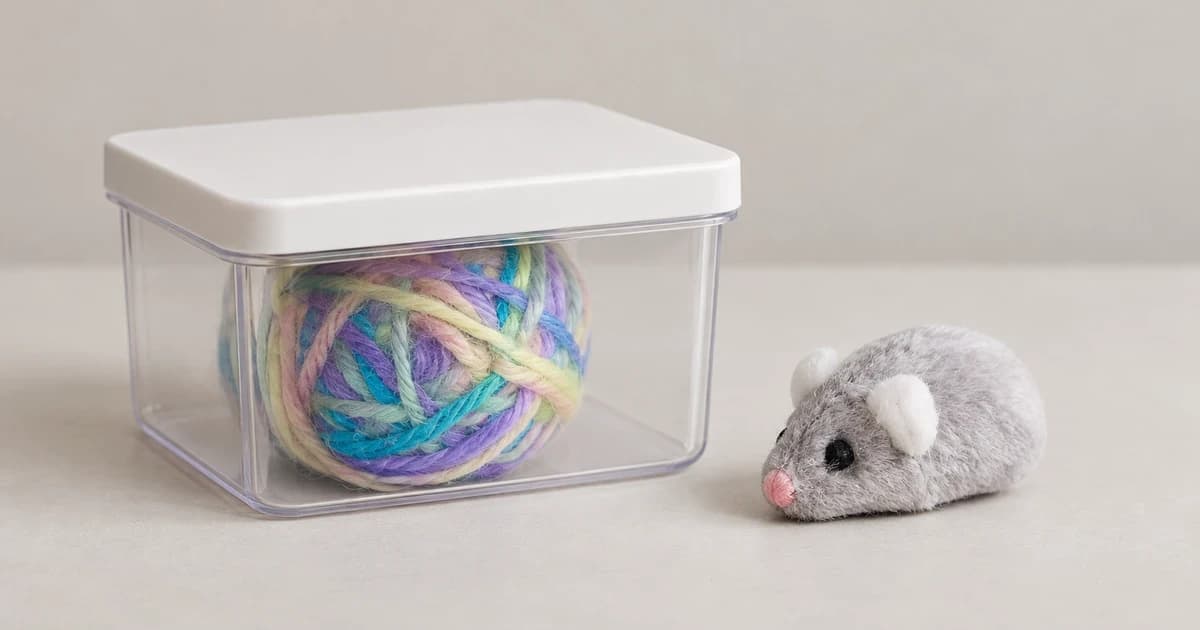
A practical household check includes sewing supplies, yarn projects, gift ribbon and bathroom floss. Store them where the cat cannot reach them, clear away cut ends and secure discarded material as well as the original roll or ball.
Before using a toy, inspect its line, joins and target. Afterward, check again for damage and put any toy with an entangling line away. PDSA advises keeping thread, wool and string out of reach and watching toys for loose pieces a cat might swallow. Storage is a routine you manage, not something we have tested for a particular box or cabinet.
If string may have been swallowed, stop the play discussion
PetMD's veterinarian-authored string-ingestion advice treats this as a medical emergency. Contact your vet or an emergency veterinary clinic immediately if you know or suspect your cat swallowed string, even if the cat appears normal.
Do not pull string protruding from the mouth, and do not try to induce vomiting at home. Follow the veterinarian's directions rather than assuming a short piece will pass or trying to remove it yourself. Tell them what material is involved, when the incident may have happened and what you actually observed; estimates should be identified as estimates.
Moving string can be interesting to a cat. A better response to that interest is an appropriate, inspectable play object and secure storage of loose materials, with prompt veterinary advice when ingestion is possible.