Fit a dog life jacket using the instructions and size chart for that exact model. Record the measurements it asks for, introduce the jacket on land and check fastening, position and movement before considering water use. A size label or a photograph of another dog cannot establish the right arrangement for yours.
A dry fitting session answers questions about placement and movement. It does not prove flotation, lifting strength or protection in particular water conditions. Keep those decisions separate rather than treating a comfortable-looking jacket as a completed safety test.
Find the model before choosing the size
Keep the jacket's product name, size label and current fitting instructions together. Check whether the chart uses centimetres, inches, a weight range or several dimensions. Similar-looking jackets can have different adjustment systems and measurement requirements.
Kurgo's Surf N Turf chart, for example, lists neck, chest and back separately. It illustrates why one measurement or a breed name may leave important information out. Its entries belong to that named model; do not use them as a size chart for another jacket.
Guessing a starting point can produce a precise number for the wrong dimension.
Record what the chart actually requests
The American Kennel Club's fitting guidance recommends checking body dimensions and any weight requirement before purchasing. Follow the exact model's directions about where to measure rather than assuming every manufacturer uses identical landmarks.
Keep a short measurement record that you can show the maker:
| Information | What to record | Question to resolve |
|---|---|---|
| Exact jacket | Product name and chart used | Does the chart apply to this model? |
| Requested dimensions | Each named measurement and unit | Are the measuring landmarks clear? |
| Other sizing conditions | Weight or length only if requested | Does one requirement conflict with another? |
| Adjustment guidance | The supplied fitting sequence | Can this arrangement be made as instructed? |
Do not resolve a mismatch by tightening one strap excessively. A familiar harness size is not a substitute: our separate harness measurement guide concerns walking harnesses, while this jacket needs its own chart.
Introduce the jacket before tightening it
Begin at home or in another calm place. AKC advises allowing the dog to investigate the jacket and building positive associations, including rewards for relaxed interest. Introduce the sensation of the jacket gradually before fastening it as the instructions direct.
Use brief, manageable attempts. If the dog moves away or becomes uncomfortable, pause. Forcing a reluctant dog into the jacket does not tell you whether the problem is unfamiliar handling, placement or fit.
Observe placement and movement on land
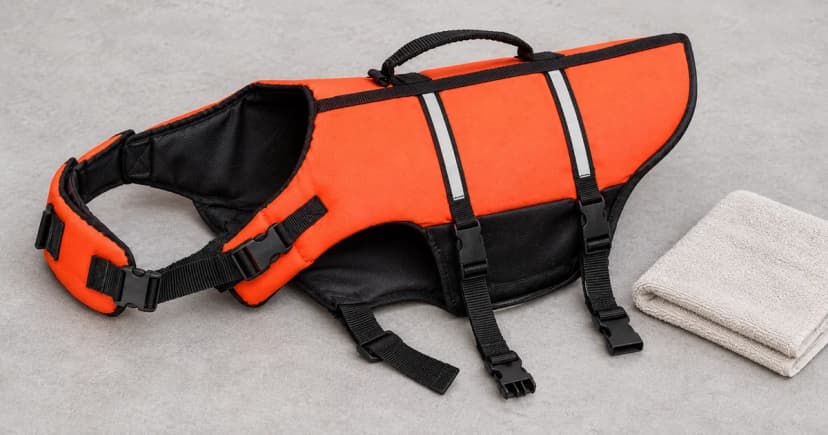
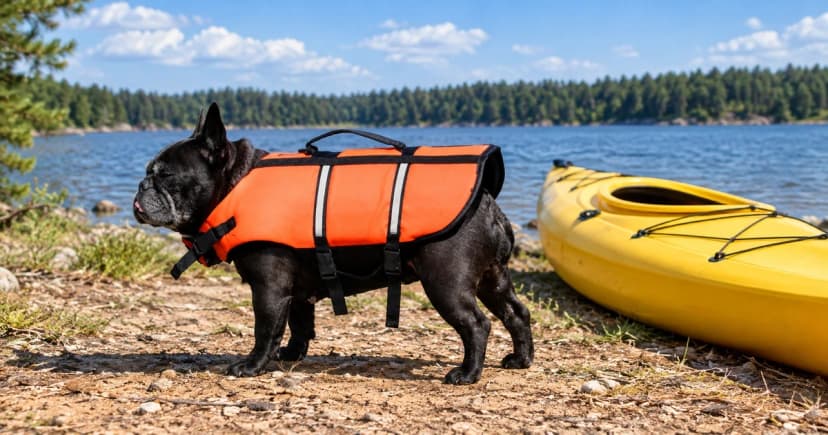
EzyDog's fitting guidance describes a jacket that stays centred without squeezing, throat pressure or restricted movement. After following the model's fastening sequence, check for twisted straps, pinching and shifting. Watch ordinary walking, sitting and turning.
If a strap digs in, the front presses into the throat or the jacket rolls sideways, stop and review the instructions. A continuing problem may mean the size or style is unsuitable.
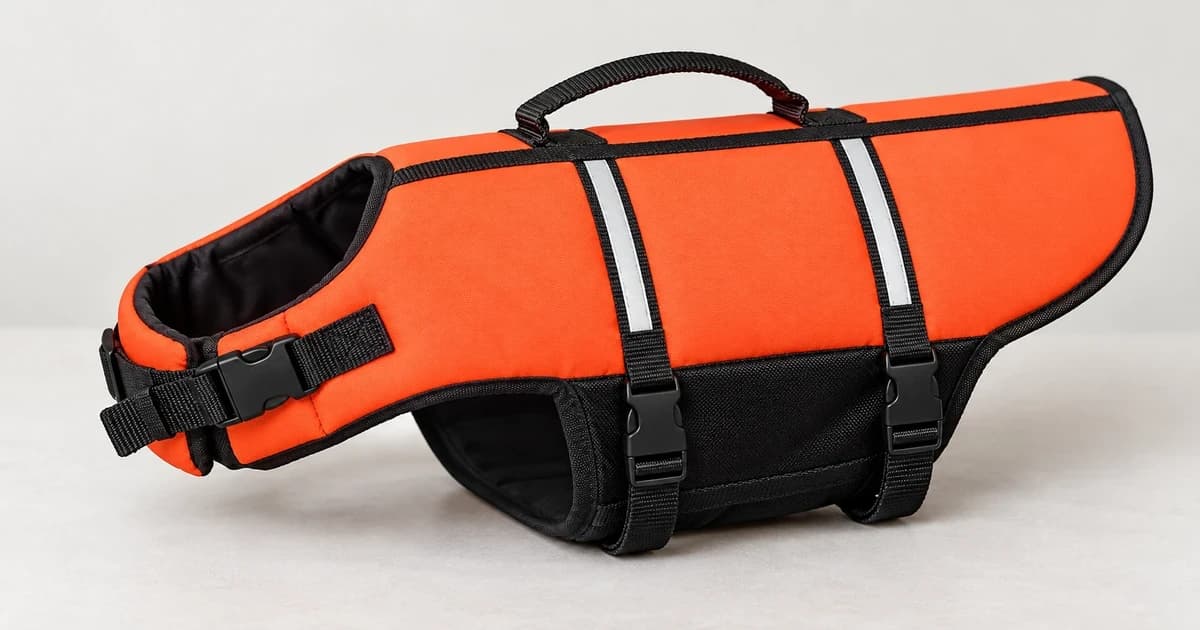
A handle is also model-dependent. Its presence does not establish that it is an approved sole lifting point or a leash attachment. Check the item's instructions for those uses.
Keep water use separate from the dry check
EzyDog recommends starting with land checks and observing the jacket when wet in suitable shallow water, with close supervision. Do not force a nervous dog into water or proceed with unresolved fit problems. A jacket does not replace supervision or a decision about whether the conditions and activity are appropriate.
Keep your measurement record and any adjustment questions with the product information when comparing dog life jackets. Confirm the exact model and its instructions before use. A category name does not establish a certified fit or water-performance result.