Start by checking the care instructions for your couch. If they permit vacuuming, remove loose pet hair with a suitable upholstery attachment and the setting recommended for the furniture and vacuum. For hair left on the surface, use a compatible dry hair tool according to its own instructions, beginning in a small hidden area. Stop if the fabric changes or the tool catches.
For pet hair on a couch, make the care label the first decision. Use a permitted upholstery-vacuum method for loose hair, then follow the directions for a compatible dry hair tool and begin in a hidden area. Stop if the fabric changes or the tool catches. Removing pet hair is a different job from treating a stain or odor.
There is no single safe method for every couch. A rubber glove, adhesive roller or reusable brush can be inappropriate for a particular surface, even when a similar-looking couch tolerates it. Hair removal also does not automatically require water, a cleaning solution or heat.
Find the couch instructions before choosing a tool
Look for the manufacturer's care information, including any upholstery tag and instructions for removable covers. Ashley's furniture care page, for example, says its upholstered products carry a cleaning-code tag under a seat cushion or beneath the furniture. Other manufacturers may put their information elsewhere.
Read the actual instructions rather than identifying the material from its appearance. A gray couch could have very different fibers, finishes and care requirements from another gray couch. A zipper gives access to a cover; it does not, by itself, authorize machine washing.
| Example care restriction | What it means for choosing a hair-removal approach |
|---|---|
| X in Ashley's code guide | Vacuuming or light brushing only; no water- or solvent-based cleaner. |
| S in Ashley's code guide | Water is excluded. Do not add a damp-glove or wet-cleaning trick to a dry hair-removal routine. |
| W in Ashley's code guide | Solvents are excluded. This code does not establish that every hair tool, water treatment or washable-cover procedure is appropriate. |
| Missing or unclear instructions | Ask the furniture manufacturer or an upholstery professional before trying an uncertain method. |
These are examples from one manufacturer's guide. Use the instructions for your furniture, including any restrictions beyond a letter code. A cleaning code does not certify every adhesive, brush or scraper for the surface.
Make a gentle first pass over loose hair
IKEA's upholstery guide recommends an upholstery attachment and attention to seams and crevices. It also warns that excessive suction can damage a cover. Apply those ideas only within the care directions for your own furniture and vacuum.
Work over accessible seat and back surfaces, then the edges and seams where hair gathers. If the instructions permit moving cushions, check the space beneath them too. Avoid forcing an attachment across trim or pulling it against fabric that catches.
After that pass, look at what remains. Loose hair sitting on top of the fabric presents a different task from fibers caught in a weave. If the vacuum is lifting or gripping the cover, reassess the setting and attachment rather than pressing harder or repeatedly working the same spot.
Use the directions for the actual hair tool
Dry hair tools have different surfaces and mechanisms. Before trying one, confirm that its intended use fits the furniture's care requirements. A small hidden-area check can reveal a change before you work across a visible cushion, but it does not replace the manufacturer's restrictions.
IKEA mentions a rubberized cloth or rubber glove for animal hair. Treat that as an option to assess for the particular surface, rather than permission to wet every glove or scrub every fabric. Skip it when the care instructions or surface condition make compatibility uncertain.
Directional reusable brushes also need the correct movement. The OXO FurLifter Furniture Brush instructions use arrows to identify the working direction and describe flipping the brush for the other direction. They explain clearing that brush in its base and emptying the base's bottom compartment when full.
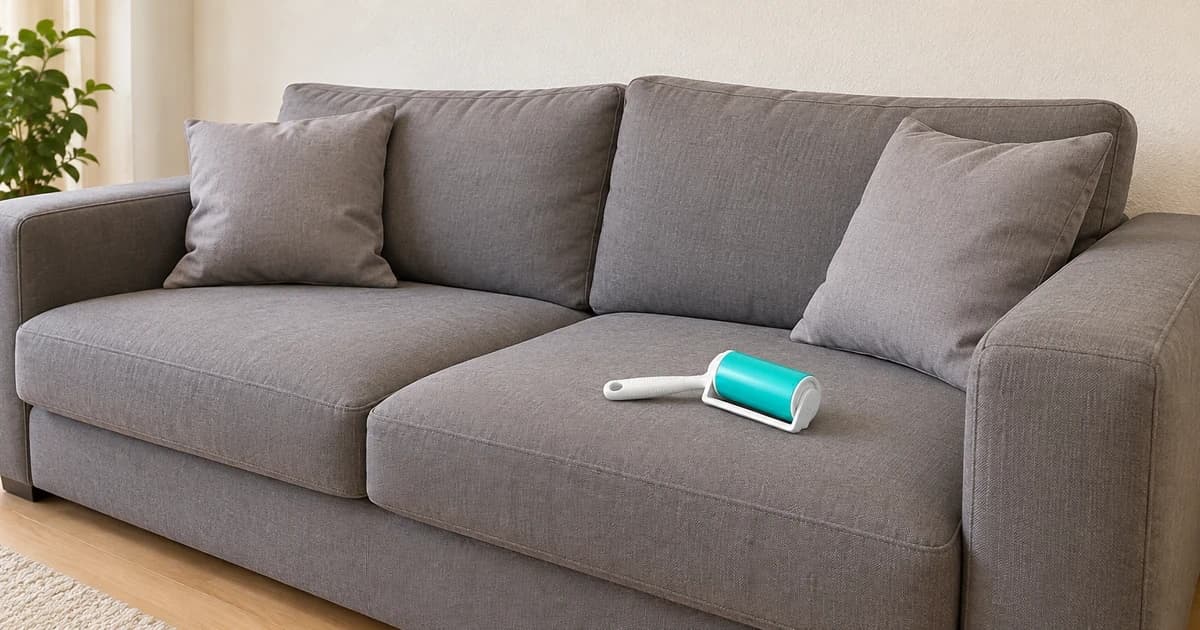
Those steps belong to that named brush. An adhesive roller or another reusable design may need a different movement and clearing procedure. Follow your tool's directions; do not transfer an OXO base-cleaning step to a pictured roller or an unrelated product.
Check the surface after the first small pass. Stop at snagging, lifted threads, a changed finish or other visible alteration. More pressure is not a reliable answer when either the tool or the fabric is unsuitable.
Keep hair removal separate from stains and odor
A dry hair pass does not tell you how to treat a stain, urine mark or odor. Resolve those as separate tasks using the furniture's instructions. Adding a household solvent, steam or a damp treatment because dry hair remains changes the care procedure and needs its own authorization from those instructions.
Avoid making an uncertain technique more aggressive just to produce a completely hair-free appearance.
Make the next cleanup easier to manage
A suitable throw or protective cover can put some routine hair cleanup on a separate surface. Check that item's own care instructions, including whether and how it can be washed. Keep it positioned so it works for the couch and the way your household uses it.
For shopping, compare the types in the pet hair remover category with both the furniture's requirements and each tool's instructions. Product names and photos cannot establish compatibility or a removal result.
A repeatable routine is straightforward: read the couch directions, remove loose hair with permitted gentle methods, assess a compatible tool on a small area and stop if the surface changes. Let the actual furniture and tool guide the work instead of relying on a universal couch-cleaning trick.