
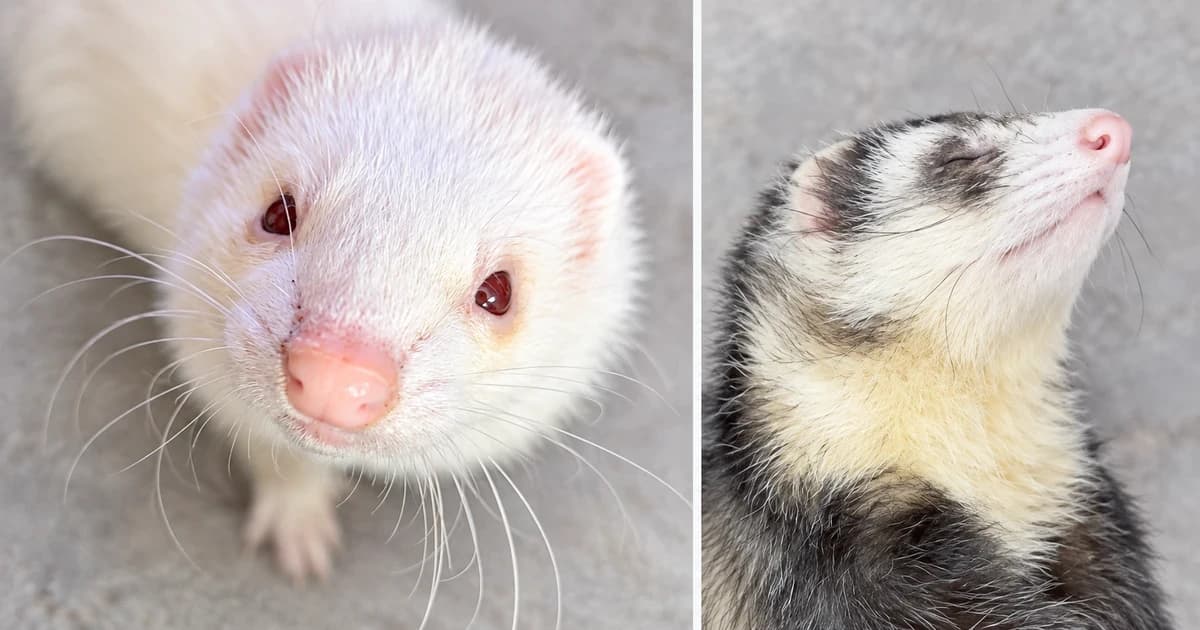
Choose contact your ferret is willing to offer, and prepare somewhere to return them before attempting a lift.
Prepare contact and return
Use a familiar, secure area with an accessible hiding place, away from prey pets. Clear reachable electrical wires and other chewing hazards. Our ferret enclosure guide covers the wider home arrangement.
PDSA suggests letting ferrets play before handling. This is an opportunity for activity, rather than a requirement to exhaust an animal or a promise they will accept being held.
For young children, begin with supervised ground-level company and gentle strokes. Adults should take responsibility for any necessary lift.
Support a necessary lift
Follow PDSA's supported hold: place one hand under or around the chest and support the hind legs with your other hand. Keep the ferret close to your body.
Plan a supported return as well as pickup. Lower the ferret to the prepared area while maintaining front and rear support. If you are unsure, ask your vet to demonstrate before trying.
End and reassess
If your ferret flees or hides, allow retreat rather than pursuing contact. Hissing, biting or screaming warrants attention to the situation. These observations do not identify a cause by themselves.
Watch for changes in normal behaviour, reluctance to move, trembling or other signs of discomfort, and seek veterinary advice. Do not shout, punish or increase restraint to obtain cooperation.
A play session, a stroke and a supported lift are different interactions. There is no requirement to turn every voluntary approach into holding.