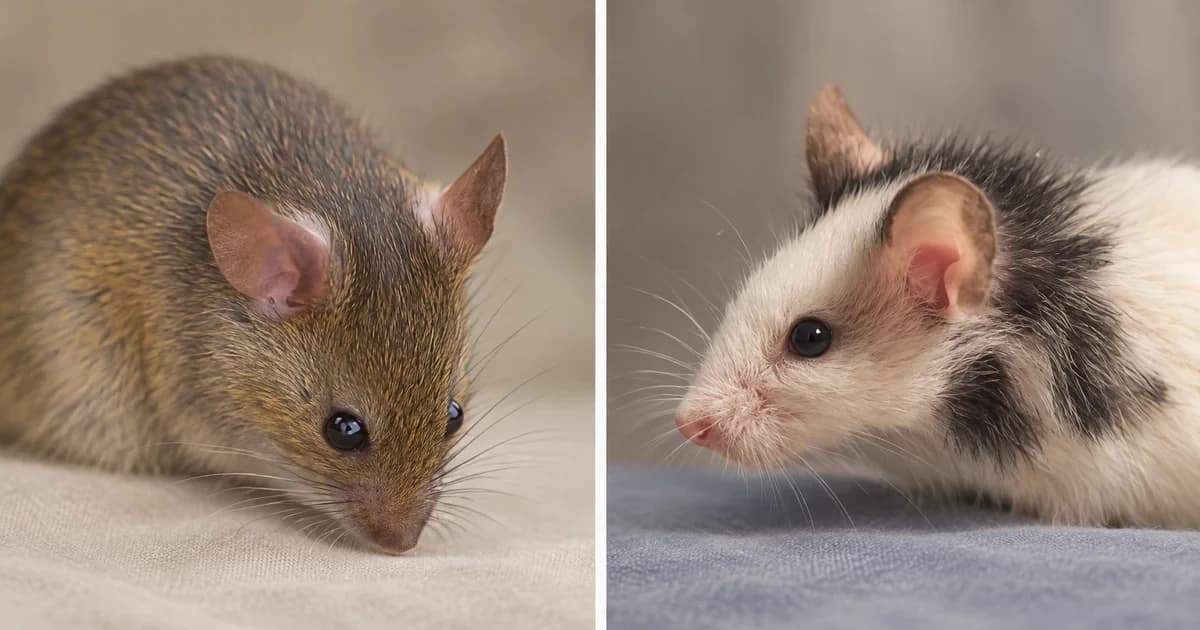
Use a familiar tunnel or cupped hands for ordinary mouse contact. Let the mouse choose to approach.
Wait for an invitation
RSPCA Australia advises letting the mouse approach and sniff your hand. Avoid pickup when it does not choose to engage.
PDSA describes quiet, gentle, patient contact: a mouse may accept a stroke or treat inside its cage.
Use a familiar tunnel
The RSPCA UK guide describes a home-cage tunnel that is normally available to the mice and carries their cage scent. Let the mouse enter, then allow it to crawl onto your cupped hands.
Prepare your receiving hands before the transfer. Let the mouse move between supported places; keep the exit unforced.
Scoop with support
RSPCA Australia describes scooping from under the belly into a cupped hand. Cup the other palm loosely above, keeping the mouse close to your body.
PDSA says to support the whole body and keep your hands low in case the mouse jumps.
Do not lift by the tail or scruff the neck.
Return and pause
Bring your hands close to the familiar enclosure's surface and let the mouse step off with support. Prepare that destination before pickup, so you do not have to choose it while holding the animal.
Children need supervision when handling mice. If you notice changes in behaviour or appearance, PDSA advises consulting your vet promptly.
This is an ordinary-contact routine, rather than restraint for examinations. An unresolved handling problem calls for a demonstration from the care team, not a stronger grip or a longer attempt.
For the accommodation task, see our pet-mouse cage setup guide. A prepared home and a supported transfer are separate parts of care.