
Plan necessary lifts around two supports: a steady hold and a prepared return. For ordinary company, start at floor level.
Make contact a choice
Sit quietly and let the rabbit approach in a secure area. If they hide or look worried, back away. Shared time can involve the activities in our rabbit enrichment guide.
Young children should interact at floor level under supervision; an adult handles any necessary lifting.
Arrange support before lifting
Work near the ground with a non-slip landing surface ready. Ask your vet to demonstrate if you are unsure about supporting your rabbit.
Support the chest and front legs with one hand, and the bottom and hind legs with the other. Lift one rabbit at a time towards your body without squeezing; keep the back and rear supported.
Never lift by ears or scruff, or flip a rabbit onto their back. Stillness in that position is a fear response, not relaxation.
Lower with the same support
In PDSA's return method, keep the rabbit close as you squat down, maintaining support until you set them down gently. Avoid prolonging the hold for cuddling.
Stop and change the plan
A struggling rabbit can injure their spine. If you cannot support and lower the rabbit confidently, seek your vet's help instead of increasing restraint.
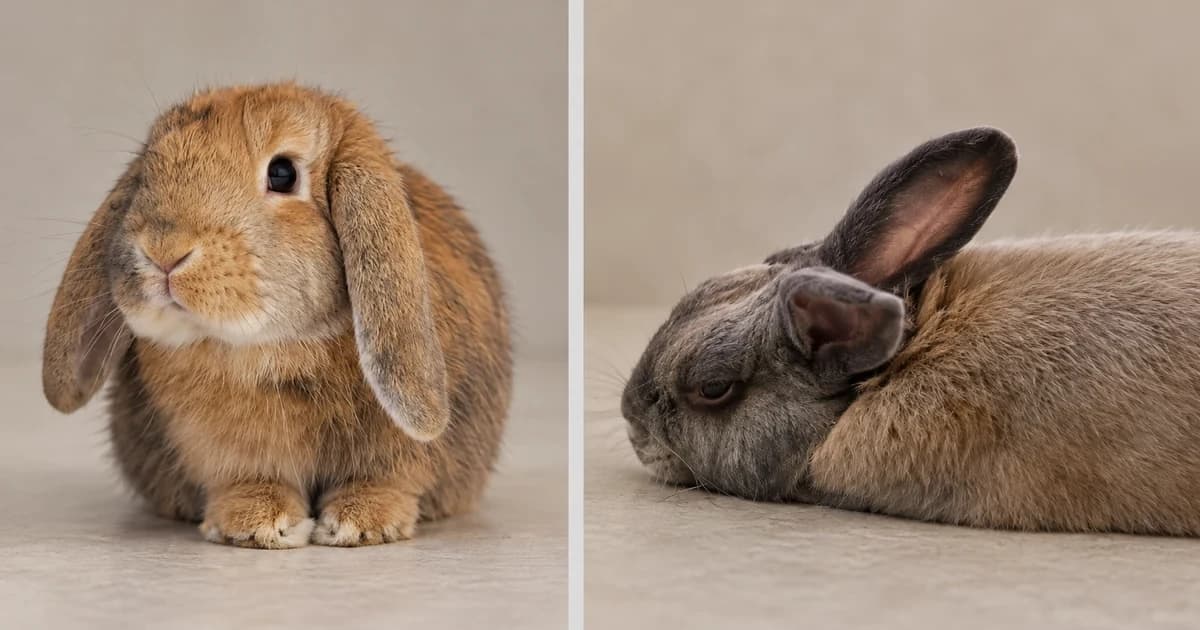
Notice the whole animal: a tense crouch, hiding or reluctance to move needs attention, and ear position alone is especially hard to interpret in lop rabbits. Changed behaviour, possible pain or illness calls for veterinary advice. Persistent difficulties can then be discussed with a qualified animal behaviourist. There is no fixed timetable for accepting contact.