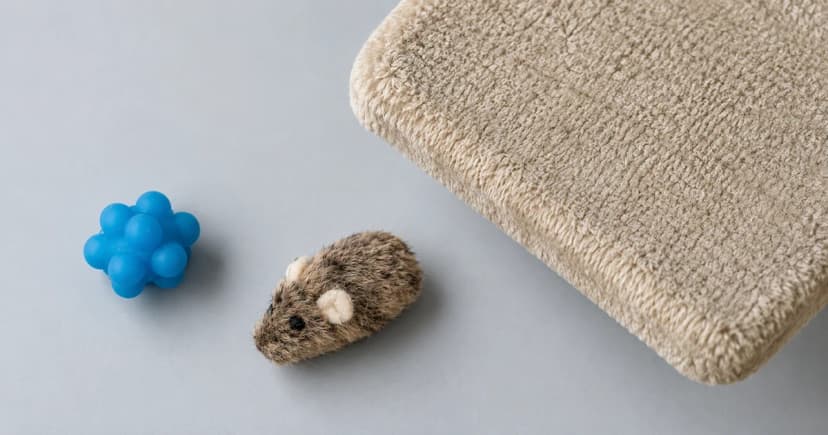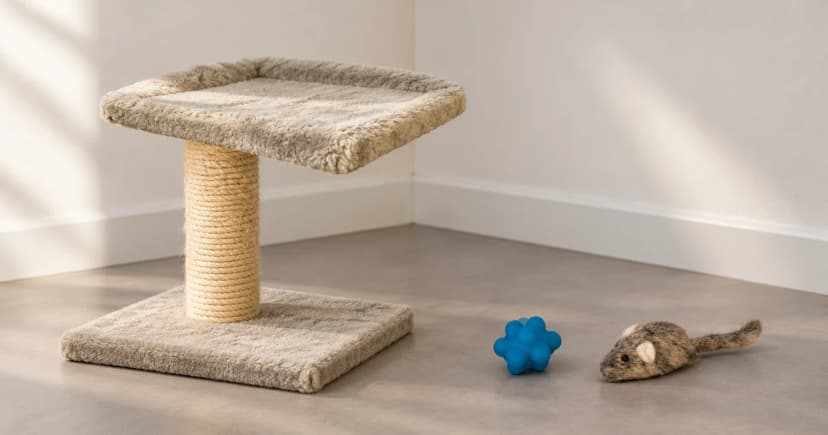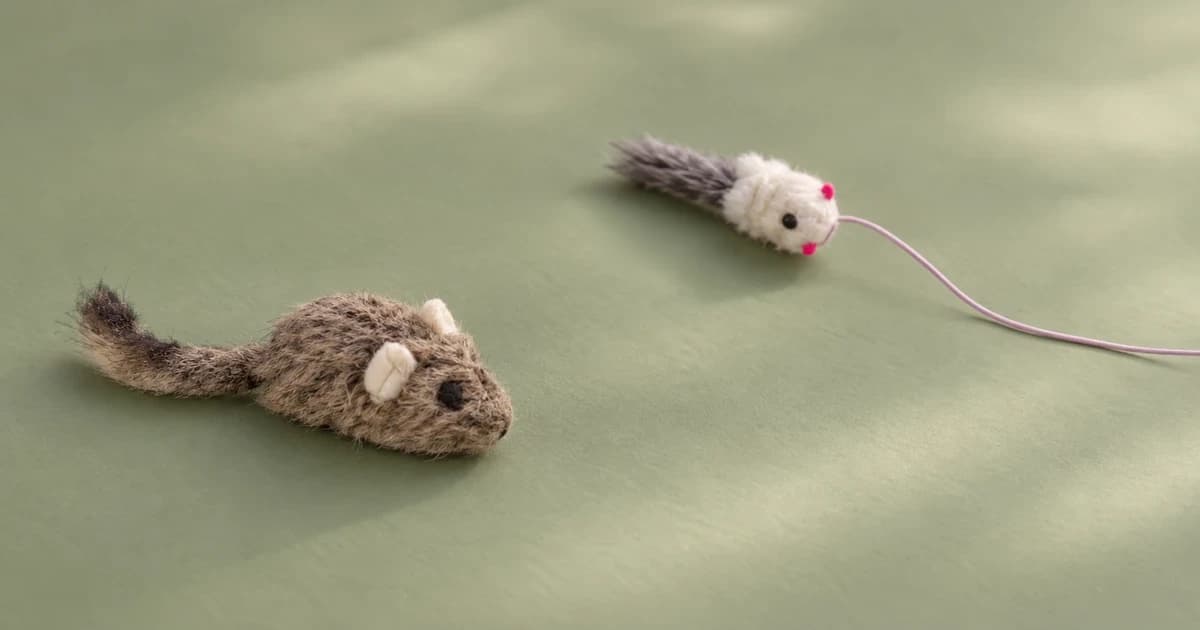
Play with your cat by moving a toy like something they can stalk, chase and catch, while keeping your hands separate from the target. Offer an invitation, watch the response and give the cat chances to pause. A cat studying a toy from cover may be participating before making a pounce.
The useful question is what movement interests this particular cat. A slow mouse-like slide, a briefly hidden lure and a bouncing toy can produce different responses. Battersea's feline behavior team recommends adapting play to the cat's preferred prey style and including successful catches.
Prepare a simple, supervised setup
Choose an area where you can see the toy and give the cat room to approach or leave. Inspect the toy before offering it: stop using damaged items or ones shedding pieces. Keep loose strings and fishing-rod toys under supervision and put them away afterward. A photograph or a familiar shape does not establish whether a particular toy is suitable for your cat.
For interactive play, a wand can create distance between your fingers and the moving lure. For independent play, some cats prefer batting a small toy around. Browse cat toys by the activity you want to offer, then check the individual item's construction and instructions. Start with one option so you can notice what the cat actually responds to.
Make the target interesting without crowding the cat
- Invite investigation. Place or move the toy where the cat can notice it. Allow watching and sniffing rather than pushing it against the cat.
- Move away like prey. Try a gentle slide along the floor or a brief movement around the edge of cover. Avoid repeatedly waving the toy directly into the cat's face.
- Add a pause. Let the target become still between movements. Watching, crouching and approaching can be part of the sequence.
- Allow a catch. Make the toy reachable instead of continually whisking it away. Let the cat engage with the physical target while you supervise its condition.
- Offer another invitation only if wanted. Resume gently or end the game when the cat disengages. You do not need to make every attempt faster.
These are ways to vary an invitation, not a required sequence for every cat. Cats Protection's play guidance describes hunting-like actions and recommends periodically letting cats catch fishing-rod toys rather than always taking the target out of reach.
Change one part of the game at a time
If the cat watches but does not approach, compare a slower movement with a short pause. If the cat loses interest, try a different toy texture or a different path on a later attempt. Keep the rest of the setup similar so you can tell which change mattered. A preferred movement today does not make another toy useless or establish a permanent preference.
PDSA's cat exercise advice emphasizes individual toy preferences and hunting-like play in short bursts. There is no single exercise amount that applies to all cats; seek veterinary advice if you have concerns about an appropriate activity level.
Keep hands separate and make stopping easy
Use a toy as the target instead of encouraging the cat to chase fingers, feet or clothing. If play turns toward your body, stop the invitation and give the cat space. Avoid reaching in to pet a highly excited cat during the game. Reconsider the toy and distance before starting again.
Let a disengaged cat leave. Do not pull a string toy to lift or drag an animal, or turn a catch into a contest. Store string toys out of access after supervised play and inspect them again before reuse. If rough play develops suddenly in an adult cat, Cats Protection recommends a veterinary check for possible medical issues before seeking behavior support.
A helpful observation is simple: which toy you offered, how you moved it, whether the cat approached or caught it, and when the cat chose to stop. Use that information to make the next invitation clearer and more comfortable, rather than treating a particular number of pounces as the goal.