To prepare for a new puppy, decide where everyday care will happen, who will do it and which questions still need an answer before arrival. Supplies matter, but a bed in a delivery box or two people assuming the other will be home is an unfinished arrangement.
Make a short household plan you can walk through together. It should connect each useful item with a location and a responsible person, then identify missing information. This guide covers that preparation; it does not set a feeding, vaccination, sleep or training schedule.
Plan the space before filling it with supplies
Start with the rooms you expect to use initially. Identify a resting option, a place for food and water bowls, storage for equipment and the route an adult will use for toilet outings. Consider what ordinary household activity happens in those places. An unused corner during a daytime visit might become the busiest part of the room when everyone comes home.
Dogs Trust's preparation checklist includes arranging veterinary contact and out-of-hours cover, planning who provides care during absences and setting up eating and resting areas. It describes different resting choices: one near an outside door may help toilet access, while other quiet areas should be away from busy routes and disturbance. Its crate suggestion is conditional on a crate-training plan. Those details support thinking about each location's purpose rather than putting every bed beside an exit.
Label the purpose of each proposed spot in your own notes. “Quiet daytime rest” and “convenient route for an outing” are different requirements. If the household cannot provide both in one place, record that conflict rather than assuming a single perfect position exists. No general floor plan establishes that a particular room is appropriate for your puppy.
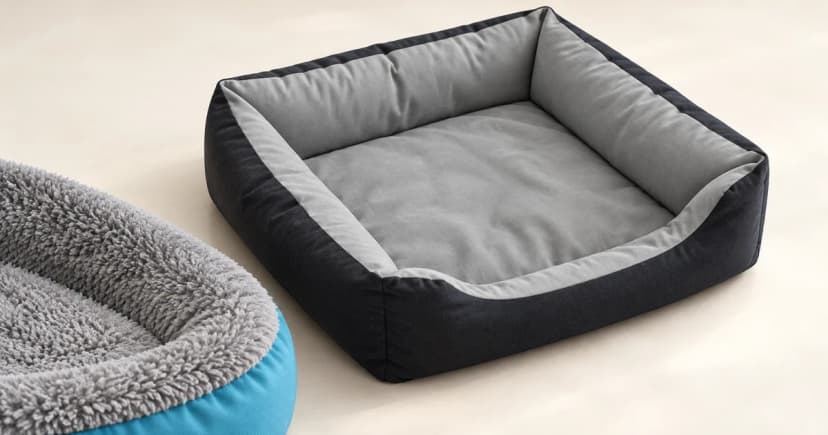
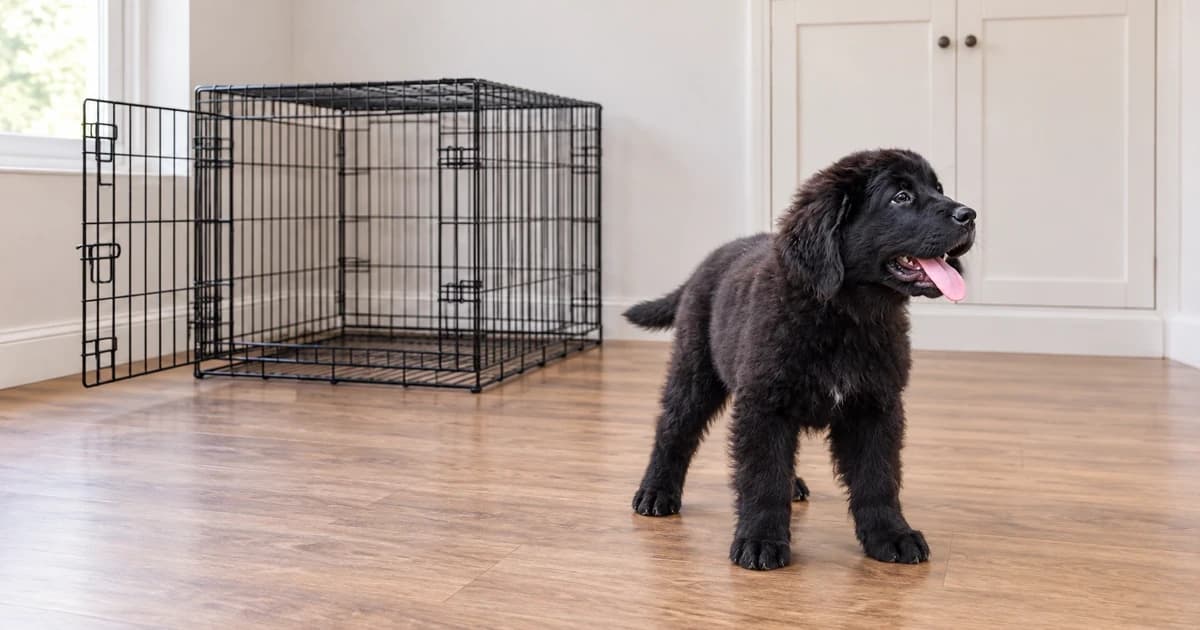
Check what you already have before ordering more. When considering dog beds and bedding, first identify the intended resting space and the item's own care instructions. If you plan to use a crate, choosing where it might go is separate from introducing the puppy to it. Our crate-training guide covers that learning task; a crate is not compulsory or a replacement for available care.
Walk through the room as it will actually be used
PDSA's new-puppy guide asks who will handle walks, feeding and play. Its preparation section discusses a quiet resting location, a different eating location and keeping harmful items such as cleaning products and cables out of reach. It also asks the family to agree on consistent access boundaries. These are planning prompts, not a certification that installing a gate or following a checklist makes a home safe.
Walk the intended route with another household member. Notice where shoes, bags, cables or cleaning supplies normally end up, including after work or while cleaning. Decide who will relocate or secure an obvious misplaced item and where it will stay afterward. A shelf that is temporarily clear during preparation is not a storage plan.
For equipment you intend to use, find its instructions and identify anything you cannot yet resolve. A gate needs its own installation information; an unfamiliar crate needs its own setup and operation instructions. Do not fill missing directions with assumptions about another product. Questions about a particular installation or layout may need the manufacturer or someone able to assess it directly.
Keep access decisions understandable to the people involved. If one person intends to leave a room open and another intends to restrict it, resolve that disagreement before the puppy arrives. This is household coordination, not a promise about containment, escape prevention or how quickly the puppy will learn.
Name the person who takes over
Blue Cross's first-owner guide includes researching a veterinary practice before arrival and planning support when the owner works. It recommends considering family help, a sitter or another care arrangement rather than relying solely on initial time off. It also describes checking that prospective training support uses reward-based methods. Its discussion includes older dogs and alone-time advice; that is not a puppy-alone allowance or a timetable adopted here.
Assign responsibilities to names rather than “someone.” Include the handover: how will the next person know what has happened and what still needs attention? A backup arrangement needs the other person's agreement and a way to contact them, not just their name in a note.
For example, imagine two adults who both expect the other to be available while one runs an errand. Their equipment may be ready, but care coverage is unresolved. The useful next action is confirming who will be present and what alternative is available. Buying another accessory does not answer that question.
| Purpose or task | Place or person to confirm | Open question |
|---|---|---|
| Resting choice | Intended location and who keeps it undisturbed | Does ordinary household traffic conflict with its purpose? |
| Everyday supplies | Where bowls and walking equipment will be kept | Which existing items need instructions or a separate fit check? |
| Care handover | Named person taking over and an agreed backup | Has each person confirmed availability and contact details? |
| Household access | Who checks the agreed doors, storage and equipment setup | Which instruction, location or household rule remains unresolved? |
| Support contacts | Puppy provider and veterinary practice, including out-of-hours contact | Who will obtain missing information and share it? |
Resolve the blanks before calling the plan ready
Turn each blank into a question for a named person. Ask the puppy's provider for relevant existing routine information and clarify individual health or care questions with your veterinarian. Keep the answers available to the adults providing care instead of relying on one person's memory.
Revisit the plan when you see how the household and puppy actually use the space. A preparation note helps reveal omissions; it does not prove the puppy will settle, sleep through the night or tolerate being left alone. Walking-equipment acceptance and physical harness fit also need their own attention, rather than being marked complete because the items are present.
This is source-based preparation guidance, not an inspected-home assessment. Our editorial policy explains source use.