To crate train a puppy, start with the door secured open and let them choose to enter and leave. Once they are comfortable spending time inside, introduce door movement, brief closure and then your movement away in separate stages. A puppy entering for food has not automatically learned to stay behind a closed door while you leave.
If crate training seems to go backwards, record which stage changed: voluntary entry, the moving door, brief closure or your departure. Return to an easier accepted stage instead of making the next closure longer. The quiet, stable place described below matters more than choosing a bedroom or living room by name; check the actual setup and the puppy’s response. This does not diagnose distress or establish a safe confinement duration.
The useful question is which part of that sequence your puppy currently accepts. Work from that point rather than a deadline for completing training. This guide covers introduction and short departures; it does not establish how long your puppy can be left alone.
Prepare a place they can enter and leave
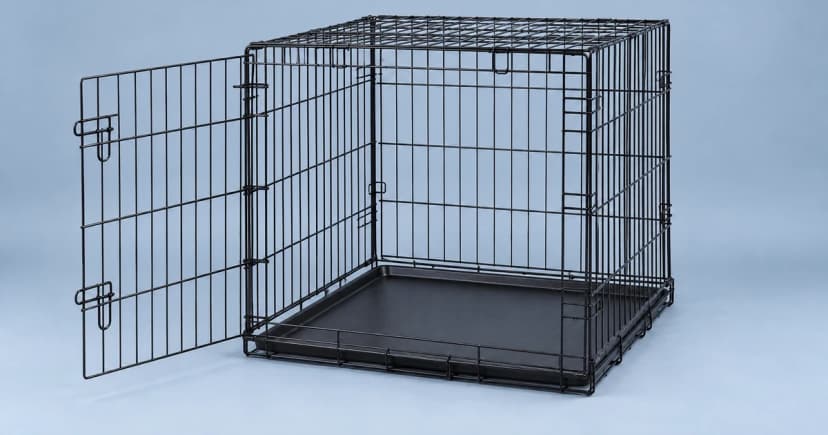
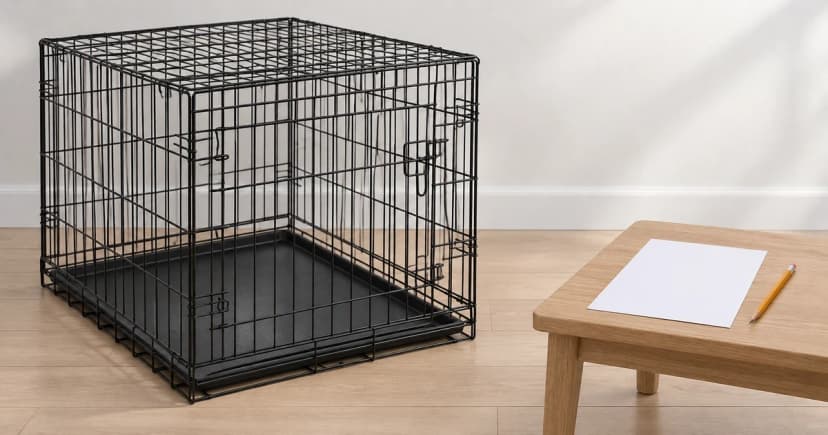
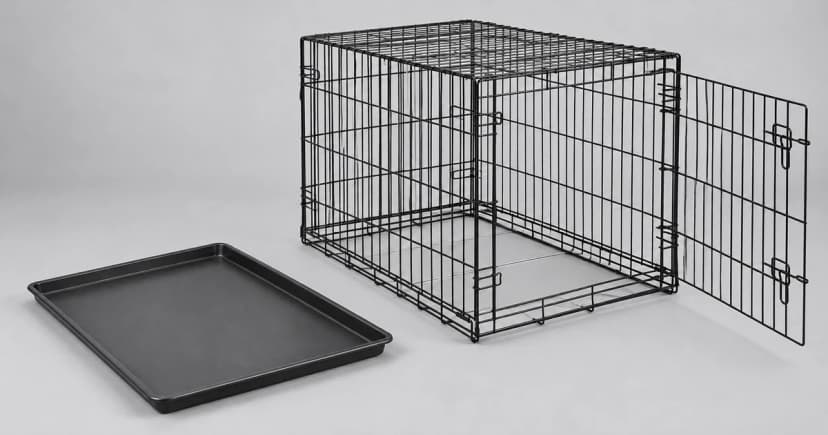
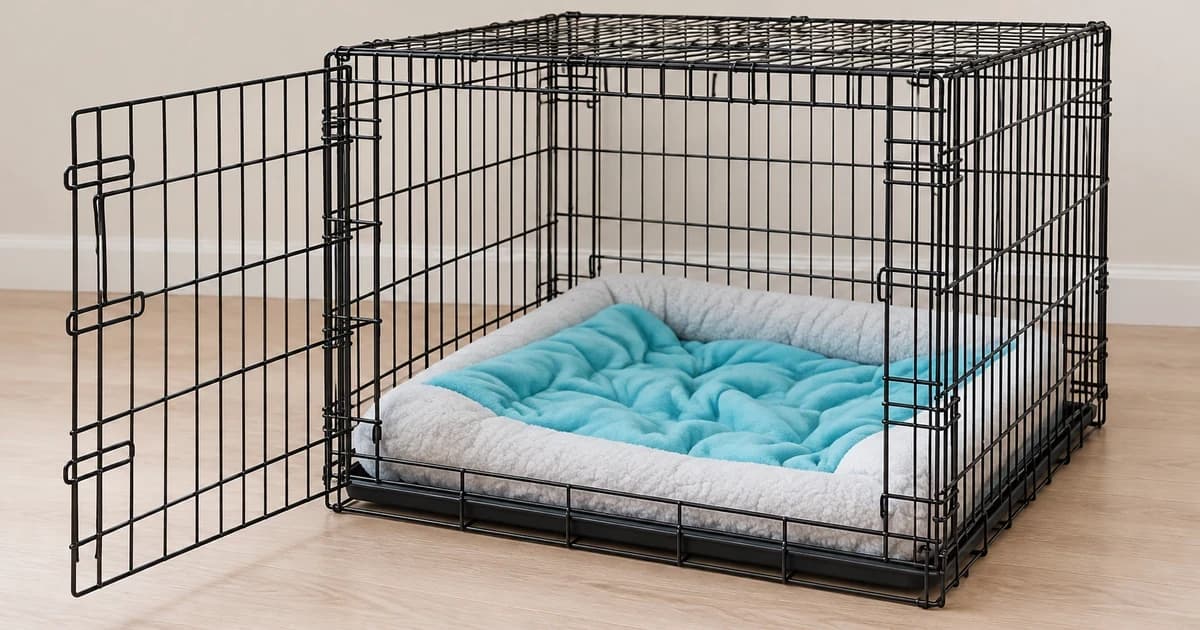
Set up the crate correctly according to its instructions, in a quiet place out of direct sunlight. Check that it is stable before introducing your puppy. They need room to stand and sit without touching the top, turn around, lie down and stretch out, with space for bedding and water. Recheck the space as they grow.
Blue Cross recommends wire rather than fabric crates for puppies because their teeth can tear the material. That is a material consideration, not proof that a particular wire crate is escape-proof or suitable for every puppy. When comparing wire crates, use the actual setup and closure instructions rather than an anxiety or indestructibility claim in a product name.
Provide appropriate bedding and fresh water. Secure the door open so it cannot accidentally shut during exploration. The Dogs Trust crate-training guide emphasizes that a puppy must be able to come out easily during these early stages.
First establish voluntary entry
Let your puppy investigate at their own pace. Have small rewards ready for choosing to go inside. If they hesitate at the entrance, make the task easier by placing a reward near the doorway rather than farther back.
If they come out, stop dropping rewards and wait for them to return by choice; do not keep calling or luring them back. Both Dogs Trust and PDSA's veterinary crate-training guidance describe this distinction. Keep sessions short and practise at calmer times, rather than trying to make an excited puppy stay still.
Build experience of entering, leaving and spending time inside with the door open. Reward calm sitting or lying down without disturbing a resting puppy. A meal or suitable chew can help build positive associations, but eating once inside is not a reason to skip the door stages.
Introduce the moving door before securing it
When your puppy is choosing to spend time inside, move the door partly toward closed without fastening it. They should still be able to leave. Repeat this small change before asking for a longer closed-door experience.
If they remain comfortable, secure the door for a moment while you stay nearby, then open it again. Allow them to exit if they choose. Gradually extend closed-door time only while the puppy remains relaxed; do not move from first closure straight to leaving the house.
Dogs Trust and PDSA advise returning to an easier stage if the puppy shows worry, including whining or scratching to get out. Treat that response as information about the current task. Waiting through escalating distress is not the next training stage.
Add distance after nearby closure is comfortable
Start doing ordinary activities in the same room while your puppy is comfortable in the closed crate. Your movement is a new part of the situation, even if the door itself is already familiar.
Then progress toward the room's doorway. Dogs Trust describes briefly stepping out and returning when the dog continues comfortably with an enjoyable activity. PDSA similarly builds from short room departures before short house departures. Neither sequence gives a puppy an automatic entitlement to hours alone.
Separate the changes in your notes so a difficult session is easier to interpret:
| Stage being introduced | What to record |
|---|---|
| Entry with the door open | Whether your puppy chose to enter and could leave easily. |
| Door movement or brief fastening | Which door change you made while remaining nearby, and whether worry appeared. |
| Movement within the room | What you did while the puppy stayed inside, before any departure. |
| A brief room departure | How the puppy responded when you moved out of sight and when you returned. |
This is an observation record, not a comfort score or a test that certifies readiness for a longer absence. Change the task gradually instead of increasing door time and your distance together whenever a session goes well.
Keep training separate from confinement needs
Make room for toileting, food, activity and company in your puppy's routine. A successful short practice does not override those needs. PDSA states a three-hour maximum for crating and says some dogs tolerate less; that maximum is not a training target or a suitable allowance for your individual puppy.
Keep the door secured open when you are not actively training, and offer other resting places. Learning to choose an open dog bed is a separate task from accepting a closed crate. Never use the crate as punishment.
If your puppy is not progressing or struggles with being alone, slow down and seek advice from your veterinarian or a qualified behaviour professional. PDSA specifically cautions against using a crate to manage separation anxiety without professional guidance. Buying a stronger enclosure does not resolve that underlying concern.