To reduce litter tracking, first find out whether grains are being kicked over the edge or carried away on your cat’s paws. Put a suitable mat where your cat actually steps after leaving the box, empty it regularly, and keep the route to the box comfortable and open. Those changes can help contain the mess close to the tray, but no arrangement guarantees that every grain will stay there.
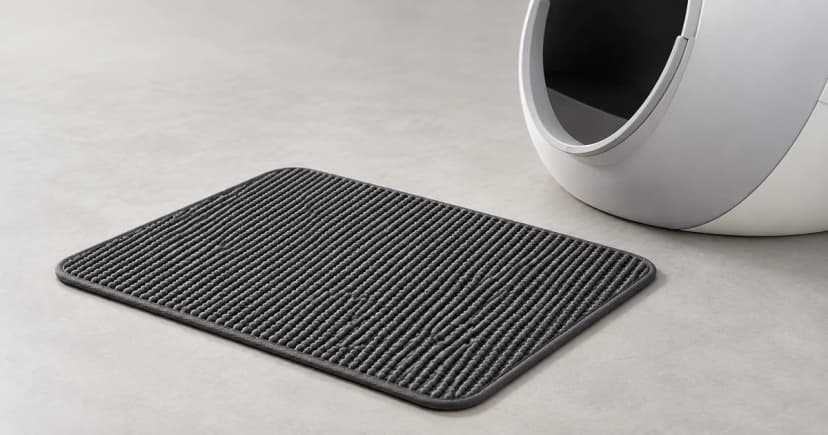
When comparing a cat litter mat for trapping litter, use two checks together: whether the cat crosses its usable surface, and how the caught grains are emptied. Pockets or a mesh-like texture describe construction; they do not establish a capture score. Compare the named examples below by footprint, layer access and their own care instructions while keeping the route to the box open.
Before replacing the box or changing the litter, look at the floor pattern and the exit your cat uses. A pile beside one wall calls for a different first check than scattered grains stretching down a hallway.
Find the point where litter leaves the box
Whisker’s litter-tracking guide distinguishes litter thrown out during digging from grains caught on paws or fur. Both can happen in the same setup.
Start after an ordinary floor cleanup so older debris does not obscure what happens next. Watch from a comfortable distance; avoid interrupting the cat or trying to direct its feet. Note three things:
- Where new grains land: beside the box wall, at the entrance, on the mat, or farther along the route.
- What happens at the exit: a normal walk, a jump over the mat, or a turn that immediately bypasses it.
- Where cleanup adds mess: spilled litter during refilling, a dusty scoop set on the floor, or grains released when moving the mat.
These observations narrow the next action; they do not diagnose your cat or prove that paw carry is the only cause. A few grains on the mat show that litter reached it, not how much it captured compared with another product.
Place the mat under the actual first steps
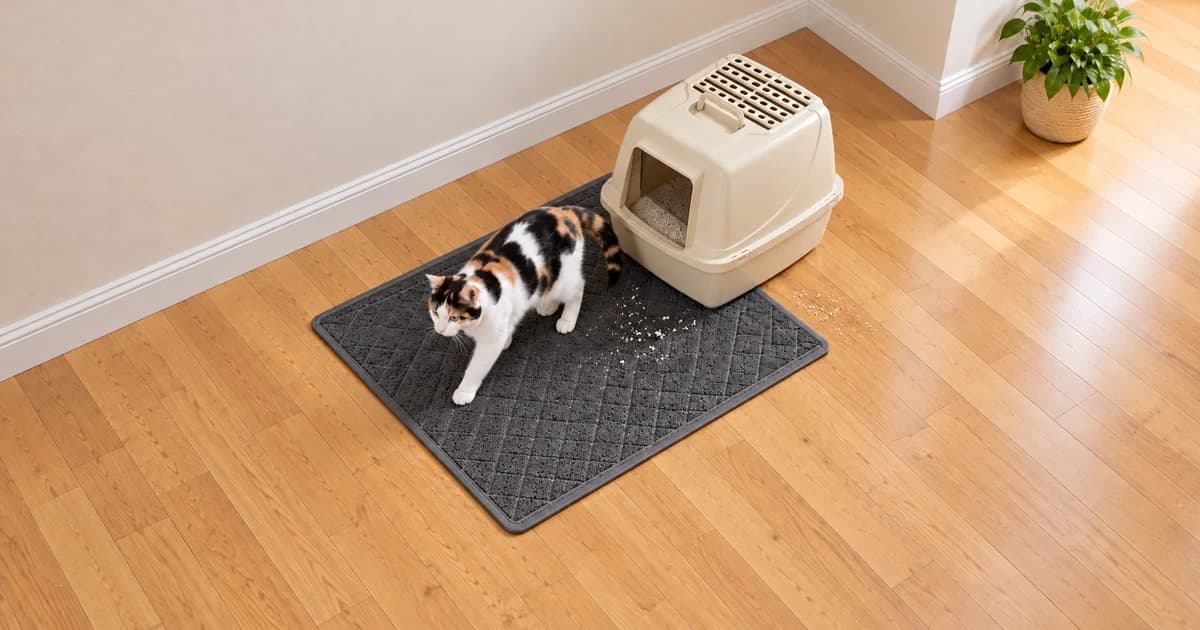
A mat outside the opening is useful only if the cat crosses it. Check the position after the box, hood and nearby furniture are in their normal arrangement. A mat tucked mostly underneath the box may leave little usable surface in front of the entrance. An angled exit can miss a small mat even when the mat looks centered from your viewpoint.
Measure the available floor space before comparing litter mats. Include the area where the cat walks or lands, rather than choosing by the box’s outside width alone. The right shape depends on the room and the observed route; this guide does not prescribe a universal number of inches beyond every entrance.
Keep edges flat and leave entry and exit unobstructed. Do not build a narrow obstacle course to force the cat across a texture it avoids. Cats Protection’s toileting advice prioritizes accessible, quiet facilities and recognizes individual preferences. A tidier floor is not a good result if the new arrangement makes the box harder to use.
If your cat steps around the mat or jumps over it, check its position and surface before assuming a larger version will solve the problem. Retain access to an accepted toileting setup while reconsidering the change.
Compare capture features with the emptying method
Two mats with similar dimensions can handle loose grains differently. Read the product’s construction and care instructions, then consider how you will remove litter without scattering it again.
| Feature to check | Useful product detail | Practical consequence |
|---|---|---|
| Surface pattern | Pockets, grooves or a mesh-like texture | Inspect whether loose grains can be removed from the recesses |
| Layer access | A removable or liftable top layer, if provided | Check the actual opening and where collected grains can be emptied |
| Footprint | Length and width of the usable mat | Compare with the observed route and available floor, not a generic size label |
| Care | The maker’s wiping, washing and drying directions | Choose a routine you can follow without assuming every mat is machine washable |
For example, Catit describes its litter mats as combining pockets and a mesh-like texture. Whisker’s LitterTrap Mat instructions describe lifting the mesh lining, emptying grains from the layer beneath, and wiping the mat as needed. Those are descriptions of named products, not evidence that Pawlivy sells the same models or that either captures all litter.
A layered mat also needs a workable cleaning location. Check that you can lift the intended part without carrying an open pocket of litter through the room.
Address scatter without sacrificing access
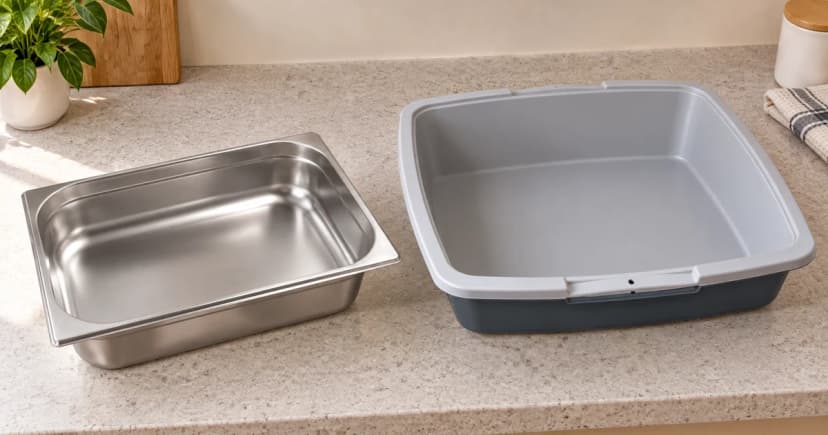
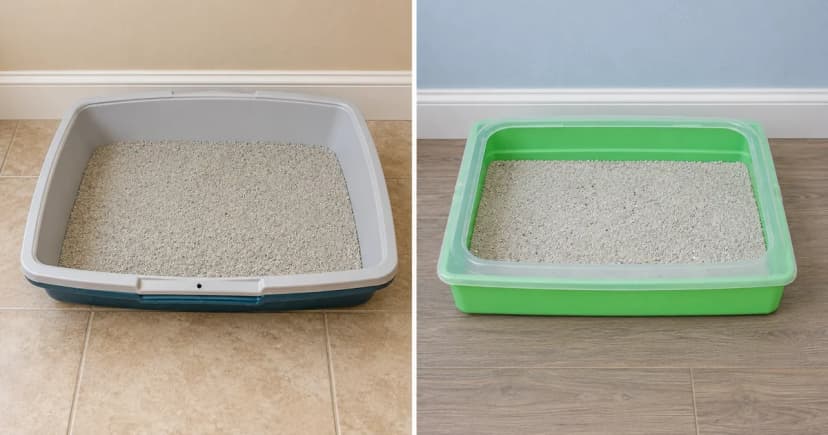
If you see litter being kicked over a low wall, the pan’s side design may deserve attention. That does not mean replacing every open box with a covered or top-entry box. Cats Protection notes that cats can have different preferences for covered and uncovered trays; an entrance still needs to work for the individual cat.
When comparing options in the litter-box collection, check both containment features and the space available for entering and turning. A taller wall is not helpful if it also creates a difficult step-over entrance. Keep this decision separate from a promise that a new box will stop paw-carried grains.
Follow the existing litter or device instructions for filling. Adding or removing large amounts merely to chase a cleaner floor changes the toileting surface too. This equipment guide does not rank litter ingredients or prescribe a universal depth, and it does not recommend wetting fresh litter or trimming paw fur as a tracking fix.
Keep caught litter from becoming another cleanup problem
Remove loose floor grains and empty the mat according to its instructions. Check beneath it as well as on top. Clean spills from refilling separately so that they are not mistaken for a failure of the exit setup. Continue scooping the box; tracking control does not replace normal litter-box care.
Use the exact mat’s approved method for soiled areas and allow it to dry as directed. Whisker’s wipe-and-empty guidance for its LitterTrap Mat is not a universal washing instruction for foam, fabric, rubber or other constructions. A backing described as water-resistant does not automatically establish machine-wash compatibility.
Make one practical change at a time and record the date, the change, the cat’s entry and exit, and where fresh grains appear. Keep a position or surface that reduces your cleanup while preserving comfortable access. Reconsider a change that the cat consistently avoids. This is a household observation record, not a controlled comparison or a measured performance claim.
Our editorial policy explains the source-based approach used here.