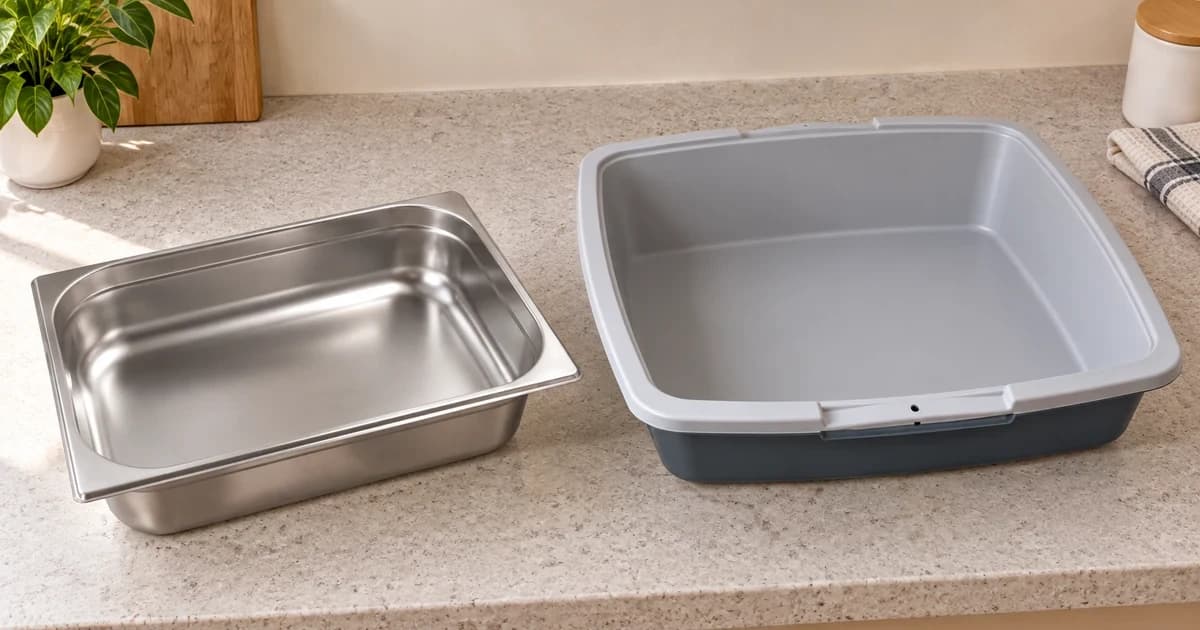
A stainless steel litter box can be worth considering, but the material name alone does not make it a better choice than a plastic box. Compare the actual pan, liner, cover, entrance and care instructions. A steel pan with a fabric hood is a different assembly from an uncovered steel tray; a plastic box used with a removable liner has another surface to maintain.
Start with the problem you want to solve: a part you cannot reach to clean, unclear washing instructions, a damaged component or an entrance that does not work for your cat. Choose a design that addresses that problem without assuming that a metal label establishes odor control, antibacterial performance or a particular service life.
Identify which parts the material label describes
Before comparing options in the litter-box collection, make a parts list. Record the pan, liner or insert, rim, hood, entry flap, clips and any mat supplied with the box.
Meowant’s MW-LB05 user manual, for example, lists stainless steel, Oxford fabric and PVC. The removable cover contains supporting poles and clips, while the pan has separate cleaning directions. This is a published manual provided as a PDF; it is an example of a mixed assembly, not confirmation that a Pawlivy listing is the same model.
The plastic category is also more specific than it first appears. Modkat’s Tray materials page identifies the base as ABS for purchases before July 2022 and polypropylene for purchases after July 2022. It lists polyethylene liners and a polypropylene splash guard. Keep the purchase period and component name with that information instead of assigning one material to every version of the product.
A shiny appearance cannot verify an alloy grade, coating or certification.
Compare the surface you will actually clean
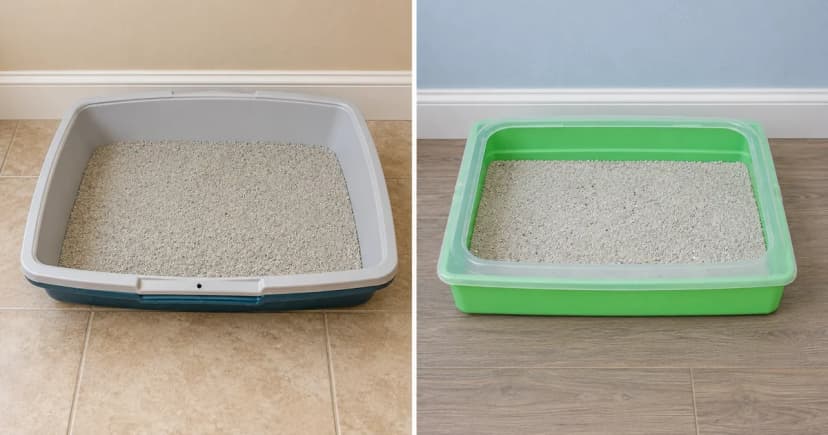
Look inside the assembled box. Is litter placed directly against the pan, or inside a liner? Does a guard overlap that liner? Can you remove the components that collect debris without dismantling unrelated parts? These questions describe the equipment, rather than predicting a result from its material.
For the Modkat Tray, the maker describes a Type G reusable liner, a splash guard that overlaps it, and a walk-off platform that locks the liner at the front. Comparing only the base with an unlined metal pan would leave out a surface and its attachment points. That does not prove either design cleans better; it tells you what needs its own care check.
| Question | Information to record | Decision it supports |
|---|---|---|
| What contacts the litter? | Bare pan, removable liner or another insert | Identify the surface whose washing and replacement instructions you need |
| What comes off? | Hood, guard, clips, flap and supporting parts | Check access to corners and the correct disassembly sequence |
| What wash method is permitted? | Directions for each part, including prohibited cleaners and appliances | Determine whether the routine fits your available washing space and supplies |
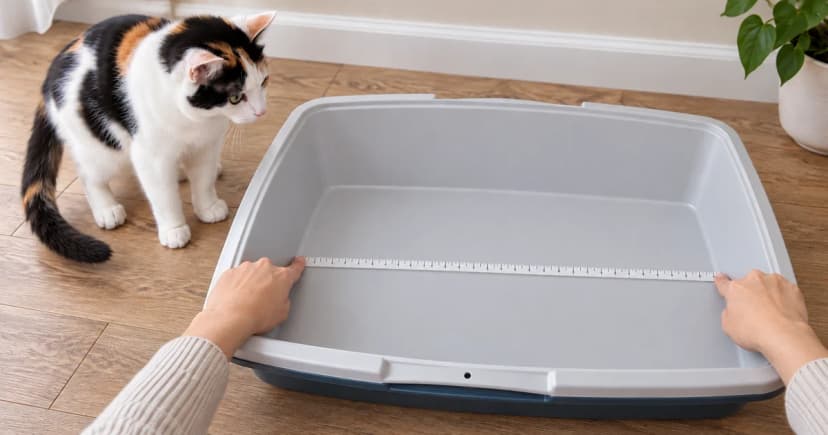
| What dimensions are described? | Usable interior, entrance and assembled exterior, labeled separately | Avoid comparing a pan’s interior with another product’s overall hood dimensions |
| What remains unknown? | Unspecified material, replacement part, care restriction or measurement |
A product page’s “easy to clean” wording is not a method. Look for the actual instructions and whether they apply to the pan, liner or whole assembly. Keep promotional durability claims separate from a replacement date you have established for your own equipment.
Do not infer dishwasher or abrasive permission from steel
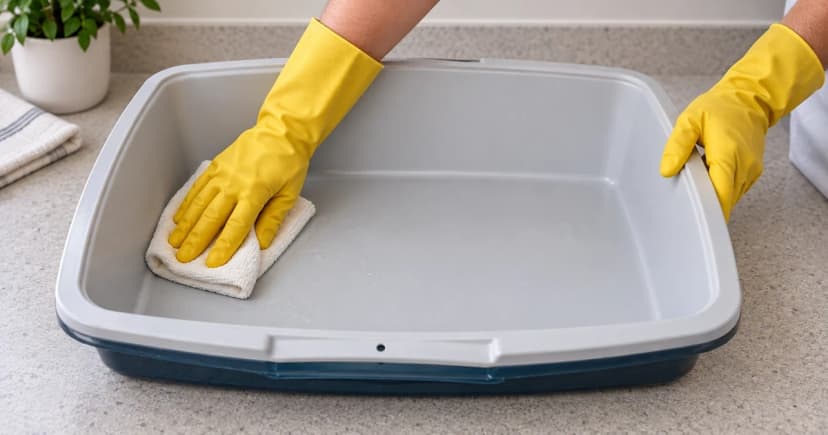
The MW-LB05 manual explicitly prohibits putting any part in a dishwasher. It also excludes strong detergents, bleach, strong acid or base liquids, and abrasive materials. Its directions for the litter pan are to rinse and wipe dry, with a short water soak and a non-abrasive sponge or pad for tougher residue. A stainless steel label therefore does not grant permission to scour this model or use an appliance.
The same manual gives the cover a different procedure: remove all supporting poles, then wash with water and air dry, or use a gentle cold-water machine cycle and air dry. Cover permission does not apply to the pan, and it is not permission to machine-wash other fabric hoods.
Modkat’s box and liner cleaning guide specifies mild dish soap and warm water for its litter box and reusable liner. That is an instruction for the named system, not a universal cleaning rule for plastic or a reason to transfer it to the Meowant assembly.
When directions are missing, obtain them before choosing a cleaner, prolonged soak or dishwasher cycle. If your preferred routine conflicts with the exact instructions, that conflict is useful selection information. Changing the material does not remove the need to read the new model’s manual.
Keep access and handling in the comparison
A material change may also change the shape, entry or accessories. Compare those features separately. Check the usable floor and opening rather than assuming that two products described as XL provide the same space. For open boxes, distinguish the entry edge from the taller sides; for covered boxes, include the hood and flap in the access check.
Plan where you will empty, wash and dry the removable pieces. For a box you already own, note how you carry it and whether the parts are practical to remove and replace. These are household planning checks, not a strength or stability test.
Choose for a documented need, not an unverified upgrade promise
Add the specific problem you want the replacement to solve. Use “not supplied” where necessary instead of filling a gap with an assumed benefit.
A stainless steel option belongs on the shortlist when its documented construction, access and care suit that need. A plastic option can remain on the shortlist on the same basis. Neither label establishes a guaranteed odor-free box, antibacterial effect, scratch-free surface or lifespan, and this guide has no comparative product test that would rank those outcomes.
Our editorial policy explains the source and illustration boundaries used here. The useful comparison is between complete products you can identify and maintain, with uncertainty left visible.