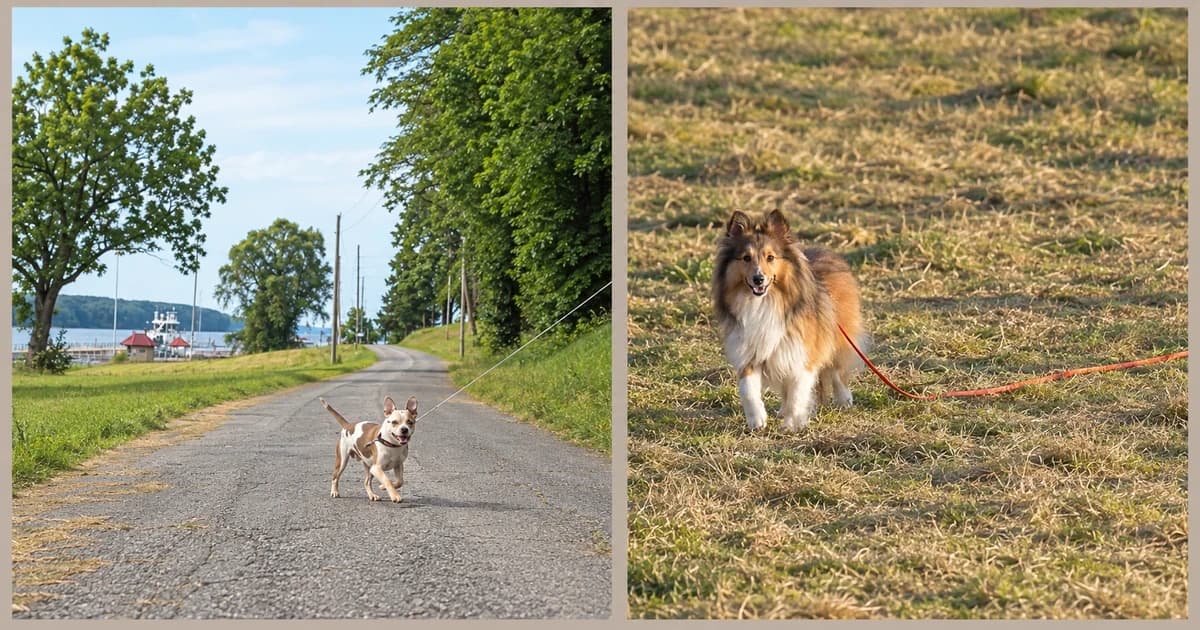
Learning how to use a dog long line starts with a workable plan for the space, the equipment and your own handling. Decide how you will begin and end the outing before extending the distance.
Choose the setting
Blue Cross advises choosing places that avoid situations your dog finds overwhelming. A busy park at peak time may be a poor choice. Allow time to become familiar with unfamiliar equipment.
Check permission and the actual route separately. If you cannot manage the planned space or equipment, choose an easier outing rather than treating a longer line as the solution.
Prepare the line
An ordinary fixed long line differs from a retractable lead. Unravel knots and kinks before gathering loose loops to hold. Follow the actual line and harness instructions for the connection.
Battersea recommends a harness rather than a collar, with the back attachment when applicable. Confirm that your own harness provides the intended connection.
Length and material labels do not establish how the complete connection works.
Manage distance with two hands
Keep two hands on the line. The hand nearer the dog manages the slack; the other holds the remaining line and its handle, if present. Feed out only the length you can manage, and gather excess as the distance closes.
Dogs Trust says never to pull the dog toward you. Calmly approach and collect your dog when needed. The line is not a way to reel them back.
Watch for people, obstacles and line around legs. You do not need to use its full length. Excess slack can tangle; a line sliding through your hands can injure you.
Pause and finish
If tangling begins, pause movement before trying to untangle. Do not keep walking while the line catches around you or your dog.
If you are unsure about holding or stopping the line, arrange practical help from a qualified trainer before adding distance. Persistent training difficulty also warrants individual support.
End while you can still manage the arrangement. Bring the dog nearby without pulling, gather the line and follow your equipment's instructions when changing back to the ordinary walking setup. This guide does not supply an emergency stopping maneuver.
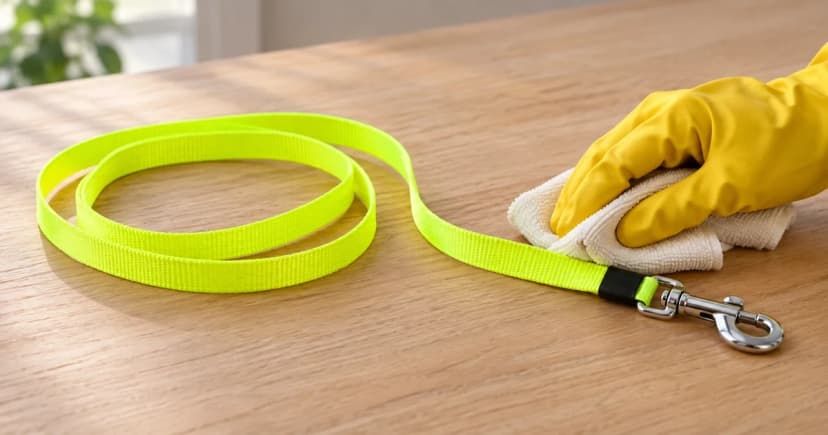
Keep the complete recall lesson separate; attached practice need not lead to release. After use, follow the long-line care guide for cleaning, drying and storage.