Off-leash dog training starts with practising a return cue while you can still keep your dog connected. Build recall in a quiet, secured setting, then increase distance and distractions gradually. Before considering release, check the rules for the actual location and your dog's response in that setting. Continuing to use a leash or training line is a valid outcome; a successful practice session does not grant permission to let go.
This guide separates recall preparation from loose-leash walking, equipment fitting and line care. It does not provide a recall percentage, a fixed training deadline or a promise that every dog will become suitable for off-leash outings.
Separate the three questions before practising
“Does my dog come back?” is only one question. Keep those answers separate in your notes. A good response at home cannot answer a park's rules, and a long line's product description cannot establish how your dog responds near another animal.
Describe the task precisely: returning when called, rather than walking beside you throughout an outing. If you are introducing ordinary walking equipment and nearby movement, begin with our puppy leash-training guide. That is a different lesson from increasing recall distance.
Establish one return cue in an easier setting
Dogs Trust's recall guide begins with attention to the dog's name, then a consistent recall word or signal shared by the household. Its early exercise starts indoors, in a garden or another enclosed space: gain attention, give the cue, step away and reward the return. It adds distance and distractions gradually, using a long line attached to a harness during preparation. Dogs Trust also advises staying calm after a missed response and seeking qualified training support when progress is difficult. This is a progression to practise, not a guarantee of return.
Write down the cue you actually use and where you began. Record an observed return separately from an attempt that needed you to approach the dog. “Came from the other side of this room” is a more useful note than “recall trained”: it preserves the circumstances without claiming the same response elsewhere.
Change the challenge gradually
Blue Cross's recall article moves from nearby, low-distraction practice to greater distance and modest distractions, then on-lead practice during walks. For a longer lead or training line, it specifies a harness and a location well away from roads. If the dog does not return to the first call, Blue Cross advises going back to a stage where the response was dependable, rather than calling continuously or telling the dog off. Its sequence does not authorize an off-leash trial wherever you happen to be.
A short record helps distinguish the challenge you changed from the result you observed:
| Record | Write a specific observation |
|---|---|
| Setting | The actual room, secured area or permitted on-lead location. |
| Distance and distraction | Where the dog was and what had its attention. |
| Response | Whether it turned and returned after the cue, without describing a guess as a result. |
| Next attempt | Which part you will make easier or keep the same. |
Keep leash handling outside this record unless you have appropriate instruction for the exact equipment and exercise. These sources do not provide a complete fastening, grip, slack-management or emergency-stop tutorial. Do not turn a general reference to a line into a direction to pull or reel a dog towards you.
Make the location decision independently
The American Kennel Club's recall article explicitly acknowledges that recall is never guaranteed and that owners may choose to keep a dog leashed. It recommends secured practice areas and a long line when working in larger, more distracting spaces. It also reminds readers that local and park leash rules still apply. Its advice supports continuing practice with a physical connection; it does not establish permission for a particular route, a measured reliability threshold or an obligation to progress to release.
Check the responsible authority's current rules and the signs for the particular area before making that outing decision. Record the actual answer rather than importing a rule from another country or assuming that seeing another loose dog establishes permission.
| What it means for today's plan | |
|---|---|
| Does this location allow release? | Keep that permission unresolved until you check the actual rules. |
| What response have I observed here? | Use the circumstances in your notes; do not substitute a result from a quieter room. |
| Am I confident about this exercise and equipment? | Keep the plan within your current instruction and ask a qualified trainer about gaps. |
Compare equipment without treating it as a result
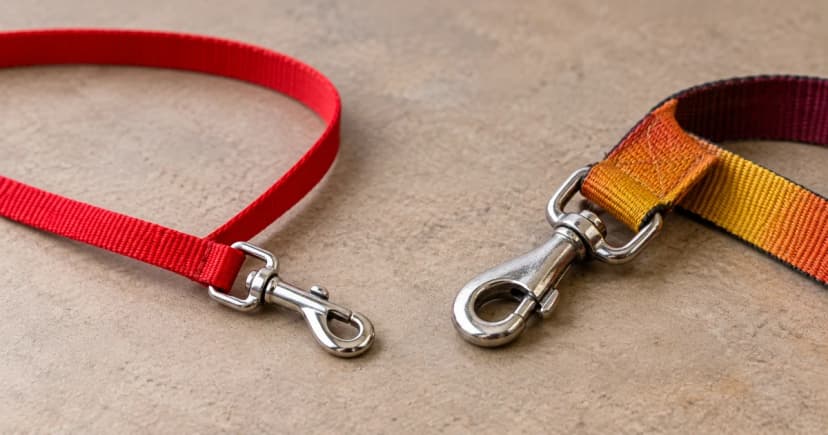
When browsing long training lines, distinguish a detachable line from a retractable mechanism. Neither a visible strap nor a length claim establishes a compatible connection or a pulling capacity. Compare harnesses and ordinary leashes for their own documented roles.
For washing and storage, use our separate long-line care guide. Clean equipment and successful recall answer different questions; one does not prove the other.
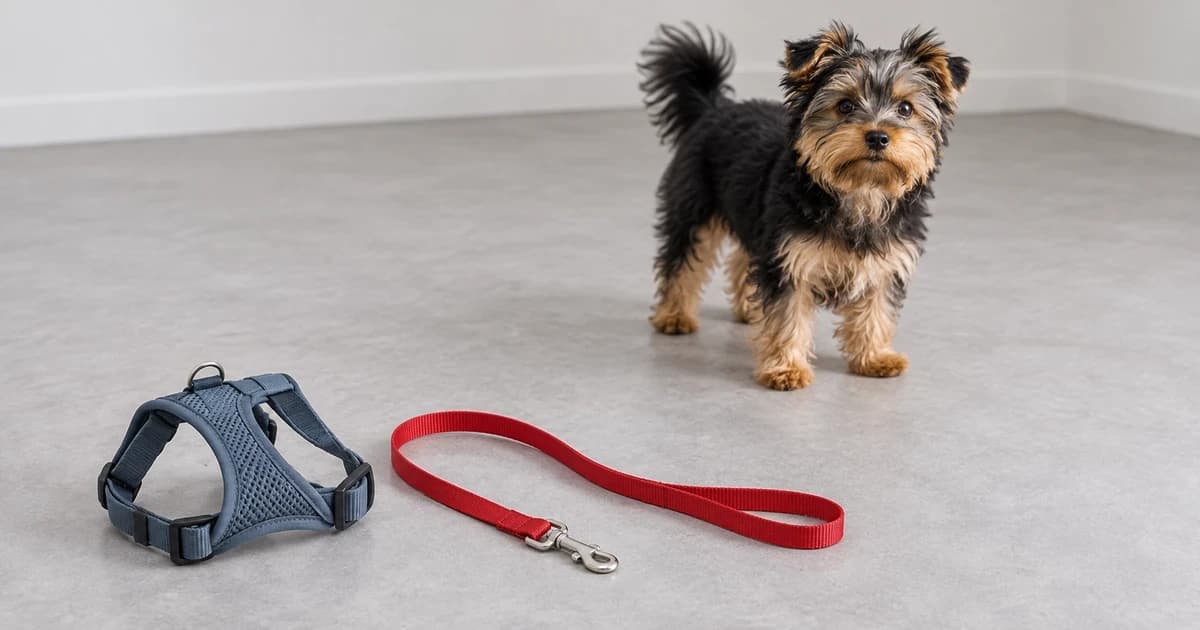
The edited illustration reconstructs a generic dog and separate ordinary walking equipment from two licensed photographs. It demonstrates no complete training-line length, attachment method, response to a cue or off-leash eligibility. Our editorial policy explains the review process.