Knowing how to measure a horse for a halter starts with matching your tape route to the exact model's sizing chart before you record a single number. Measure the nose, cheek, and crown along the endpoints specified for that halter, record whether each figure represents a full circumference or a single strap section in inches or centimeters, and keep flat-webbing and rope-halter charts strictly separate. Size labels such as "Horse," "Average," or "Cob" are not standardized across brands, and a size chart match must still be followed by an on-horse fit check when the halter arrives.
Compare measurement routes before putting a tape on the horse
The most common sizing mistake when looking up how to measure horse for halter models is substituting a single top-of-nose strap length for a full noseband circumference, or measuring an isolated crown strap when the chart expects a continuous loop from the noseband over the poll. Always record the exact product name, chart version, and unit alongside your numbers, and note whether you measured the horse's head or an existing halter.
Record endpoints, full-circumference status, and units in one table
Use a soft fabric measuring tape—or a non-stretch string measured against a ruler afterward—and log every field required by the specific size chart before selecting a size:
| Measurement field | Endpoints to record | Full circumference or single section? | Unit & chart version | Post-delivery fit check |
|---|---|---|---|---|
| Nose | Exact facial placement (e.g., two to three finger widths below cheekbones or halfway to two-thirds from nostrils to eyes) | State clearly whether full noseband circumference around the muzzle or a single top nose section | Inches or cm; record exact brand and model chart name | Confirm the noseband sits at the intended facial height without binding or pinching |
| Cheek | Start and finish points along the cheekbone (e.g., knot-to-knot excluding knots, or ring-to-ring hardware boundaries) | Single side section along one cheek | Inches or cm; note whether hardware or knots are excluded | Verify cheekpieces keep the noseband level and clear of the eye and facial crest |
| Crown / Poll | Either end-to-end along the removable crownpiece or from one noseband side up the cheek, over the poll, to the opposite noseband position | Single crown strap with buckle range OR continuous cheek-poll-cheek arc | Inches or cm; include stated buckle adjustment range (e.g., 18.5–22.5 in) | Check buckle hole position or tie excess so the poll strap lies flat without pulling the throatlatch forward |
| Throat & Chin | Separate throatlatch and under-chin strap paths when listed as individual columns | Individual strap sections or throat clearance loop | Inches or cm; match the exact model's multi-column table | Verify jaw and throat clearance according to the halter's fitting guide |
A precise measurement taken along the wrong route will point to the wrong row on the chart.
Read flat-halter chart fields separately
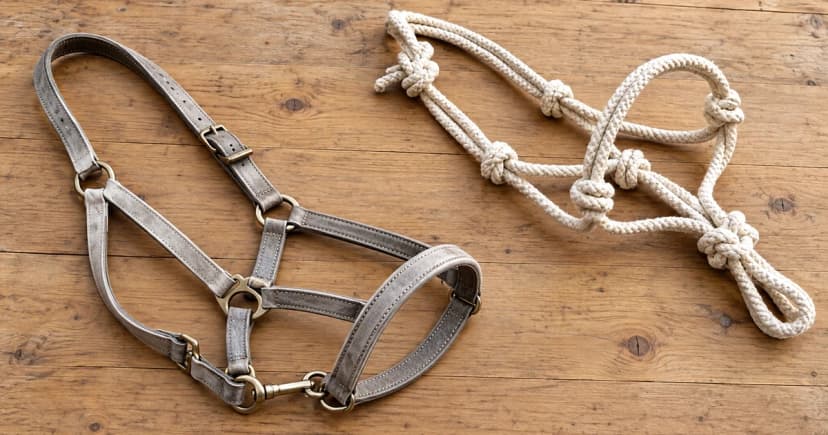
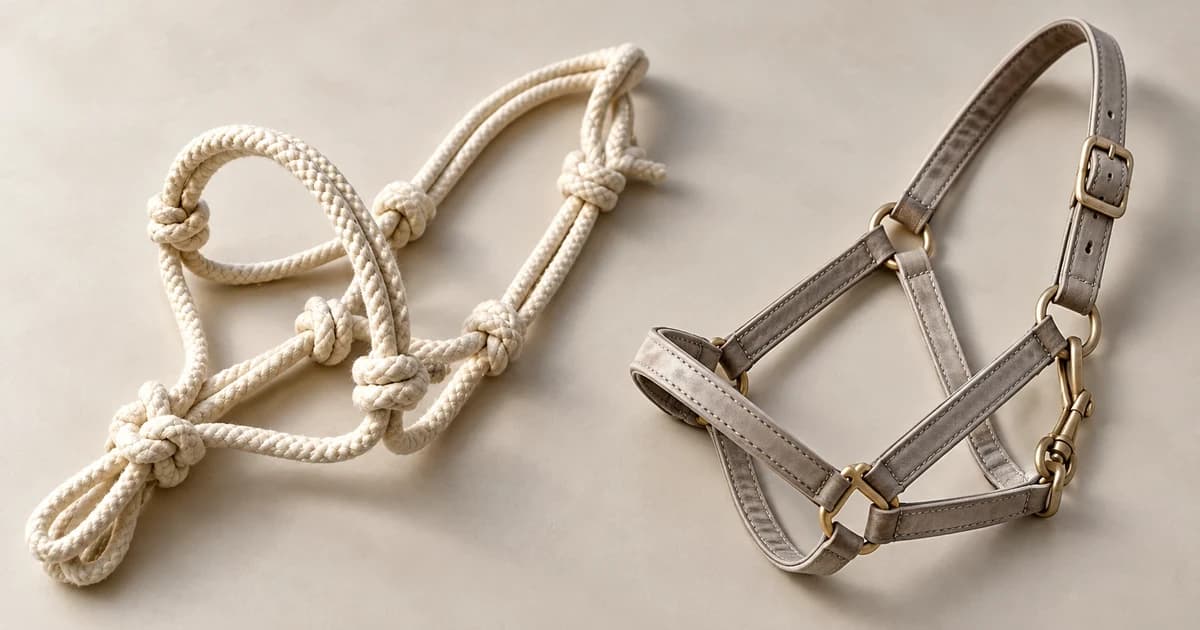
For example, Weaver Equine's Original Adjustable Chin and Throat Snap Halter, 1 inch, separates Crown, Nose, Cheek, Throat, and Chin into distinct columns. Its Average horse row lists a Crown range of 18.5–22.5 inches, a 10.5-inch Nose field, a 7.5-inch Cheek field, a 16-inch Throat field, and a 12.25–15-inch Chin range.
Keep those field labels attached to their numbers. A 10.5-inch Nose field on a multi-part flat halter chart represents a single strap section rather than the full circumference around a horse's muzzle. Because the Chin and Crown straps offer adjustable ranges while the Cheek and Throat fields are fixed lengths, compare every individual column instead of relying on body-weight estimates alone.
Keep rope-halter endpoints with their own chart
Do Or Do Knot's Sizing & Adjusting Halters guide defines noseband circumference, cheekpiece length, and crownpiece length specifically for its knotted rope halters. Its sizing table states that lengths are measured from knot to knot, excluding the knots themselves—for instance, its Standard Horse size lists a 25-inch noseband circumference, a 7.5-inch cheekpiece length, and a 32-inch crownpiece length.
Its on-horse measuring method places the noseband approximately two to three finger widths below the cheekbones and records the full nose circumference and cheekpiece length with a soft tape or string; an optional crown measurement is taken end to end. Keep those knot-excluding endpoints paired strictly with that rope-halter chart rather than carrying the numbers over to a hardware-buckled flat halter.
The guide also notes that rope halters can fit slightly larger as the knots tighten and settle with use. Treat that settling behavior as specific to this rope construction rather than a reason to buy undersized halters across other designs.
Follow the chosen model's route through the delivered fit check
HalterUp's measuring guide records a full nose circumference around the intended noseband location, and then measures the crown route starting at that noseband point on one side, running up the cheek and over the poll, and returning to the opposite side of the noseband. In its Horse chart, for example, a Cob size pairs a 23-inch nose circumference with a 35-inch crown route, while a Full Horse size pairs a 25-inch nose circumference with a 39-inch crown route.
Notice how even a single guide can present slight wording variations: the text places the noseband a little over halfway to two-thirds of the distance from nostrils to eyes, whereas the diagram label says halfway, and Donkey sizes are separated into their own rows. Always record which facial landmark you used so your nose circumference and over-the-poll loop start from the same reference point.
Once the halter is on the horse, HalterUp's fit check confirms that the noseband neither binds nor sits overly snug, and that the throatlatch leaves two to three fingers of space between strap and jaw without excessive droop. Apply those checks as a separate post-delivery inspection before putting the halter into regular work.
Resolve proportion mismatches and plan ongoing care
When a horse's nose circumference and cheek length fall into different rows on a fixed chart, do not rely on a generic "size up" shortcut. Check whether an adjustable chin and crown design or a custom-knotted option accommodates both proportions, and keep the halter clean and tags intact during your initial trial in case an exchange is required.
Use the same five-column measurement record whenever you compare horse halters, and once you confirm the delivered fit on the horse, follow a regular routine to clean and store a horse halter so salt, mud, and stiffened straps do not alter how it sits on the head.