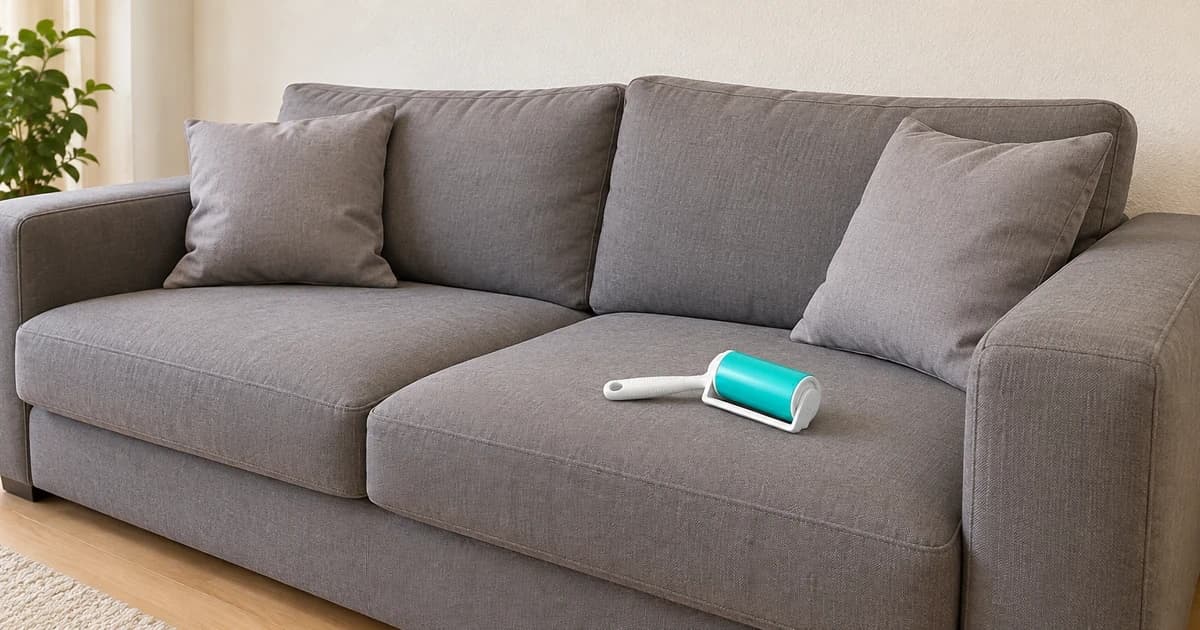
Knowing how to get pet hair off a couch safely requires matching two sets of rules before you start: your sofa's upholstery care label and the operating directions for your dry hair-removal tool. Begin with a gentle upholstery-vacuum pass over cushions and seams (when permitted by the sofa label), then test a compatible dry tool—such as a directional fabric brush, rubberized glove, or lint roller—on a hidden fabric edge first, stopping immediately if threads snag or the nap changes.
1. Match your couch care code to a compatible dry hair-removal method
Before trying a household hack on visible cushions, check under the seat cushions or along the lower frame rail for the furniture tag—where Ashley Furniture's care and cleaning guide places its upholstery cleaning codes. Even for dry hair removal, those codes tell you which moisture or friction tricks to rule out from the start:
| Upholstery care code or fabric note | What the furniture care rule means | Compatible dry hair-removal route | Methods to avoid on this upholstery |
|---|---|---|---|
| Code X (Ashley care code guide) | Vacuuming or light dry brushing only; no water, foam, or liquid solvent cleaners of any kind | Low-suction upholstery vacuum attachment (IKEA upholstery guide) or light dry brushing after a hidden-seam test | Wet rubber gloves, dampened sponges, water misting, steam, or liquid stain sprays |
| Code S (Solvent-only spot-clean fabrics) | Water is excluded to prevent water rings, shrinkage, or pile distortion | Dry upholstery vacuum pass followed by a dry directional brush (such as the OXO FurLifter Furniture Brush) tested in a hidden spot | Dampening a rubber glove with tap water or spraying water-based fabric refreshers to loosen fur |
| Code W or W/S (Water-tolerant spot-clean codes) | Permits specific spot-cleaning agents for stains, but still requires gentle surface handling for daily fur | Upholstery vacuum pass + hidden-spot test with a dry rubberized cloth/glove (mentioned by IKEA) or reusable pet hair remover for couch | Stiff metal scrapers, wire slicker brushes, or assuming a cushion zipper means the cover is machine-washable |
| Looped bouclé, velvet, or missing care tag | Raised loops and delicate pile can snag or crush easily under friction | Gentle suction with a smooth upholstery nozzle; check the furniture brand's documentation or consult an upholstery specialist before using friction tools | High-suction rotating beater bars, aggressive adhesive tape, or back-and-forth scrubbing |
2. Follow the four-step couch hair-removal sequence
Keep dry pet-hair pickup separate from stain or odor treatment, and work through this single sequence:
- Inspect the cushion tags and seams first: Confirm the cleaning code and check whether cushions may be lifted. Remember that zippers on foam cushions are often for manufacturing assembly rather than machine washing.
- Run a gentle upholstery-vacuum pass: Following IKEA's upholstery cleaning advice, attach the dedicated upholstery nozzle and vacuum across seat cushions, backrests, and the crevices where fur collects—keeping suction moderate so the nozzle never pulls or stretches the cover weave.
- Test your dry hair tool on a hidden flap: Try your chosen dry brush, rubberized glove, or roller on a back skirt or underside hem first. If you use a directional reusable brush like the OXO FurLifter Furniture Brush, follow the arrow printed on the head, flip the brush for the opposite stroke, dip it into its self-cleaning base to strip collected fur, and empty the bottom trap when full.
- Stop if the surface changes: Check the fabric after your first light strokes. If you see pulled threads, fuzzing, pilling, or a flattened nap, stop immediately—pressing harder with an incompatible tool will damage the weave rather than free trapped hair.
3. Reduce couch fur buildup between cleanings
To make routine sofa upkeep faster, lay a washable throw blanket over your pet's favorite cushion spot (checking the throw's own laundry tag) and brush your pet's coat regularly away from upholstered furniture—afterward, follow our separate guide to clean a dog brush so loose undercoat does not transfer back into the living room.