
Set up an automatic aquarium feeder by checking the mounting position, the dry dispensing path and the programming method for your exact model. Then observe both a deliberate manual release and the scheduled operation. A turning drum does not establish that the saved schedule is active, that the outlet is correctly positioned or that the amount released suits your fish.
This is an equipment setup guide based on manufacturer instructions, not a feeding plan or a hands-on product review. The checks below help you record what the device actually does. They do not establish a suitable diet, meal size, absence duration or an unattended-care guarantee.
Identify the model before pressing a programming button
Keep the model number, its manual and the supplied mounting parts together. A rotating drum, a compartment tray and an app-controlled feeder can have different release mechanisms and settings. Similar buttons or housings do not make their instructions interchangeable.
Separate three questions on paper: how the unit is attached, how a release is triggered, and how much material the outlet allows through. Answer each from that model's instructions. A schedule entry cannot resolve an unsuitable mounting surface, and a portion slider cannot confirm that a scheduled release is enabled.
The EHEIM autofeeder 3581 manual, for example, distinguishes the clock, four scheduled entries and rotation modes. The JUWEL EasyFeed manual describes timing from activation. The Fluval PF2 instructions save a daily time when you operate a programming button at that actual time of day. These examples show why a generic button sequence can be misleading.
Check the mounting surface and the route into the tank
Find the attachment option supplied and permitted for your feeder. Check whether your aquarium has the required rim, cover surface or designated feeding opening. Positioning the outlet over a lid is different from positioning it over a clear opening. Trace where a release would go, including whether a cover edge or other equipment obstructs the path.
EHEIM's manual describes a cover position that lets material fall freely to the water and an optional holder for an open tank. It also requires the drive unit's rear air intake to remain uncovered and outside the humid-air section. That is a named unit's placement rule, not evidence that any feeder can be left anywhere above an open aquarium.
The PF2 diagram shows its supplied secure base on a standard cover and a different arrangement for the designated Fluval FLEX feeding port. JUWEL describes a holding jacket and matching opening, and advises contacting the retailer about a suitable flap set when the template is absent. Do not treat these diagrams as permission to cut an unfamiliar lid or substitute a different mount.
Inspect the unit for damage and follow the stated water and power precautions. EHEIM explicitly says not to immerse its feeder and to protect the installation site from possible water leakage. Stop the setup if the mount, water exposure or supplied parts cannot be reconciled with your own instructions.
Distinguish a saved time from an enabled release
Write the intended device schedule next to the settings you actually enter. Check the clock if your unit has one, the enabled entries and any release-count indicator. Keep a manual test separate from the automatic schedule in your notes.
| Named model | Programming detail that changes the check |
|---|---|
| EHEIM autofeeder 3581 | A stored time with no arrow produces no release. One arrow means one rotation; two mean two rotations separated by one minute. |
| JUWEL EasyFeed | Turning it on starts an actual release and the daily interval. Selecting the second release adds one six hours after the first. |
| Fluval PF2 | P1 and P2 are saved at the actual desired time of day. The manual M button triggers a separate full rotation. |
These are operating differences, not recommended feeding frequencies. Do not adopt the maximum available entries as your aquarium's feeding plan. A manual rotation also cannot demonstrate that tomorrow's saved entry will run; observe the enabled schedule itself.
Observe the release without treating capacity as a meal size
Use only the material your exact feeder permits. The EHEIM manual specifies dry flakes or granulates and excludes live or frozen food. Other mechanisms may have different restrictions. Container capacity, tray compartments and an adjustable opening describe the equipment; none gives a universal nutritional amount.
Check that the dispensing container is assembled and seated as instructed. EHEIM says to dry its cleaned drum before filling; JUWEL says not to compress material in its container. Keep those instructions with the named products rather than turning either into a universal filling method.
Use the maker's manual-release function deliberately and watch the outlet, movement and destination. Record an empty release, obstruction or unexpected extra rotation as an unresolved operating problem. Follow the model's troubleshooting instructions instead of forcing the mechanism or adding material to compensate for an uncertain release.
Count manual releases as additional events in your record. Changing the aperture or refilling the container creates another setting to check. An observed rotation shows movement at that moment; it does not certify repeatable quantities or the suitability of the material released.
Recheck power changes and leave a usable settings record
Battery and power behavior deserves its own check. JUWEL EasyFeed and Fluval PF2 require reprogramming after battery replacement. EHEIM's 3581 manual says to replace batteries within one minute to preserve programmed settings. Recheck the actual clock and enabled entries after the change rather than assuming one model's retention behavior applies to another.
Keep this short record beside the manual:
- Identification: model, manual version and supplied mount used.
- Position: attachment surface, clear outlet route and any ventilation requirement.
- Settings: clock or activation time, enabled entries and rotations per entry.
- Observation: manual releases recorded separately from actual scheduled releases.
- Changes: refills, aperture adjustments, battery replacement and the settings rechecked afterward.
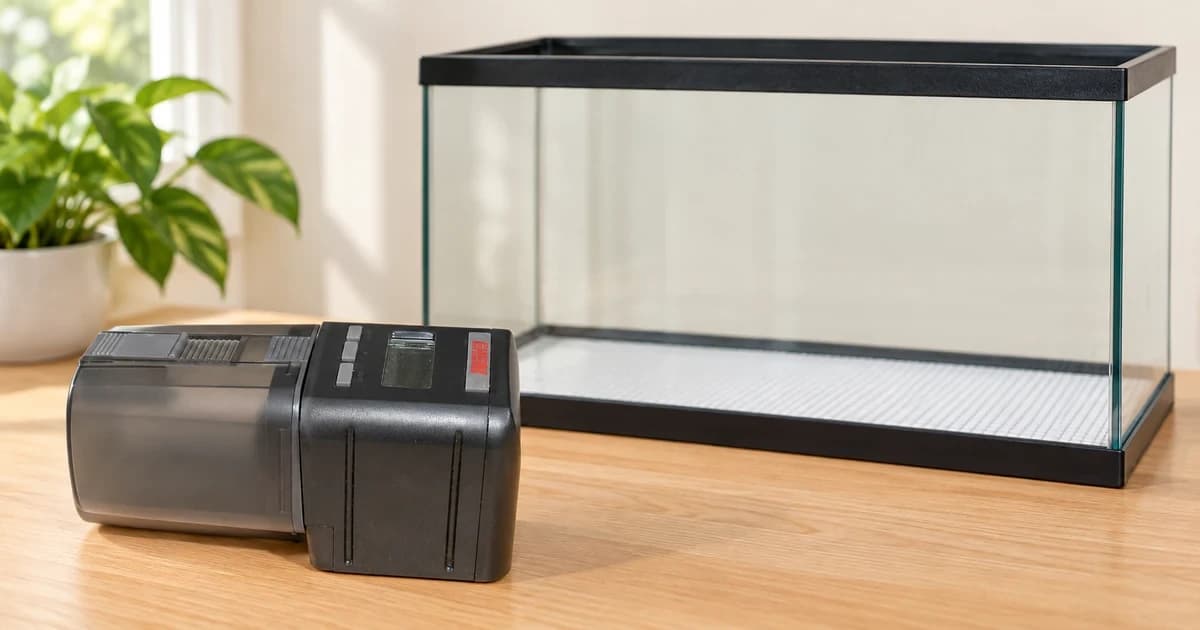
Catalog claims about backup power, moisture resistance or remote logs do not establish uninterrupted operation or an appropriate fish-care plan. The photo-based illustration shows a source-derived feeder beside an empty aquarium during preparation, not a verified installation or dispensing test.
For maintenance, follow your feeder's removal and cleaning instructions. EHEIM says to remove the unit before aquarium work and distinguishes a rinsed drum from a drive unit cleaned with a dry cloth. Keep this equipment task separate from choosing a magnetic glass cleaner. Our editorial policy explains the distinction between source-based guidance and actual product testing.