Knowing how to store dry pet food involves more than choosing a bin. Keep the food connected to its original package, check what the container permits, and plan how you will empty, clean and dry it before the next bag. A useful arrangement makes the package accessible without turning each refill into a mixture of unidentified leftovers.
Start with the original bag and a suitable location
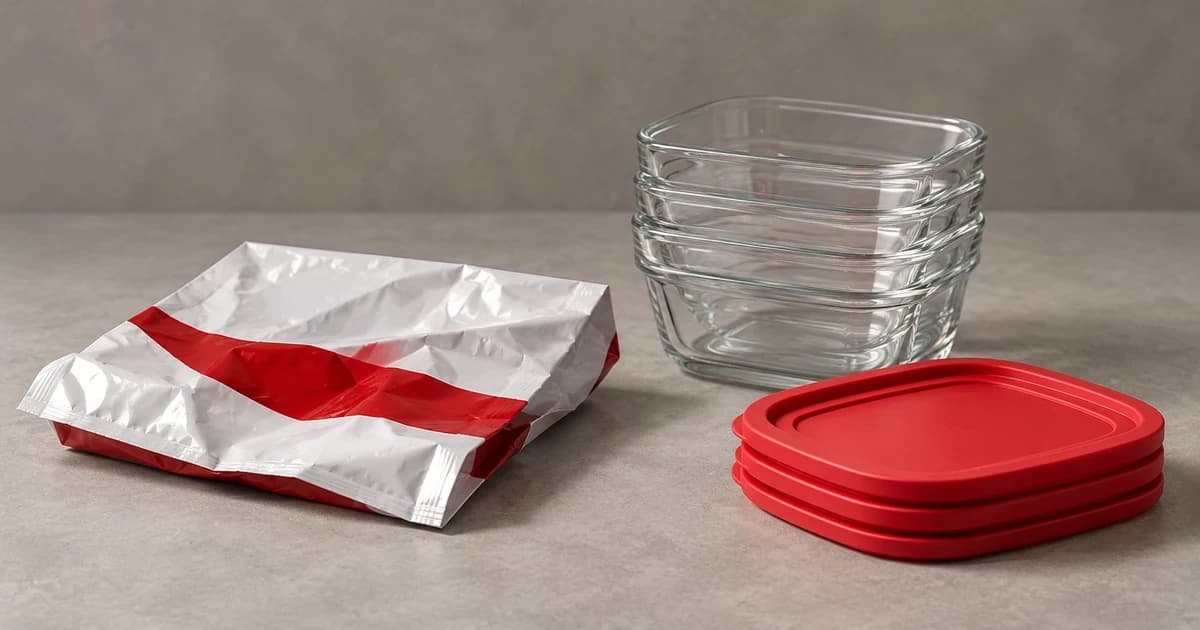
The FDA’s US storage guidance recommends keeping pet food in its original bag or container. If using a separate storage container, its preferred arrangement is the entire original bag inside. For food poured out of its package, the FDA specifies a clean, dry container with a snug-fitting lid and keeping the package information, updated when a new bag is opened.
The FDA also advises storing dry pet food in a cool, dry location below 80°F and washing and drying storage containers between finishing one bag and filling with another. Choose a secure location if your pet can get into its food.
Check the actual food label alongside that guidance. Write down where the bag will live, how you will reach its opening and where you will keep its identifying information. A location that works for a small bag may become awkward when a larger bag blocks the lid or access to the package.
Check the bag-and-container arrangement before filling
Inspect the actual container’s stated purpose and instructions. Confirm whether the bag can sit inside while its opening remains accessible and the container closes as intended. Nominal food capacity does not answer that question: the bag’s shape and the container’s opening also matter.
If the bag does not fit, consider a different container or follow the food and container makers’ instructions for decanting. Keep the original package information with the current contents. Our guide to pet food lot numbers and refill records explains that identification task in more detail.
A named dog-food example: avoid topping up old food
For readers checking how to store dry dog food, Purina’s dog-food storage article recommends keeping the original bag, squeezing out excess air and securing it with a clip. It describes placing that bag inside a metal or plastic bin. If pouring food out, it calls for a container made for appropriate food storage.
Purina advises against pouring new food over old food. Its changeover advice is to finish the previous contents and wash the container before adding a fresh supply. This is named maker guidance for dog food; check the instructions for your actual product rather than transferring every detail to another food.
Plan the changeover before opening the replacement bag. Keep the unopened replacement separate while you prepare the container.
Read care permissions at component level
The Petmate Vittles Vault Little Vittles page, for example, refers to removing its removable silicone seal, handwashing with warm soapy water, rinsing thoroughly and drying. That wording belongs to this model.
For your own container, identify the body, lid and any separate components in its instructions. Record permitted cleaning methods and any removal or reassembly directions. A removable seal on one product does not establish that another seal should be pulled out.
Complete the changeover before the next fill
- Identify the outgoing contents. Keep their package record separate from the incoming bag.
- Empty the container. Resolve remaining contents under the food maker’s guidance instead of burying them beneath a new supply.
- Follow the container’s cleaning directions. Use only the component permissions established for the actual product, including applicable rinsing instructions.
- Complete drying and permitted reassembly. Then check the container is ready for its intended storage arrangement.
- Add the new bag or permitted decanted supply. Associate the correct package information with that fill and return it to the chosen location.
Before buying from the food storage container category, compare access to the bag, usable opening, component care and the space needed during changeover. Those practical details help you choose an arrangement you can maintain between bags.