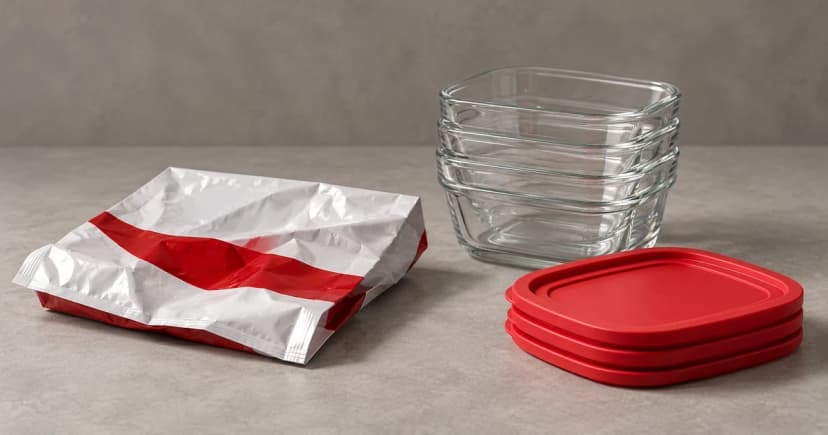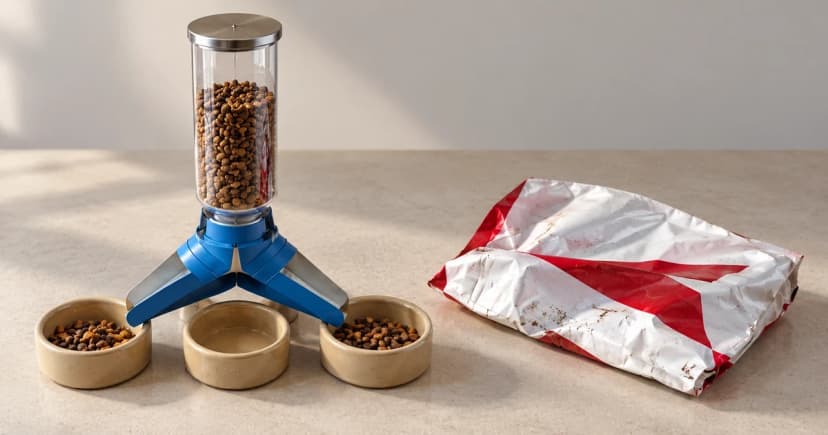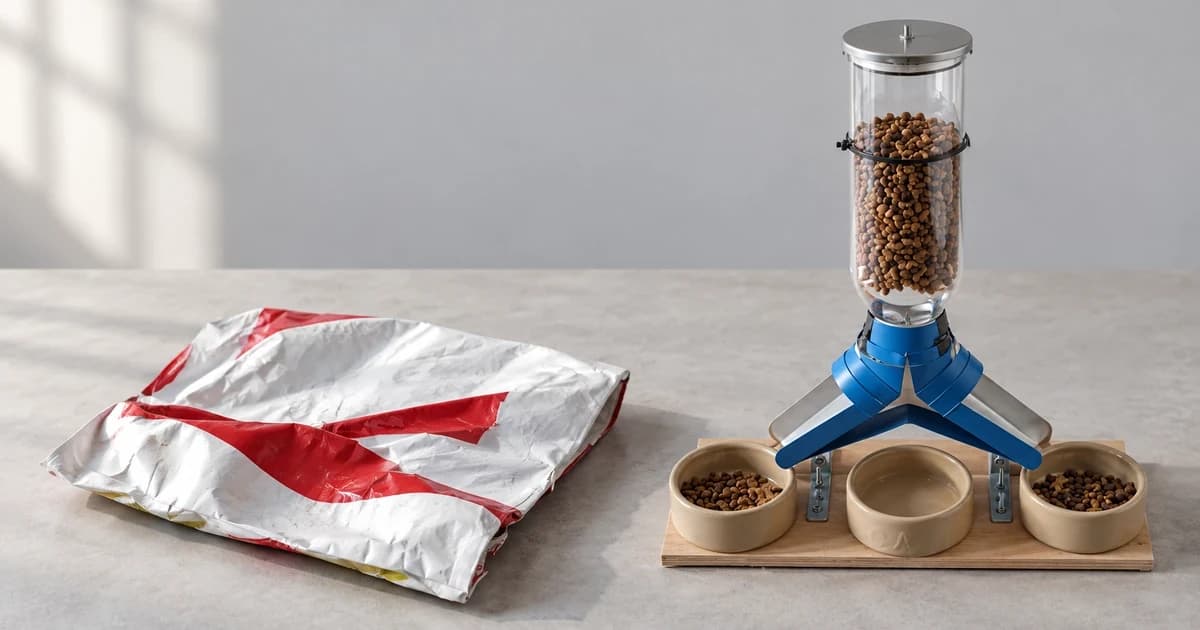
A food container or automatic feeder can outlast several bags of kibble. Its current contents are easier to identify when each refill stays connected to the package it came from. Keep the real product information, preserve unclear printing and note when the source changes. A generic container label or a familiar brand name cannot establish the batch inside.
The process below organizes packaging and refill information. It does not determine whether food is safe, set an after-opening deadline or replace the manufacturer's instructions.
Find the package codes before discarding an opening strip
The FDA's lot-number guide distinguishes several identifiers:
- Lot number: identifies a particular production batch. Its length and location vary; it may be near a date or on material removed when opening.
- UPC: identifies the company and product, rather than the production plant or a particular batch.
- Company date: terms such as best by or use before concern the manufacturer's stated quality timing; some companies also use dates to identify batches.
- Packing code: may include production timing, which is different from a best-by date.
FDA suggests saving the original package, a cutout or a dated phone photograph. If characters are unclear, retain the image rather than silently changing a possible B into 8. When unsure which code matters, provide all the codes to FDA or the company instead of inventing a decoding rule.
Keep one package record before transferring food
FDA's pet-food complaint guidance asks owners to retain original packaging, if possible, until the food has been consumed. Its requested information includes the exact labelled product and description, package type, intended storage condition, lot, date, UPC, net weight, purchase date and location, and how the food was stored or handled.
Use that list to make a retrievable package record. Keep a view of the product identity and a clear view of its printed codes together. Preserve the date wording exactly as printed. A photograph taken today is a capture date, not a replacement for the manufacturer's date. Record only observations you can support; do not fill an uncertain batch or purchase detail with a guess presented as fact.
Carry the information across a container change
The FDA's storage guidance favors keeping dry food in its original bag, including placing that whole bag inside a storage container. If food must be poured into another container, it says to preserve the product and manufacturer, UPC, lot and best-by information. It suggests attaching that information to the outside and changing it when a new bag is opened.
Keeping a label does not verify the contents' condition. This packaging step also does not give a container or feeder permission to be washed, filled or used in a particular way; follow that equipment's own instructions.
Connect each refill to the package you actually used
Give the destination a recognizable household name, such as the specific storage tub or feeder location. At each refill, connect that destination to the saved package record. The following is a practical household format, not an FDA-required form or a traceability certification.
| Record | What to enter |
|---|---|
| Refill event | The date and, if useful, time you actually added food. |
| Destination | Which container or feeder received it. |
| Source package | A link, filename or location for that bag's identity and code photographs. |
| Existing contents | What you actually know about food already present; mark uncertain information as unknown. |
| Open question |
When you start another bag, create its own package record. Reusing a familiar product name does not show that the lot is unchanged. Likewise, a new label cannot retrospectively identify leftovers whose origin was not recorded. Preserve relevant earlier records rather than making the latest package stand for every possible source. This is not a recommendation to combine foods or top up old contents.
Retrieve the original evidence when a question arises
Work backward from the destination and refill date to the actual package photographs. Keep the original image alongside any typed transcription so another person can inspect ambiguous characters. If the source remains uncertain, describe that uncertainty to the manufacturer instead of declaring a batch match from the package's appearance.
These three sources are U.S. FDA guidance, including a U.S. reporting route. A saved record is not a submitted complaint, a completed recall comparison, a laboratory result or proof that food caused a problem. Use the current manufacturer's information and the appropriate reporting route for your location.
For separate equipment tasks, see cleaning a feeder's hopper and food chute. When comparing food storage containers, consider how the actual package and its information will remain accessible alongside the container's own use and care instructions.