Learning how to use a dog long line starts with a practical plan for the walking space, the harness connection, and two-handed slack management: let out only the length you can control, gather slack as your dog moves closer, and walk up to your dog rather than reeling them back. Decide how you will begin and end the outing before adding distance.
Choose the setting
Blue Cross advises choosing quiet spaces that avoid triggers your dog finds overwhelming. A crowded park at peak hours makes long-line handling difficult, so allow time to get used to the extra webbing in a calm area first.
Check local access rules and ground obstacles beforehand. If the environment or line length feels unmanageable, switch to an easier outing rather than expecting a longer lead to solve the situation.
Prepare the line and harness connection
A fixed-length training long line works differently from a spring-loaded retractable lead. Untangle any knots and kinks before clipping on, and gather excess webbing into neat, loose loops held in your reserve hand. Follow the published documentation for your specific long line and harness when checking clips and attachment rings.
Battersea's long-line guide recommends clipping a long line to a well-fitted harness rather than a neck collar, using the back attachment ring where applicable. Verify that your dog's harness provides a secure back connection before setting out.
Printed length and webbing-material labels alone do not confirm how a specific clasp and harness combination behaves under movement.
Manage distance with two hands
Keep both hands working together on the line. The hand nearer the dog guides tension and feeds or takes in slack smoothly, while your second hand holds the remaining folded loops and the end handle, if your line has one. Release only as much length as you can keep clear of obstacles, and gather loops back into your reserve hand whenever the distance between you and your dog narrows.
| Handling element | Role during normal movement | Safety boundary |
|---|---|---|
| Lead hand (nearer the dog) | Maintains a soft, responsive contact on the active section of line, letting out manageable length or guiding slack back toward the reserve hand. | Never yank or haul on the active line to pull your dog backward. |
| Reserve hand (farther from the dog) | Holds the remaining line in loose, untwisted loops along with the wrist loop or handle, if fitted on that model. | Never wrap tight coils around fingers or wrists, and do not let loose webbing slide rapidly through bare palms. |
| Closing the distance | Take in slack between both hands as your dog approaches, or walk calmly toward your dog while gathering loops if you need to collect them. | Do not use the full length of the line by default or treat the line as a winch to reel your dog in. |
| Line around legs or obstacles | Stop walking immediately so both you and your dog are stationary before stepping clear or lifting slack free. | Do not keep walking while webbing wraps around ankles, paws, or brush; seek in-person trainer support if stopping or holding feels uncertain. |
Dogs Trust's recall guidance states never to pull the dog toward you with the line. Instead, walk calmly up to your dog and collect them when needed; a long line is a safety backup, not a way to reel a dog back.
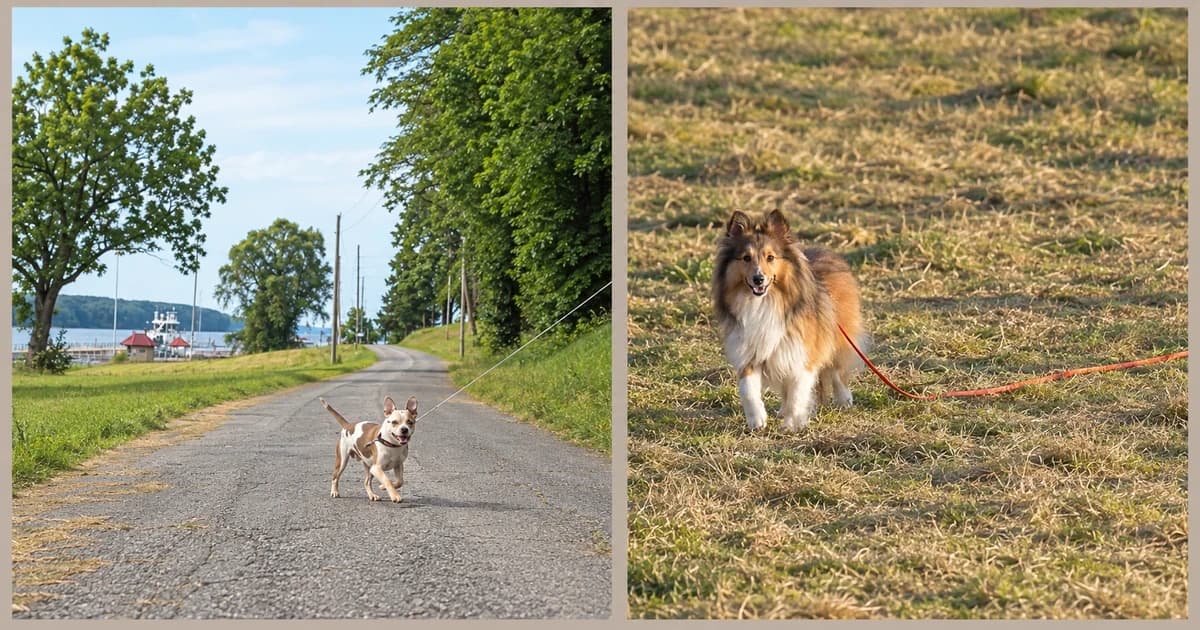
Stay alert for passers-by, posts, and slack looping near legs. You never have to let out the entire length of the line; trailing excess webbing tangles easily, and a taut line zipping through bare hands can cause friction burns.
Pause and finish
Whenever a tangle starts forming, stop moving first before freeing the line. Continuing to walk while webbing catches around your legs or your dog's limbs increases the risk of trips or rope burn.
If you feel unsure about holding, gathering, or controlling a long line in real time, arrange hands-on coaching with a qualified reward-based trainer before practising at longer distances. Ongoing recall or pulling challenges also benefit from individual professional support.
Finish the session while the setup is calm and manageable. Walk up to your dog without pulling, gather the remaining loops, and clip back onto your standard walking lead before unclipping the long line. This guide covers calm slack management and does not provide an emergency stopping maneuver.
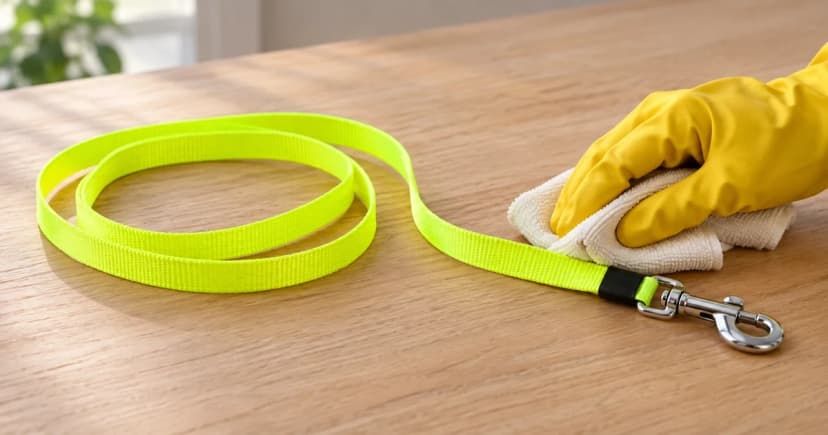
Treat our step-by-step recall lesson as a separate training task, since practising on a long line does not automatically mean a dog is ready to be unclipped. After your walk, use our long-line care guide to wash, dry, and store the webbing properly.