Successful off-leash dog training starts with practising a dependable return cue while your dog remains physically connected or inside an enclosed area. Build off leash dog training recall in a quiet, fenced setting first, then add distance and mild distractions step by step using a harness and long training line. Before unclipping in any open space, verify both the local leash rules for that exact site and how your dog actually responds there; keeping a dog leash or long line attached is always a valid, responsible choice.
Whether you search for how to off leash dog training, how to train a dog off leash, or how to train a dog off the lead, this guide separates recall practice from loose-leash heelwork, long-line slack handling, and gear washing. It does not offer a guaranteed recall percentage, a fixed day count, or a promise that every dog should walk off-leash.
Separate the three questions before practising
"Does my dog come back when called?" is only one piece of the decision. You also need to verify whether the specific location permits off-lead dogs and which equipment keeps today's practice session under control. Keep those three checks separate in your notes: a fast recall in your hallway does not change park bylaws, and buying a long line does not tell you how your dog will react when a squirrel or another dog appears.
Define the training goal clearly: turning and returning promptly on a recall cue, which is a different skill from walking politely beside you on a short lead. If you are still introducing basic collar or harness walking next to you, start with our puppy leash-training guide before working on distance recall.
Establish one return cue in an easier setting
Dogs Trust's recall guide starts by teaching the dog to look toward you when hearing their name, then pairing a single, consistent recall word or whistle cue used by everyone in the home. Early repetitions take place indoors or in a secure garden: get your dog's attention, give the recall cue, step backward encouragingly, and deliver a high-value reward the moment they reach you. As you move to larger spaces, Dogs Trust recommends attaching a long line to a back-clip harness, staying calm if a call is missed, and consulting a qualified trainer when progress stalls.
Write down the exact recall word or whistle pattern your household uses and where you practised. Log a clean, voluntary return separately from an attempt where you had to walk over and collect your dog. Writing "returned across the fenced garden while sniffing grass" is far more useful than writing "recall finished," because it preserves the real context when you plan how do you train a dog to walk off leash safely.
Change the challenge gradually
Blue Cross's dog recall training guide progresses from close, quiet indoor sessions to greater distance, mild distractions, and on-lead recall practice during everyday walks. When using a long training lead, Blue Cross specifies clipping it to a harness and practising well clear of roads. If your dog ignores the first recall cue, step back to an easier distance or quieter environment where they succeeded reliably, rather than repeating the cue over and over or scolding them when they finally arrive.
A brief session log helps you separate the variable you changed from the response you saw:
| Record | Write a specific observation |
|---|---|
| Setting | The actual room, fenced yard, or permitted on-lead park area. |
| Distance and distraction | How far away your dog was and what held their attention when you called. |
| Response | Whether your dog turned and returned on the first cue, without counting a guess as a pass. |
| Next attempt | Which single factor (distance, distraction, or reward value) you will make easier or keep steady next time. |
Keep physical line-handling mechanics separate from your recall log. The recall sources above do not teach two-handed slack management or tangle prevention, and you should never use a long line to yank or reel a dog back toward you. Before taking a long line out to practise how to train dog off leash skills at a distance, read our dedicated guide on how to use a dog long line for routine setup, two-handed slack control, and when to pause—while remembering that an article cannot replace model-specific hardware manuals or in-person coaching.
Make the location decision independently
The American Kennel Club's reliable recall guide notes that no recall is 100% guaranteed around every trigger and that many owners wisely choose to keep their dogs on a lead or long line in open spaces. It recommends fenced practice areas and long training lines when building reliability around distractions, and reminds owners that municipal and park leash laws always govern where a dog may be unclipped.
Check the local council or park authority rules and posted signs at the entrance before every walk. Record the verified rule for that location rather than assuming another loose dog means off-lead walking is permitted.
| Outing check | What it means for today's plan |
|---|---|
| Does this location allow release? | Keep your dog clipped on until you verify the posted local rules for that exact area. |
| What response have I observed here? | Base your decision on how your dog responds in this environment, not on indoor or backyard notes. |
| Am I confident about this exercise and equipment? | Stay within your practiced line-handling skills and work with a qualified trainer when unsure. |
Compare equipment without treating it as a result
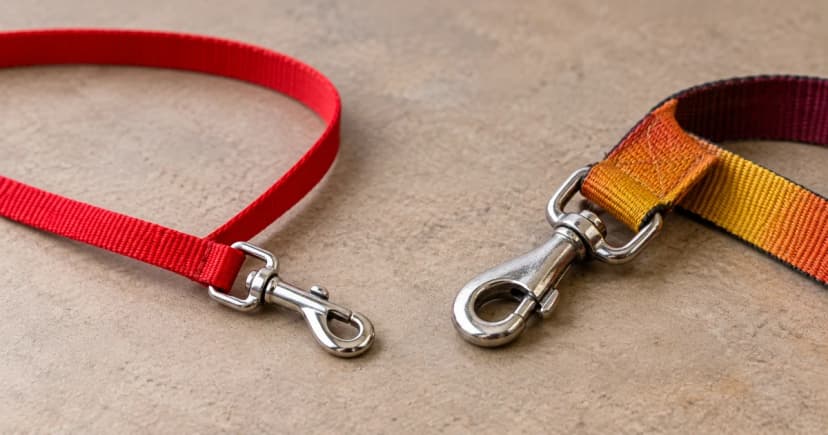
When browsing long training lines, distinguish a fixed-length webbing line from a spring-loaded retractable lead, and check each product's manual for clasp and harness instructions. Compare harnesses and ordinary leashes according to their documented walking roles.
After outdoor practice, follow our long-line care guide to wash, dry, and coil the webbing. Clean gear and reliable recall solve different problems, and neither guarantees off-leash readiness on its own.
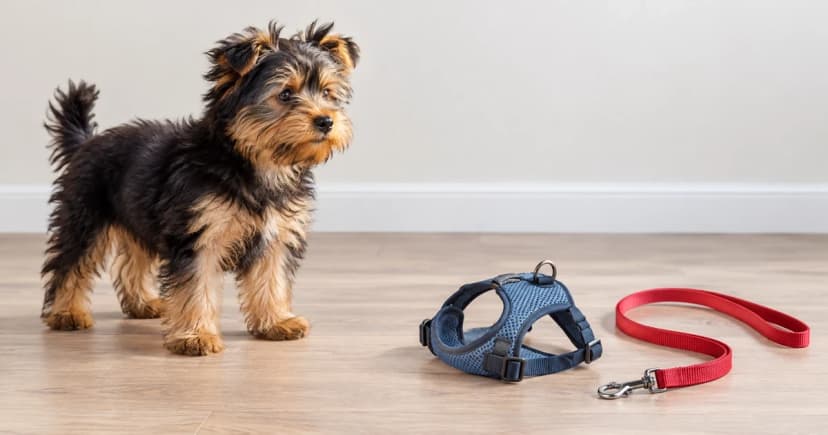
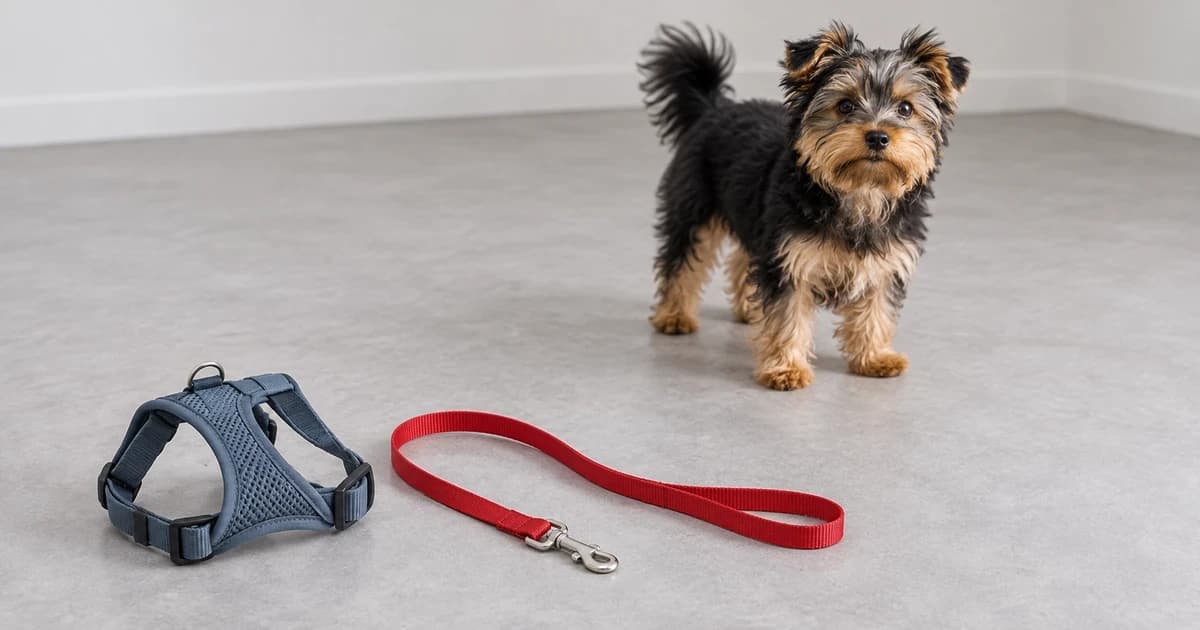
The edited header illustration combines licensed photos of a dog, an unworn harness, and an unclipped standard leash; it does not depict a long-line connection or off-leash clearance. Our editorial policy explains how we review training sources.