To understand how to use a leash coupler for two dogs, first distinguish its three connection points—the central ring or swivel where your main host leash clips, and the two separate branch ends that clip to each dog's collar or harness—then verify whether your specific model uses fixed or adjustable arms and whether one handler can safely control both dogs together.
A two-dog splitter connects equipment, but it does not automatically balance two dogs of different sizes or teach polite walking. Always verify the attachment diagram for your exact coupler and evaluate both dogs' behavior before heading onto a busy path.
Understand the General Connection Layout First
While hardware details vary by brand, a standard two-dog coupler arrangement consists of three distinct zones (always check your model's instructions rather than treating this general layout as a universal assembly diagram):
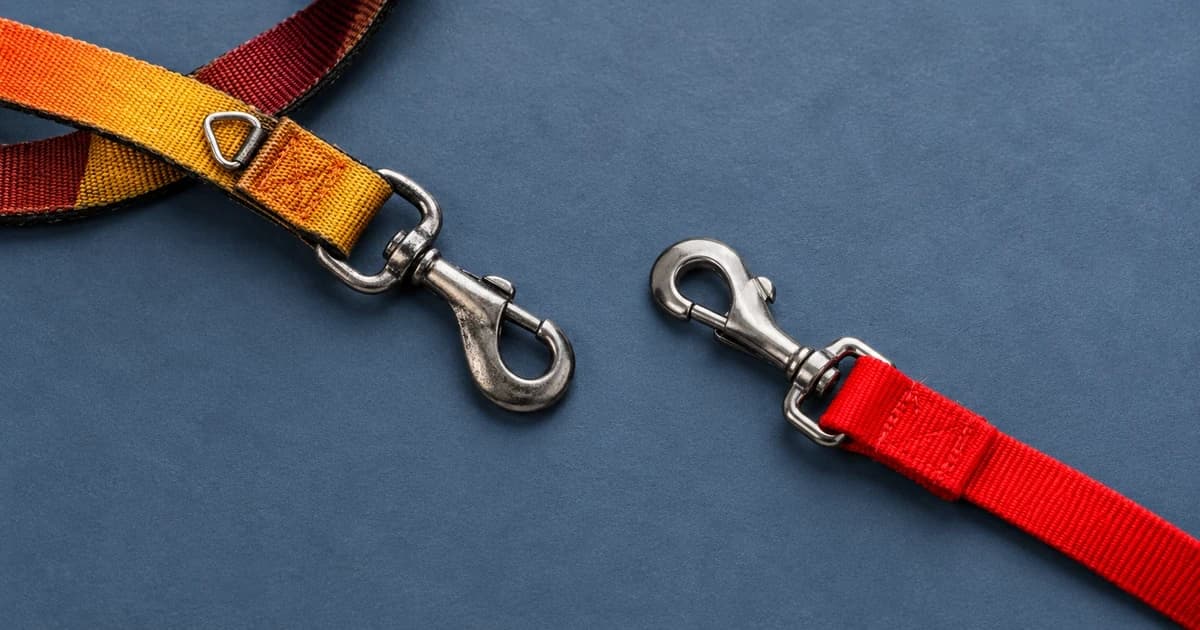
- Host-leash connection point (top/center): The central ring or swivel where your primary walking leash clips. In EzyDog's Double Dog Leads FAQ, one answer describes clipping the main leash to the splitter attachment and the two ends to each dog's collar or harness, while another answer mentions the wording "primary leash handle"—always check your exact product diagram so you clip to the designated splitter hardware rather than an unapproved handle loop. Never pair a coupler with a retractable leash.
- Two coupler arms (left and right branches): The two strap segments extending from the center join. Depending on the model, both arms may adjust via tri-glide sliders, one arm may adjust while the other stays fixed, or both arms may have fixed lengths.
- Dog-end clips (bottom ends): The two snaps that attach to Dog A's and Dog B's individual collars or harnesses. Keep a two-dog splitter distinct from a double-ended training leash designed to clip to two points on a single dog's harness.
Compare Fixed Arms, Adjustable Arms, and Two-Dog Pairing Factors
Beginners often assume both sides of every coupler slide to any length. Published manufacturer specifications show why you must check each branch separately and match it to your dogs' heights and strides:
| Coupler Design / Pairing Dimension | How the Branches Work (Named Examples) | What to Check for Two Dogs |
|---|---|---|
| Dual-adjustable arms (RC Pets Primary Adjustable Coupler) | Both branches use adjustable slides; Small adjusts across 10.2–15.5 in (3/4-in width) and Large adjusts across 14.5–22.5 in (1-in width) | Match the coupler size to your dogs' hardware scale and set each slide separately to account for shoulder-height differences |
| One adjustable arm + one fixed arm (EzyDog Soft Touch Couplers) | Lists one adjustable branch (14–24 in) paired with one fixed branch (24 in) | Identify which side carries the slider before clipping on; never tie knots in the fixed arm to force a shorter length |
| Body size & stride difference | Arm length settings affect how closely the two dogs walk side by side and whether a taller dog pulls up on a smaller dog's neck or harness | Check that neither dog is pulled sideways at a standing pause or normal walk; if their heights or paces clash beyond the coupler's adjustment range, walk them on separate leads |
Check Dog Compatibility and Handler Control Before Stepping Out
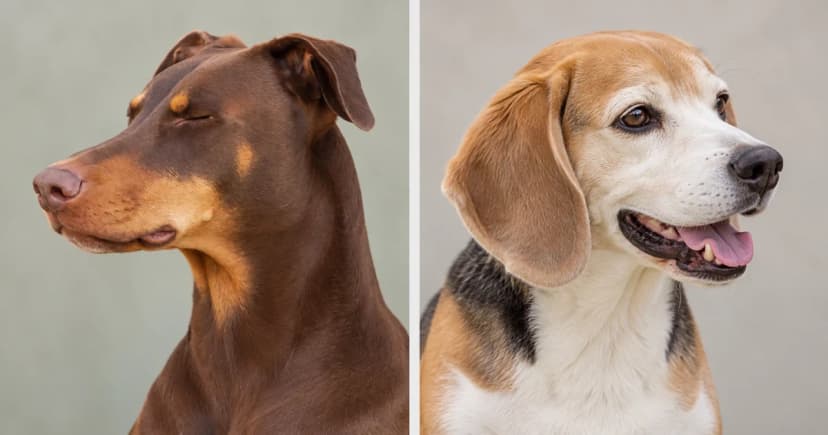
Dogs Trust's professional dog-walker guidance emphasizes that dogs walked together should have met beforehand, that individual needs and owner-approved equipment come first, and that a handler should never walk more dogs than they can safely control. Even within the same household, a coupler binds two dogs into close proximity where one dog's sudden lunge transmits force directly to the other dog and to your hand.
Ask two practical questions before clipping two dogs onto one splitter:
- Can each dog walk calmly on a single lead? A coupler does not fix leash pulling or reactivity. If either dog lunges or pulls hard, work through our loose-leash walking guide on individual leashes first.
- Can one person manage the combined pull and crossing paths? Test the setup in a quiet, enclosed yard or familiar low-distraction area first. Watch whether one dog repeatedly crosses in front of the other, whether the central swivel clears tangles, and whether you can stop both dogs comfortably.
Pre-Walk Checklist and Equipment Care Record
Pause immediately and switch back to separate leashes if a clip binds, one dog pulls the other off balance, or handling feels strained. Keep a brief four-item check for your two-dog walking setup:
- Equipment match: Coupler model and size, non-retractable host leash, and each dog's collar or harness attachment point.
- Branch settings: Which arm is adjustable versus fixed, and the exact slider setting used for each dog.
- Observed gait & space: Whether both dogs can stand, sniff, and walk without pulling each other sideways or tangling.
- Handler decision: Continue in low-traffic areas, adjust arm lengths within permitted limits, or revert to two separate leashes.
Store your coupler's care notes alongside your other walking gear; our long-line care guide explains why webbing and metal clips need separate inspection after wet walks. When comparing options in our leash couplers category, check each product's arm adjustment range and hardware details before pairing two dogs.