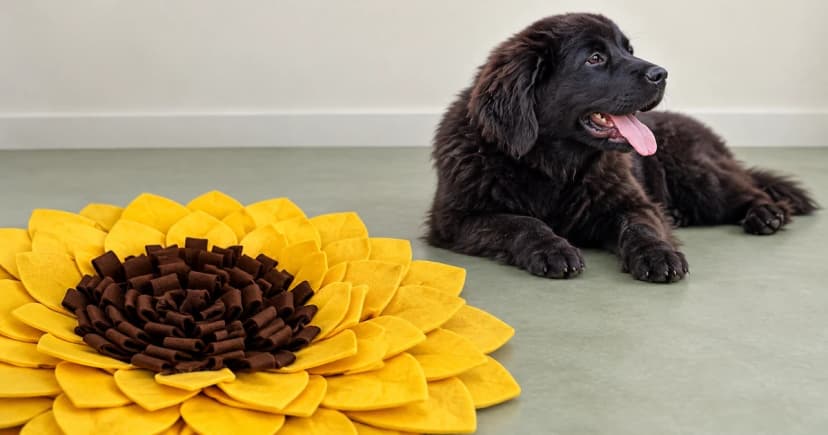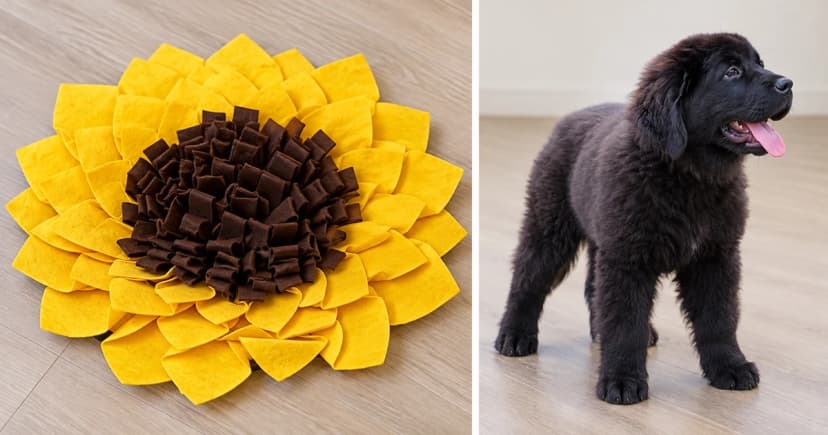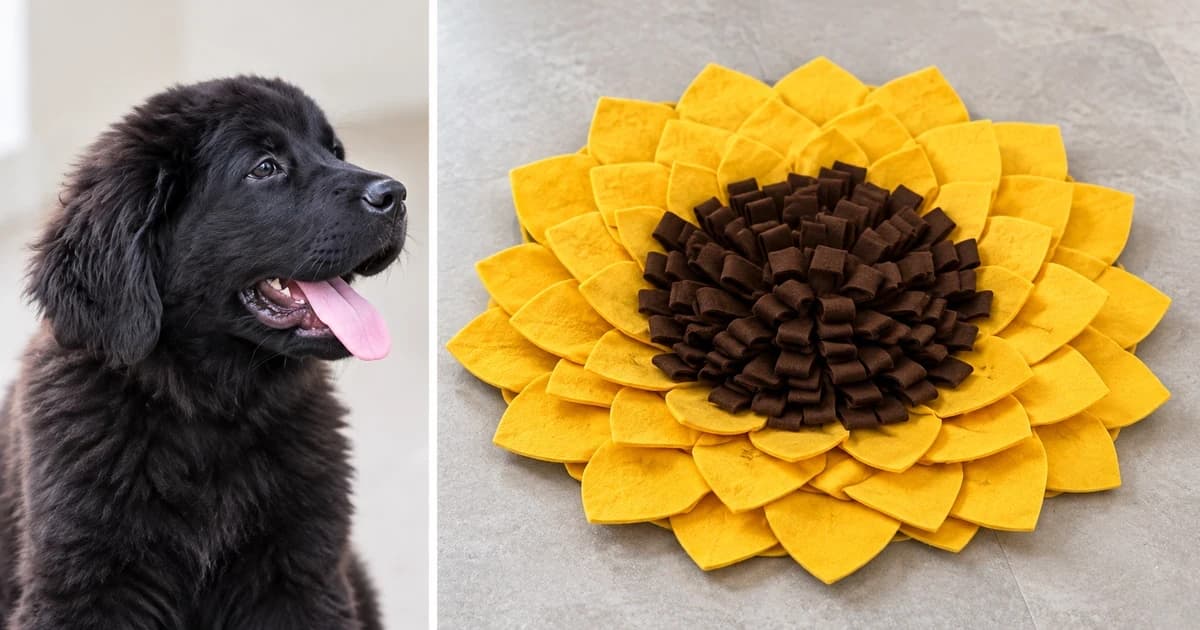
Learning how to use a snuffle mat starts with following your specific mat's directions for placing dry food or treats, then supervising closely to see how your dog interacts with its fabric layers. Food poured on top and food tucked among fabric strands offer different types of access tailored to different mat designs—they are not mandatory difficulty levels or a reason to bury food deeper right away.
Keep the first session simple enough to record clearly: which mat you offered, where its permitted treats were placed, and whether your dog approached, sniffed, and retrieved them calmly. This guide focuses on supervised use of a finished snuffle mat rather than DIY crafting, meal-ration calculation, or guaranteed behavioral outcomes.
Identify the mat before loading its layers
Review the published product manual while the mat is out of your dog's reach, checking the permitted food types and setup steps. A photo of a similar fleece mat does not confirm that two products share the same placement or care permissions.
Inspect how the fabric strips or folds are secured to the base. Any loose strand, torn seam, or detached piece calls for setting the mat aside before use. Never cut slits, untie knots, or pry open stitched sections to copy another mat's layout.
Count any treats or kibble used inside your dog's normal daily feeding plan. The product examples below do not add extra daily calories or require withholding a regular meal.
Distinguish food on top from food among the strands
Published guidance across commercial and charity sources describes different food placements depending on the exact mat context. Compare the named examples below rather than blending them into a single universal rule:
| Named product or context & source | Placement described by the source | What not to infer |
|---|---|---|
| PAW5 Wooly Snuffle Mat (PAW5 product page) | Pouring dry food on top of the named PAW5 Wooly mat surface. | Does not establish a timed difficulty progression or a rule for every commercial mat with a shaggy surface. |
| Pet Parents Forager® Mat (Forager Mat product page) | Hiding food or treats within the fabric layers of the named Forager Mat for a sniff-and-search activity. | Does not prove that an unidentified mat permits the same food types, or guarantee a specific calming or health outcome. |
| Completed DIY fleece mat (Dogs Trust DIY snuffle-mat guide) | After the homemade mat is finished, placing dry food among the tied fleece fronds while watching the dog search it out. | Its homemade knotting and washing notes apply to that DIY project, not to commercial stitched mats. |
PAW5's Wooly Snuffle Mat page describes pouring food on top of its named mat. Keep that placement tied to that specific product rather than assuming every mat starts on top and must progress to buried pockets.
The Pet Parents Forager® Mat page describes hiding food or treats within its fabric for sniffing and foraging. Keep that description linked to the named Forager Mat rather than treating it as universal permission for any fabric toy.
Dogs Trust's snuffle-mat guide illustrates how, once its homemade mat is completed, treats are tucked among the fronds while the owner supervises the dog searching them out. That completed-DIY context explains the sniffing task without turning DIY construction or washing notes into rules for store-bought mats.
Use these three examples to match placement to the design and published directions of your own mat, rather than forcing an artificial progression from surface food to deep hiding.
Observe an interaction without moving the dog's nose or paws
Set the prepared mat down as its manual directs in a space where you can stay present and watch the entire session. Give your dog room to approach, sniff, or walk away at will; pushing their nose into the fleece or placing a paw onto the mat only shows what your hand did, not what your dog chose to do.
Record each behavior separately: walking up to the mat, sniffing the top layer, retrieving food, or walking away are distinct observations. Looking at the mat does not mean all food was found, and walking away does not diagnose a behavioural or medical issue.
If your dog cannot reach the food easily, pick the mat up away from your dog and check whether the placement matches the product directions. Never respond to frustration by stuffing treats deeper into tight folds or altering the stitching.
If your dog starts tugging at fleece strips, ripping seams, or chewing the base, end the session calmly and inspect the mat. Chewing fabric is a cue to remove the mat and check its integrity—not a sign that your dog needs a harder puzzle.
Keep a useful note instead of an invented level score
A brief session log helps you repeat a workable setup without turning enrichment into a test:
- Item: the specific snuffle mat name and the product manual followed.
- Placement: whether permitted dry food rested on top or among the fabric strands.
- Observation: calm approach, sniffing, food retrieval, walking away, or chewing/pulling that required picking the mat up.
- Next decision: repeat the same setup, check product care guidelines, or switch to a different activity.
This note is a practical household record rather than an intelligence score, an exercise quota, or a multi-level training ladder.
Finish with the equipment accounted for
Pick up the snuffle mat as soon as the session ends, shake out any leftover crumbs, and check that all fabric strips and attachments remain intact. Our snuffle-mat cleaning guide covers the separate wash-and-dry checks; first-use placement rules do not grant machine-washing permission.
Our snuffle-mat category groups foraging mats by product type without certifying individual durability or feeding suitability. See our editorial policy for how we cite product and charity sources.