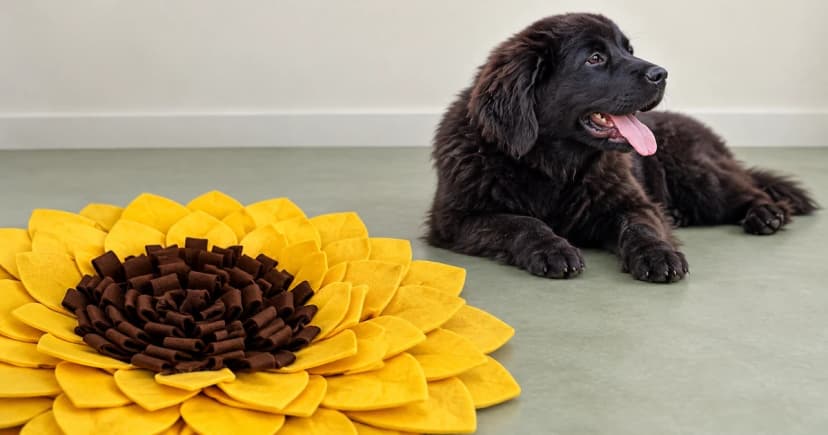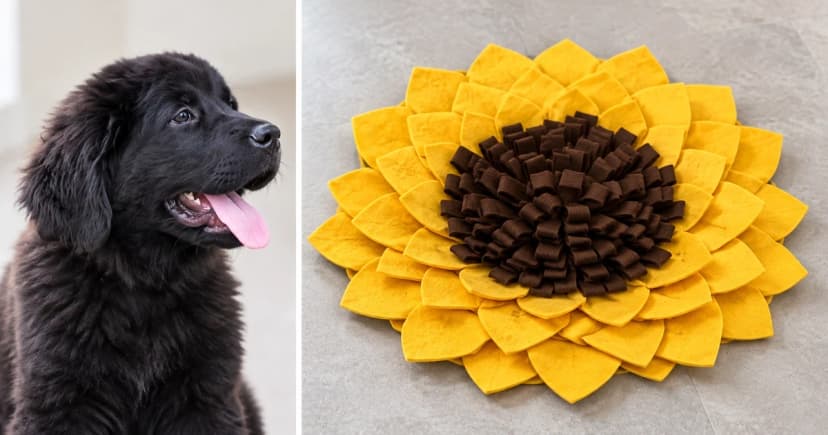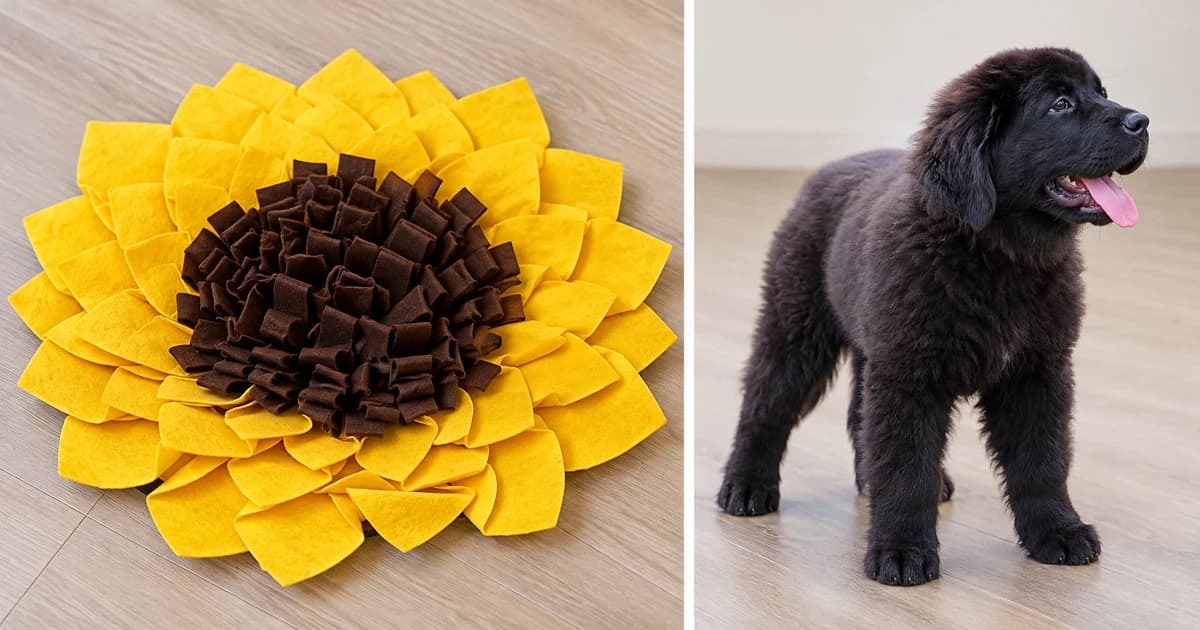
To know how to clean a snuffle mat properly, start by shaking and inspecting deep between the fabric folds to remove trapped kibble or crumbs, then wash and dry the mat using the exact care instructions for its complete assembly—fleece fringe, non-slip backing, and any attached tie straps. A soft fleece top never tells you what water temperature, spin cycle, or dryer heat the bottom backing and stitched joins can tolerate.
Work with an empty mat away from your dog and treat pre-wash crumb removal, model-specific washing permission, and deep-layer drying as three separate checks.
Step 1: Empty the Food-Holding Folds Before Adding Water
Part the fleece strips, petals, or pockets row by row so you can see right down to the base stitching rather than glancing only at the top surface. Shake out and lift accessible kibble pieces or dried treat crumbs without pulling apart knotted, stitched, or bonded fabric joints—a folded petal can hide damp crumbs that turn into soggy paste inside a washing machine.
Separate food residue from structural wear during this check. Stuck treat crumbs are a cleaning task, whereas a fleece strip tearing loose from the base grid or a peeling non-slip backing is a physical damage issue that washing will not repair.
Step 2: Match the Fringe, Backing, and Straps to One Product's Care Rules
Locate the exact brand, product name, and sewn care tag before choosing a hand wash or machine cycle. Check whether the mat has a permanently attached roll-up strap or buckle that must be secured before washing so it does not snag the fringe or drum.
Our general dog-toy washing guide covers rubber, rope, and plush toys, whereas snuffle mat care centers on dense, multi-layered food fabric attached to a structured base. When browsing the snuffle-mat category, always match care steps to the specific mat model rather than assuming all foraging mats share one wash setting.
Step 3: Keep Named Manufacturer Wash and Dry Examples Separate
Published instructions from PAW5 and Pet Parents show why washing permission, cycle settings, and drying rules must be recorded separately for each product:
PAW5 Wooly Snuffle Mat: PAW5's Snuffle Mat page states that its named mat can go in the washer and dryer, but the page does not specify a water temperature, cycle setting, detergent type, or dryer heat level. Record the appliance permission as stated while checking the physical care tag on your unit rather than inventing a warm-water or high-heat rule.
Pet Parents Forager Mat vs. Forager Bowl: The Forager Mat section of Pet Parents' washing instructions gives specific steps: secure the strap to the back, machine wash on a gentle cycle with cold water, avoid bleach and fabric softener, and use gentle machine drying (or hang/lay flat to dry for longer product life). That same care page also lists the Forager Bowl, which uses a drawstring-and-cinch pocket preparation step, as well as blankets and diapers with different settings—keep Forager Mat and Forager Bowl preparation steps strictly separate.
Forager Mat Product FAQ Note: The Forager Mat product-page FAQ gives a shorter summary to machine wash and air dry. Keep both documented drying options (air dry / dry flat for longevity vs. gentle machine dry on the care page) tied solely to the Pet Parents Forager Mat rather than transferring them to another brand's rubber-backed mat.
Step 4: Keep a Complete Five-Row Care Note for Your Mat
Because "machine washable" alone leaves out strap preparation and drying limits, use this five-row table to log the exact care rules and post-wash checks for your snuffle mat:
| Care Check Stage | Evidence and Details to Record in Your Care Note |
|---|---|
| Food-holding fabric folds | Which deep folds, petals, or pockets were inspected and cleared of dry kibble before washing, plus any loose fabric strips spotted. |
| Backing and closures | Exact brand and product name (for example, distinguishing a flat Forager Mat from a drawstring Forager Bowl) and required strap-securing steps. |
| Wash permission | Exact product version, permitted wash method (hand or machine), and stated water temperature, cycle, and detergent/softener restrictions—keeping any unstated label settings clearly flagged for verification. |
| Drying permission | Separately documented drying rule (such as air drying flat, hanging, or gentle tumble drying) and any model-specific heat restrictions. |
| After-care deep-layer check | Confirmation that sheltered base layers beneath overlapping fleece strips, stitched junctions, and the underside backing are 100% dry and intact before storage or food refills. |
Step 5: Check Beneath Overlapping Layers Before Storage or Reuse
After completing the approved wash and drying method, part the thickest center folds and press where the fleece strips meet the backing. Exposed outer fringe dries much faster than dense, overlapping base junctions, and storing a mat while its core is still damp can trap moisture and odors. Retire or repair any mat with detaching strips or crumbling backing rather than running another wash cycle. See our editorial policy for how we cite manufacturer care documentation.