Can you wash dog toys? Yes, you can wash many dog toys, but learning how to wash dog toys safely depends on the exact toy's care label and every material built into it. A top-rack dishwasher-safe rubber shell never makes an attached cotton rope, internal plastic squeaker, plush sleeve, or battery unit dishwasher safe. Always inspect the toy for chewed seams or missing chunks first, use the gentlest cleaning method the manufacturer permits, rinse thoroughly, and dry the toy inside and out before giving it back.
Choosing a pet-safe detergent for dog toys—and knowing the difference between routine washing and how to sanitize dog toys after an illness—starts with the product's own care instructions. Washing away slobber and kibble crumbs is routine cleaning, not medical disinfection; if a toy is contaminated during a contagious illness or parasite treatment, ask your veterinarian whether it requires a specific veterinary disinfectant or disposal.
Sort Your Dog Toys by Construction Before Turning On an Appliance
Check the product packaging, sewn care tag, or brand FAQ before choosing a sink soak, dishwasher rack, or washing machine cycle. Record washing permission and drying permission separately—top-rack dishwasher permission or cold washing-machine permission never automatically authorizes a heated drying cycle.
| Toy Construction | What to Check First | Cleaning & Appliance Decision |
|---|---|---|
| Single-material hollow or solid rubber chew toy | Brand dishwasher permission, internal food cavity residue, surface cracks, or chewed-off pieces | Soak in warm soapy water and scrub the cavity with a bottle brush; use the top dishwasher rack only when the exact brand/model permits (skipping heated dry). |
| Plush or fabric dog toy | Sewn care tag, seam integrity, exposed stuffing/squeaker, and whether the brand classifies it as spot-clean plush vs. machine-wash fabric | Retire torn toys with exposed stuffing; follow the model's exact spot-clean or cold gentle cycle branch and air dry completely. |
| Rope, rubber-and-rope, or mixed-material tug toy | Care rules for the complete combined assembly rather than just the rubber end | Follow the whole-toy instruction (KONG notes toys with added rope or fabric may require hand washing rather than the dishwasher). |
| Interactive puzzle toy with sliders or cups | Which cups or trays are designed to detach versus fixed sliding tracks or wood composites | Separate only removable washable parts; hand-wash or wipe bases as directed and dry all recessed tracks before refilling food. |
| Electronic or battery-powered moving toy | Whether the motor module removes from a washable outer cover | Keep battery boxes, wires, and motors completely out of sinks and washing machines. |
Can Dog Toys Go in the Dishwasher? Start With the Exact Rubber Toy
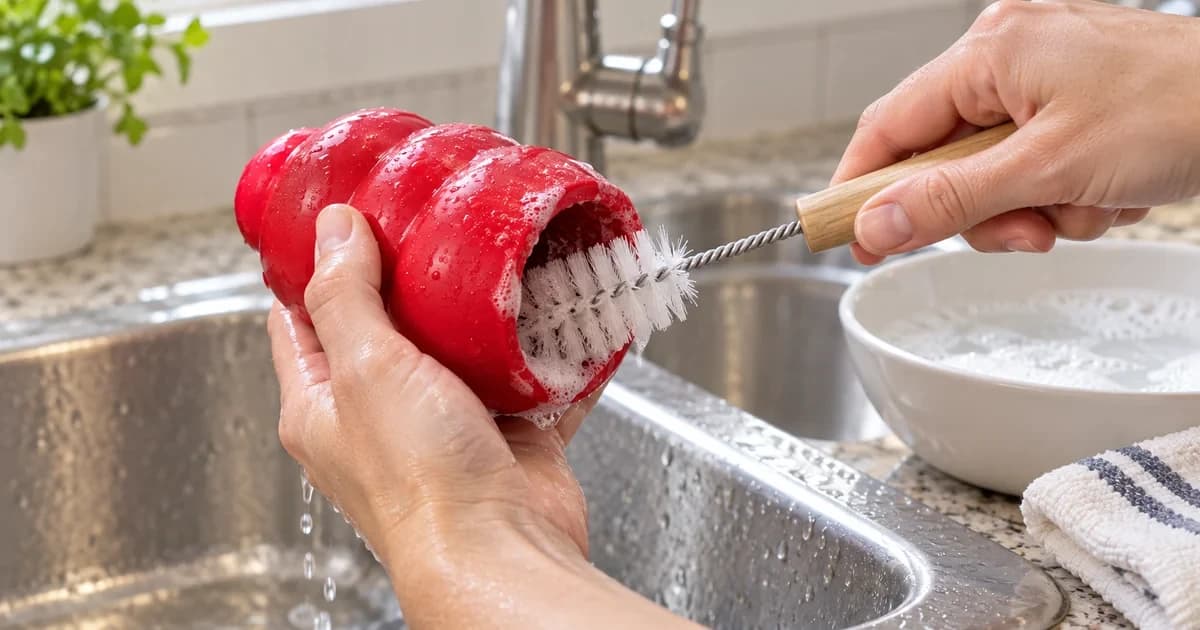
A hollow treat toy can look clean on the outside while trapping sour peanut butter or wet food inside its narrow top opening. KONG's rubber-toy cleaning guide outlines a five-step routine for its natural-rubber toys that serves as a clear benchmark before comparing other items in our dog chew-toy category:
- Inspect before soaking: Check the narrow and wide openings for cracks, tears, or missing rubber chunks, and discard damaged chew toys immediately.
- Clear loose food from the cavity: Knock or scoop out loose kibble before wetting the toy.
- Soak and brush the interior: Soak stubborn dried food in warm water with dish soap, then scrub inside the hollow cavity using a bottle brush or clean toothbrush.
- Rinse openings and interior walls: Rinse under running water and check under bright light that no soap or food film remains inside.
- Air dry with openings unobstructed: Stand or rack the hollow toy so air circulates through both holes until the inside walls are completely dry.
When checking whether rubber dog toys can go in the dishwasher, compare how two major brands state their rules and heat limits:
- KONG Rubber Toys (KONG Care FAQ): States that most KONG rubber toys can be cleaned on the top rack of the dishwasher, warns that heated drying cycles can degrade natural rubber, advises against bleach or harsh chemicals, and notes that KONG toys combining rubber with rope or fabric may require hand washing instead.
- West Paw Zogoflex & Seaflex Toys (West Paw Help Center): Permits top-rack dishwasher cleaning and complete drying for its Zogoflex and Seaflex lines, cautions against high heat, and explicitly notes that West Paw has not tested microwaving (never boil or microwave a rubber or plastic dog toy to sanitize it).
Can Dog Toys Go in the Washing Machine? Distinguish Plush vs. Fabric Labels
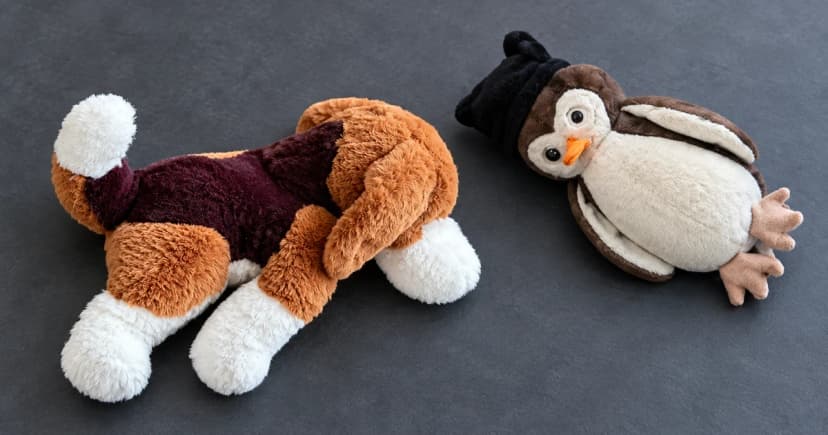
Before asking how do you clean dog toys made of soft cloth or faux fur, inspect every seam, embroidered eye, and squeaker pocket. If a seam is split or stuffing is poking out, take the toy out of play—washing will not fix a swallowing hazard.
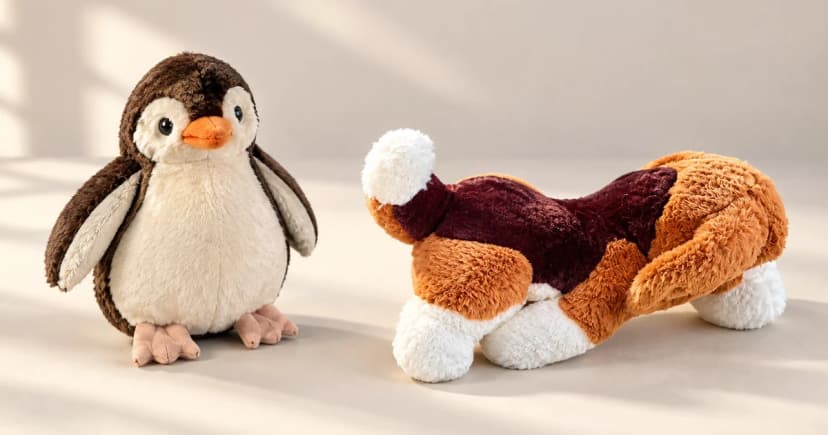
When reading manufacturer FAQs for soft toys, pay close attention to how brands name their categories. For example, KONG's official FAQ lists two separate rules side by side: it recommends surface spot cleaning for its "plush toys" and describes washing in cold water on a delicate cycle and skipping the dryer (air drying) for its "fabric toys." Because shoppers often use the words "plush" and "fabric" interchangeably—and the general FAQ page does not provide a visual checklist to separate every plush line from every fabric line—use this three-field check on your specific soft toy rather than generalizing either rule to all plush dog toys:
| Brand & Documented Category Wording | Published Wash Permission | Drying Rule & How to Resolve Category Overlap |
|---|---|---|
| KONG FAQ — "Plush toys" branch | Surface spot cleaning only | Air dry the spot-cleaned area; use this branch whenever a soft KONG toy's sewn tag specifies spot cleaning or when internal electronics/structures prohibit immersion. |
| KONG FAQ — "Fabric toys" branch | Machine wash in cold water on a delicate cycle | Skip the dryer (air dry only); apply this machine-wash branch only when your specific KONG toy tag or product page confirms machine-wash permission. |
| West Paw Guide — Intact stuffed toys (Household Cleaning Guide) | Damp-cloth wiping or washing-machine cleaning for intact stuffed toys | Cautions against heated drying when toys contain internal plastic squeakers or parts; verify that dense inner stuffing is 100% dry before play. |
Mixed Materials: Follow the Whole Product's Instructions
A rubber ring knotted onto a cotton rope or a plush character built around a crinkle film and plastic squeaker must be cleaned according to its most restrictive component. Before washing rope and tug toys or dog puzzle toys, check whether components are meant to detach and never soak fixed wood composites, glued joints, or battery compartments.
How Often Should You Wash Dog Toys? Check Condition and Cavity Residue
Rather than following a single calendar timer for every toy in the basket, match your cleaning frequency to how each toy is used:
- Hollow food-stuffed rubber toys: Wash and brush out the cavity after every wet-food, paste, or treat-stuffing session so residue cannot spoil inside.
- Outdoor fetch and tug toys: Rinse or wash according to the model's instructions whenever they pick up mud, turf grit, or standing outdoor water.
- Indoor plush and fabric toys: Spot-clean or wash per the care tag when drool-soaked or visibly soiled, keeping a dry backup toy in rotation while washed toys air dry completely through the center stuffing.
Before returning any toy to your dog, confirm four things: clean inside and out, completely dry to the core, structurally intact, and free of loose parts. As KONG's safety guidance notes, discard damaged toys promptly and contact your veterinarian immediately if you suspect your dog has swallowed a piece of a toy. See our editorial policy for how we cite manufacturer care instructions.