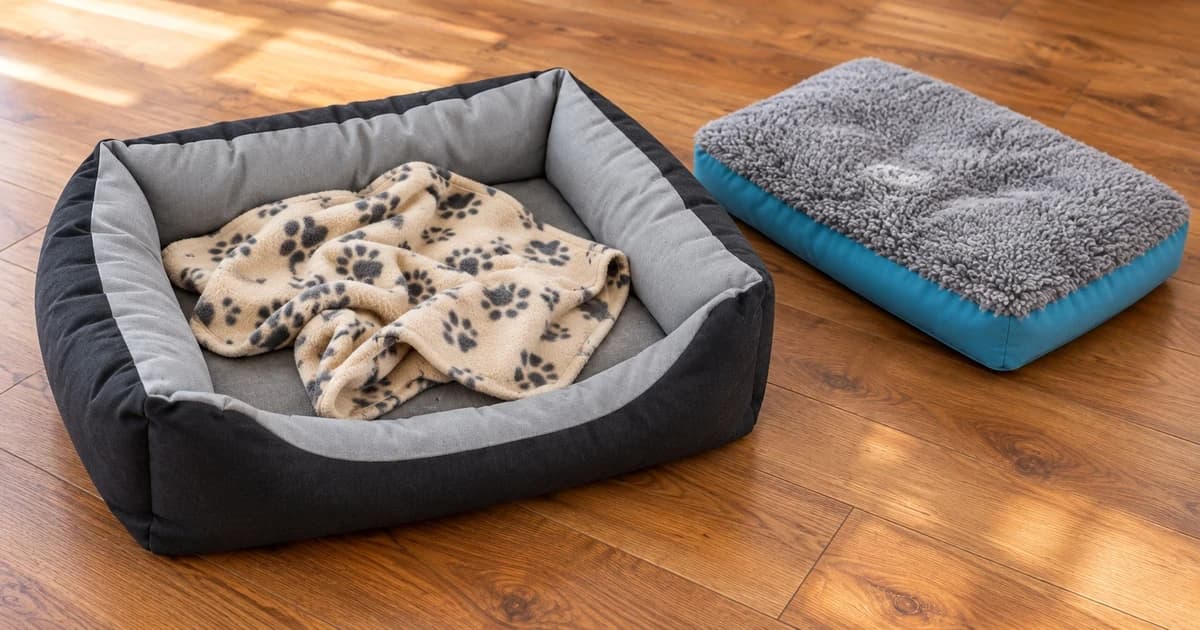
Understanding why do dogs dig in their beds requires looking at the entire resting sequence—what happens right before the pawing starts, whether the mouth is tearing fabric, and whether your dog lies down to sleep afterward. Brief scratching and circling that ends in a calm nap is commonly part of normal surface preparation, whereas repeated tearing, chewing exposed stuffing, or pacing without settling signals a pattern that needs practical management or veterinary review rather than an automatic label like "anxiety."
1. Separate ordinary nesting habits from changes that need attention
A cushioned indoor bed does not switch off instinctive bed-making movements. The American Kennel Club links bed digging to ancestral denning habits—adjusting the surface and temperature before resting—while Dogs Trust's destructive-behaviour guidance notes that dogs may also paw at bedding to arrange a comfortable spot, investigate a scent, or uncover a hidden item. Keep possible explanations separate from what you actually see on the floor:
| Routine pre-rest rearranging (Observed facts) | Changes or damage requiring action (Observed facts) |
|---|---|
| Dog paws or circles on the blanket for a short spell right before naptime or bedtime, then lies down and rests comfortably. | Dog scratches repeatedly, walks away, returns to dig again, and cannot settle into a rest. |
| Only the paws push or bunch loose fabric; teeth and jaws are not pulling at seams or zippers. | Dog grips the cover with its teeth, rips open seams, pulls out foam/stuffing, or risks swallowing fabric pieces. |
| Bedding stays intact with no exposed filling, and the habit matches your dog's long-standing bedtime routine. | The behavior appears suddenly, escalates in intensity, is hard to interrupt calmly, or occurs alongside restlessness or discomfort. |
2. Record the sequence from start to finish
Watch from a relaxed distance and log five details before changing equipment: (1) what happened just before your dog walked to the bed, (2) whether only paws or both paws and mouth were involved, (3) whether your dog settled and slept afterward, (4) whether this matches or differs from your dog's usual routine, and (5) whether any seams, zippers, or stuffing were damaged.
3. Two hypothetical examples: how observations guide your next step
To see how a sequence log turns into a practical decision, compare these two clearly labeled hypothetical scenarios (illustrative examples rather than clinical case studies):
| Hypothetical scenario | Observed sequence (Before → During → After) | Condition of the bed | Appropriate next step |
|---|---|---|---|
| Hypothetical Example A: Routine bunching before sleep | Before: Evening quiet time after a walk. During: Dog paws a loose fleece blanket into a mound for 15 seconds without using its mouth. After: Dog curls up against the bunched fold and sleeps soundly. |
Cover, seams, and blanket remain completely intact. | Keep the setup as-is: Allow the normal bedtime preparation and leave the washable throw blanket available for bunching. |
| Hypothetical Example B: Repeated tearing without settling | Before: Afternoon in the hallway after household activity shifts. During: Dog scratches a corner seam, bites and pulls at the fabric, paces away, and returns to dig again. After: Dog stays standing or pacing rather than sleeping. |
Corner seam is split open and inner polyfill is exposed. | Manage safety and seek advice: Calmly call the dog away, remove the damaged bed immediately so no filling is swallowed, contact a vet right away if any material may have been ingested, and discuss the unsettled routine with your vet. |
4. Adjust the resting setup safely and know when to seek veterinary advice
Dogs Trust stresses contacting a veterinarian immediately if you suspect your dog has swallowed any non-food fabric or stuffing. For a healthy dog that simply enjoys digging as an activity, Battersea recommends constructive outlets and enrichment outside the sleeping area so the bed itself does not become a shredding game.
When reviewing dog beds and bedding, match the surface to what your dog actually does safely: a flat or pillow-style bed offers a different surface layout from a bolstered rim, and fitted bed covers and liners help with routine maintenance when sized to the exact mattress. However, no bed shape or "tough" label makes chewing fabric safe or replaces a veterinary check. Consult your veterinarian if bed digging is newly appearing, persistent, accompanied by signs of physical discomfort when lying down, or prevents your dog from resting.