When owners ask are laser pointers bad for cats, the concern comes down to two distinct issues: a laser beam must never touch a cat's eyes, and a spot of light gives a hunting cat nothing physical to grasp at the end of the chase. Understanding why do cats like laser pointers is simple—a tiny, fast-darting dot triggers a cat's visual stalk-and-pounce reflex—but strong chase drive alone does not mean an uncatchable beam leaves your cat satisfied.
Because eye exposure, prey-sequence frustration and behavioral research answer different questions, separating agency guidance, survey correlations and our editorial recommendation makes it easier to choose a safe game.
Keep beam safety separate from play behavior
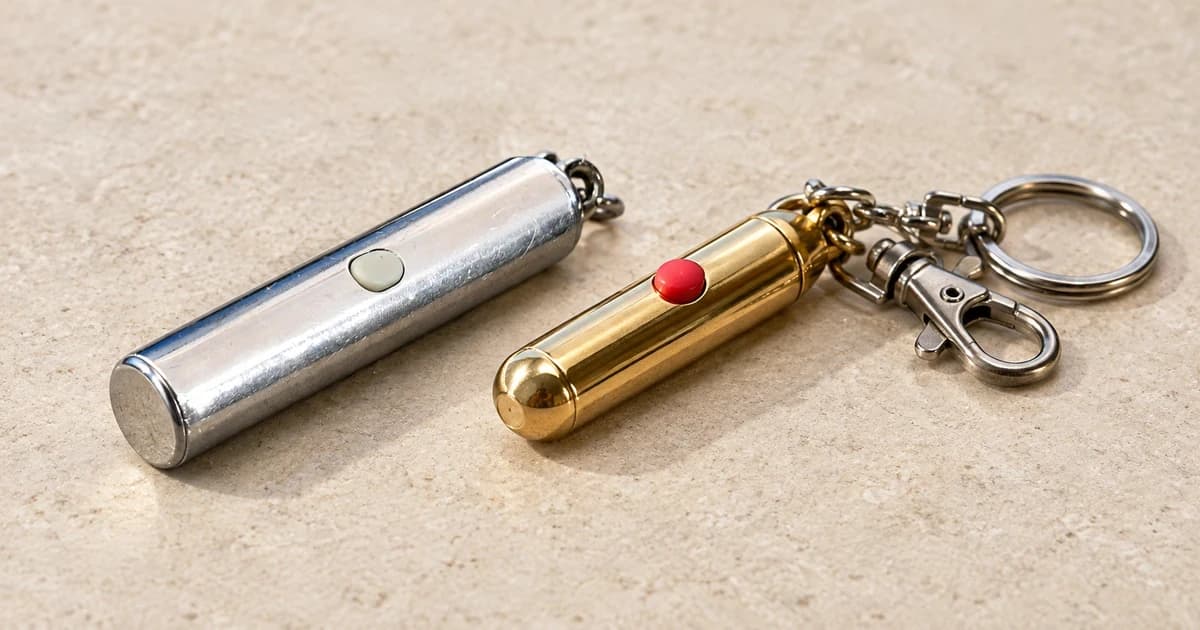
The FDA's consumer laser safety guidance states never to aim or shine a laser pointer directly at any person or animal, and warns that mirrors, glass or polished metal floors can reflect a beam into the eyes unexpectedly. Skip any pointer with missing power/class labels, and never treat a "pet toy" title on a listing as permission to shine light near your cat's face.
If a beam accidentally hits your cat's eyes—or if you notice squinting, excessive blinking, pawing at the face or vision changes—stop using the device immediately and contact your veterinarian. PDSA's feline eye guidance treats eye pain and acute changes as urgent veterinary questions.
Institutional advice, survey evidence and editorial choice at a glance
Welfare organizations, veterinary writers and academic surveys frame light-pointer play differently. The evidence card below separates what each source supports and what it cannot prove:
| Evidence layer | Source & core finding | Scope & what it cannot establish |
|---|---|---|
| Institutional welfare & veterinary guidance | Battersea does not recommend laser pointers because cats cannot catch the dot, causing frustration; PetMD allows conditional use only if beams avoid the eyes/high walls and play ends on a physical toy or treat. | Provides welfare and handling boundaries rather than a clinical trial of every individual cat's tolerance. |
| Cross-sectional survey association | Kogan & Grigg (2021) analyzed 618 cat-guardian survey responses: higher frequency of light-pointer play (including lasers, pen lights and flashlights) correlated with more reports of chasing lights/shadows and staring at reflections; overgrooming was not associated. | Cross-sectional guardian recall cannot prove causation, establish whether behavior preceded pointer use, or define a safe minute or weekly frequency threshold. |
| Pawlivy editorial choice | We recommend choosing a physical, catchable toy (such as a supervised wand lure or plush kicker) as your primary play tool. | An editorial judgment favoring a complete stalk-pounce-grasp sequence, not a claim that studies have proved every brief laser session causes harm. |
Why the uncatchable dot and the 2021 survey matter together
In a natural hunt or a game with a feather teaser, the chase ends when the cat's paws and mouth close around a physical object. With a light dot, the target vanishes or slides out from under the paws every time. While Kogan and Grigg's 2021 survey of 618 guardians cannot prove that laser play caused light-fixation behaviors, its association reinforces why paying attention to your cat's post-game settling matters.
Use a decision check before the next game
| What you notice or cannot verify | Practical next step |
|---|---|
| Unclear laser class, missing label or unverified power output | Put the pointer away and use a physical toy instead. |
| Reflective floors, mirrors or angles where the beam could reach eyes | Do not use a light pointer in that room. |
| The dot leads the cat toward high shelves, furniture edges or slick landings | Stop immediately and switch to a ground-level physical lure in a clear area. |
| Your cat keeps searching the floor or staring at shadows after the light turns off | Retire the laser permanently; offer a physical activity and consult your vet if repetitive searching disrupts daily rest. |
| Your cat loses interest or walks away mid-session | End the invitation calmly and let your cat rest. |
| Possible eye exposure or any blinking, squinting or eye redness | Stop immediately and contact your veterinarian; never shine light at the eye to check it. |
Choose an alternative with a tangible target
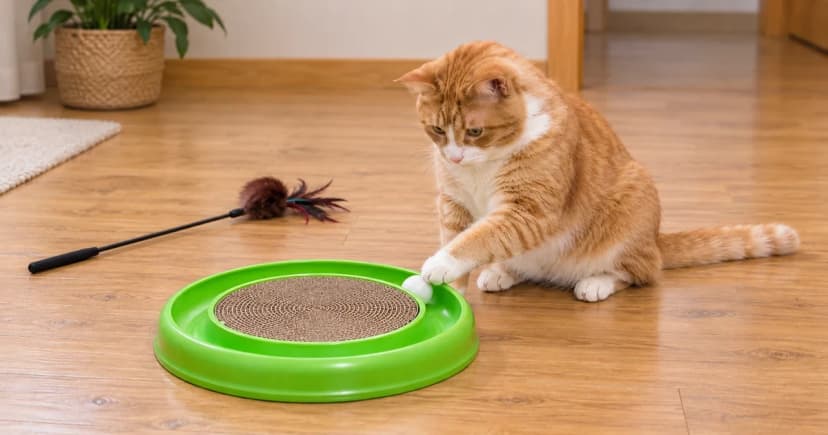
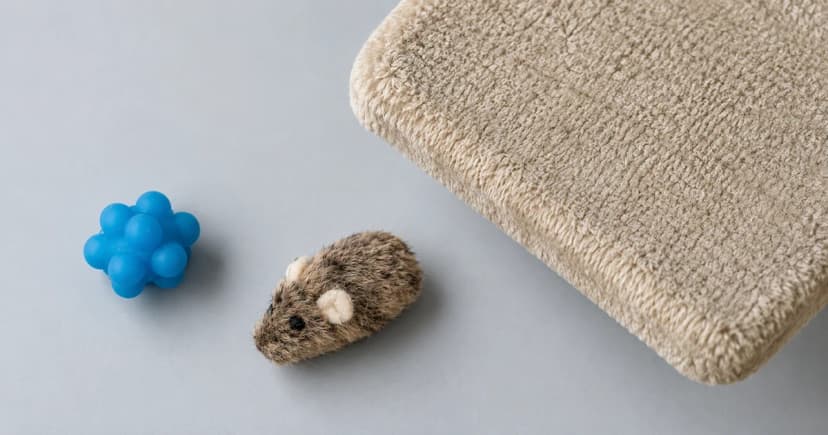
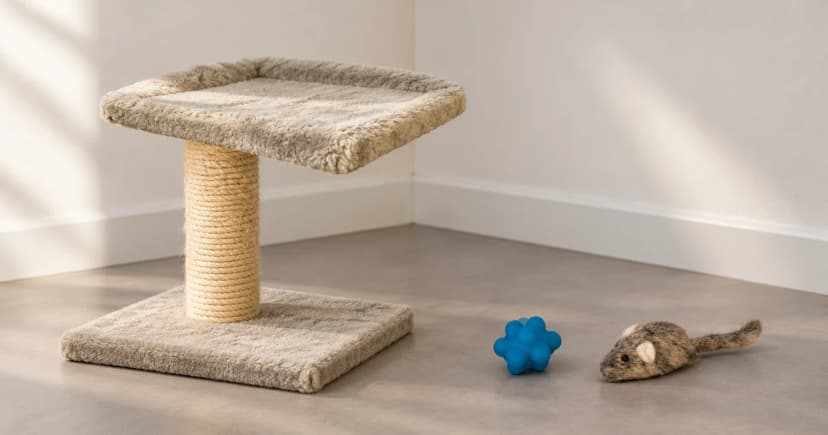
Wand and teaser toys let you guide a moving lure across the floor so your cat can stalk, pounce and physically hold the catch before you store the corded wand safely out of reach after the supervised session. For solo biting and hind-leg bunny kicks, compare plush mice and kicker toys or browse other cat toys and enrichment options. If you still use a laser occasionally, always land the final pass on a real toy or treat your cat can capture—while recognizing that a physical catch toy from the start avoids beam and frustration risks altogether.