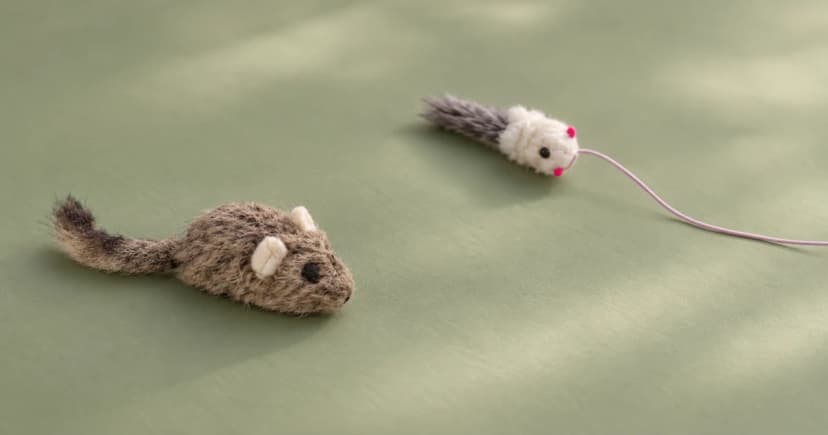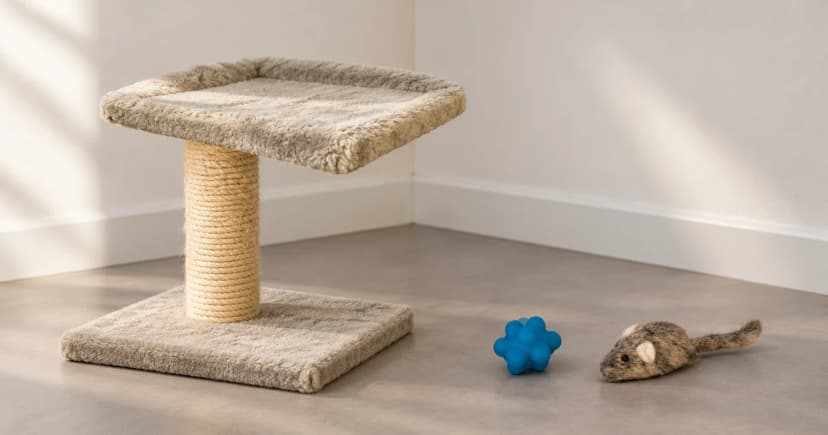
When considering how long should I play with my cat, there is no single compulsory minute quota that every cat must finish. Veterinary and animal-welfare sources describe play timing in two different ways: general session-length suggestions (such as 10–15 minutes) and observations of how long cats naturally engage in a single burst (often around 5 minutes before pausing). Offer a familiar play opportunity, watch how your cat chooses to engage, and allow breaks without forcing your cat to complete a stopwatch target.
To keep your observations clear, separate three distinct measures: how long you offered the play setup, how long your cat actively chased or batted the toy, and when your cat paused to watch or walked away.
Read what each published timing statement actually describes
AAHA's resource on how often to play with your cat offers a general guideline of two or three play sessions lasting 10–15 minutes (while explicitly noting in the same article that there is no clear-cut answer for every cat and that age, energy, and personality vary). Meanwhile, PDSA's cat-exercise guidance states that cats do not need a fixed daily exercise quota and favors short bursts throughout the day, observing that most cats play for about five minutes before taking a break.
Compare the three published references side by side so session length, frequency window, and individual caveats stay attached to their source:
| Source | Stated Session Duration | Stated Frequency & Time Window | Individual Caveat & What It Does Not Establish |
|---|---|---|---|
| AAHA (How Often Should You Play with Your Cat?) | 10–15 minutes per general session | Two or three sessions (the summary phrase states “two or three times” without locking a rigid calendar rule; AAHA pairs it with daily routine context while stressing there is no single clear-cut formula) | Explicitly states individual cats vary; does not require forcing a cat to stay in continuous motion for 15 straight minutes or multiplying into a mandatory daily minute quota. |
| PDSA (How to exercise your cat) | About 5 minutes before a break (typical bout observation) | Short bursts spread throughout the day; explicitly states cats do not need a specific set amount | Describes a common natural engagement burst—neither a minimum threshold to enforce nor a hard ceiling where you must stop a cat that still wants to play. |
| Battersea (Playing with your cat) | Short, regular bursts matched to the cat's interest | Guided by voluntary participation and natural hunting-play rhythm | Advises against forcing interaction; stalking, watching, and pausing are normal parts of cat play. |
Never average or multiply those numbers into a rigid daily requirement. If your cat has a weight, mobility, or medical condition, consult your veterinary team about what gentle activity looks like for that individual cat.
Track voluntary engagement alongside elapsed time
Holding a wand toy for 12 minutes does not mean your cat ran for 12 minutes. During a normal session, a cat may crouch and watch a toy from behind a sofa, pounce twice, pause to groom, and then walk to a perch. Watching from a distance and pausing between pounces are normal predatory play behaviors—not automatic signs that your cat failed an exercise test.
As Battersea's play guide emphasizes, always give your cat the choice to decline an invitation or end the game, and keep fresh water, food, and quiet resting spots available outside play areas.
Keep play technique and toy selection separate from timing
If you want to refine how a wand or ball moves across the floor, follow our guide to playing with a cat. For matching textures and motion styles to what your cat prefers, see our cat-toy preference guide. Changing toy motion and changing session timing one at a time makes it much easier to see what your cat responds to.
Always put wand strings, ribbons, and corded toys securely out of reach as soon as supervised play ends; leaving a toy on the carpet all afternoon is not recorded playtime.
Use a simple offer, engagement, and pause log
Use the five-line observation card below during ordinary home routines so offered window length is never confused with active chasing time:
| Observation Field | What to Note for Your Cat |
|---|---|
| 1. Play offer & setting | Toy type, room, and how the motion was offered: ____ |
| 2. Observed participation | Stalked/watched, pounced/chased, batted in place, or declined: ____ |
| 3. Pause & ending choice | How many short pauses occurred and whether the cat walked away to rest or eat: ____ |
| 4. Separate time notes | Total window offered: ____ | Approximate active bouts (e.g., ~5-minute bursts): ____ |
| 5. Adjustment for next time | Try a different time of day, shorter burst, or quieter room: ____ |
Connect single sessions to the rest of your cat's day
Interactive play is only one part of an indoor environment; see our indoor-cat opportunity plan for vertical perches, foraging, and window views, and browse our cat toys category when comparing play equipment. If your cat shows a sudden drop in energy or appetite, describe that change to your veterinarian rather than extending playtime—and read our guide to interpreting possible boredom signs and our editorial policy on how we cite veterinary and welfare sources.