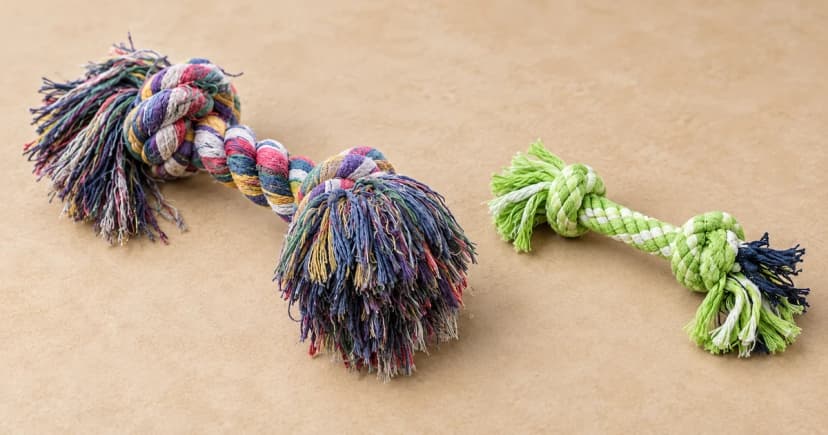
Answering “are rope toys safe for dogs” depends on how your individual dog interacts with the rope and whether you supervise and inspect the toy at every session. A braided rope used for a brief, supervised game of tug is very different from a rope left on the floor for a dog to chew apart and swallow. Any toy that is unravelling, shedding loose fibers or missing chunks must be removed from play immediately.
If you suspect your dog has swallowed rope strands or any piece of a toy, contact your veterinarian immediately—do not wait for symptoms to appear and never try to induce vomiting at home, as emphasized in PDSA's veterinary guidance on gut blockages in dogs.
Five-step routine for safer rope-toy sessions
- Match the toy to the dog and game: Check the size and intended-use label before offering any item from rope and tug toys.
- Inspect the entire rope before play: Check the central braid, knots, tassel ends and any rubber or plastic attachments in good light.
- Supervise active play directly: Watch what happens in your dog's mouth; interrupt immediately if tug turns into stationary gnawing or strand pulling.
- Re-inspect and store out of reach after play: Compare the post-play condition against pre-play condition and put the rope away between sessions.
- Call your vet promptly if material is missing: Treat any unaccounted-for knots or swallowed fibers as an immediate veterinary call.
Look at the dog, the toy and the intended game
Watch the very first minute of interaction rather than assuming enthusiasm equals safe play. Does your dog grip the center for shared tugging, or lie down to scissor through a knot with the back molars? Blue Cross's chewing guidance distinguishes interactive play toys from items meant for sustained chewing and notes that fabric and rope toys can be torn apart quickly by determined chewers.
Check the rope before and after play: visual inspection guide
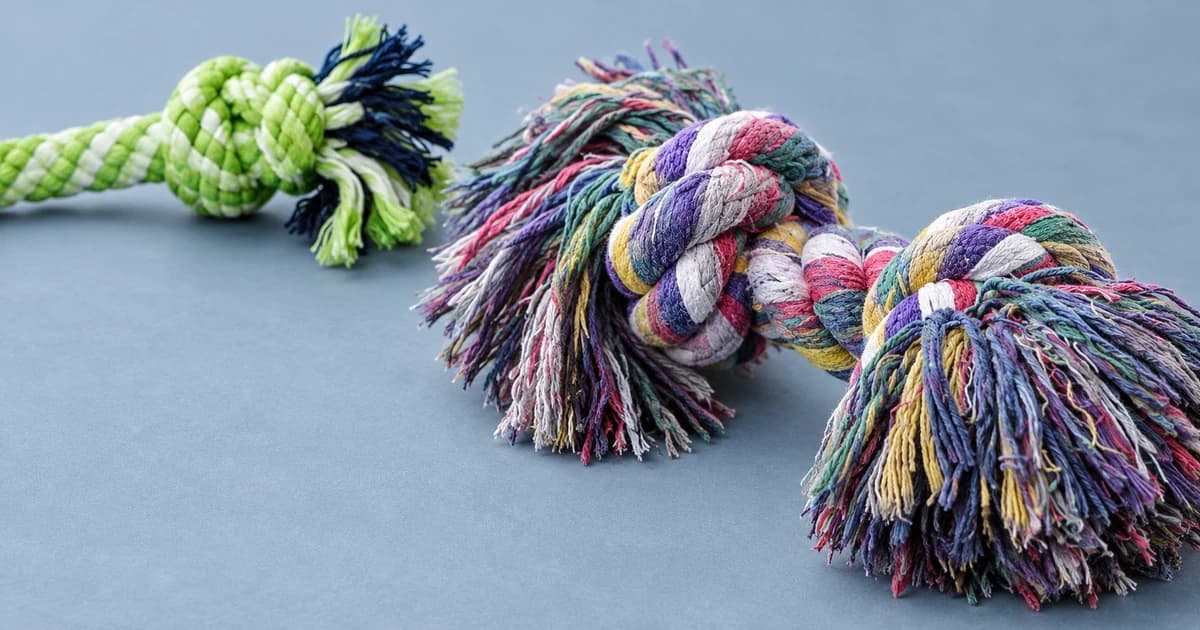
Because many rope dog toys are manufactured with fringed tassel ends, owners sometimes confuse original end fringe with structural damage—or check only one knot while missing an unravelling center braid. Use the annotated diagram and before/after table below to inspect the entire object:
| Inspection zone | Before-play check | Post-play stop trigger |
|---|---|---|
| 1. Tassel ends | Note original fringe length and ensure no loose clumps pull free in your fingers. | Dog actively plucking or swallowing fringe threads, or clumps detaching. |
| 2. Braided shaft & knots | Twists sit tight and uniform along the full length. | Braid unravelling, core exposed, or a knot chewed partway through. |
| 3 & 4. Shedding fibers or missing sections | Whole length accounted for with no lint piles on the floor. | Pulled-out strands on the floor or any missing piece (call your vet if ingestion is possible). |
| 5. Attached rings or rubber parts | Attachment sits flush with no cracks or gaps. | Cracked rubber, widened gap or sliding component. |
Set up play so you can pause it
Blue Cross's play guidance recommends choosing appropriately sized toys, checking for chewable parts, and supervising whenever ingestion is a risk. Store the rope out of reach as soon as tug play ends.
If material is missing or may have been swallowed
Take the remaining toy away and call your veterinarian right away with a description of the missing section and when play occurred. According to PDSA's gut-blockage guidance, linear fibers and toy pieces can cause serious intestinal obstructions; signs such as vomiting, appetite loss, lethargy, abdominal pain or straining require urgent veterinary care, and you should never wait for those signs to appear before calling about suspected ingestion.