When pet owners ask is tug of war bad for dogs, the answer is that tug-of-war is not inherently bad when played on condition of a suitable long toy, low and gentle resistance with your dog's feet on the ground, and built-in pauses—provided you never use tug to test strength, force participation, or play through pain. Learning how to play tug of war with a dog safely means putting voluntary engagement and calm releases ahead of winning.
Make it a shared game
Blue Cross's play guidance addresses the concern that tug encourages controlling or aggressive behavior. It describes tug as a rewarding outlet for many dogs, while emphasizing appropriate toys and enjoyable play. This does not mean every dog wants this game or that tug treats a behavior problem.
Let your dog choose to engage. Offer the toy rather than pushing it into their mouth or repeatedly pursuing them with it. If they are uninterested, try a different activity. A dog's decision to walk away is useful information, not a challenge to overcome.
Choose and inspect the toy
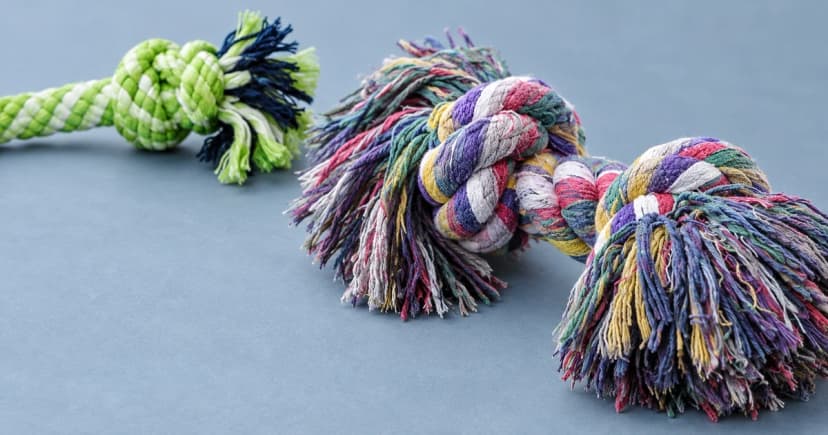
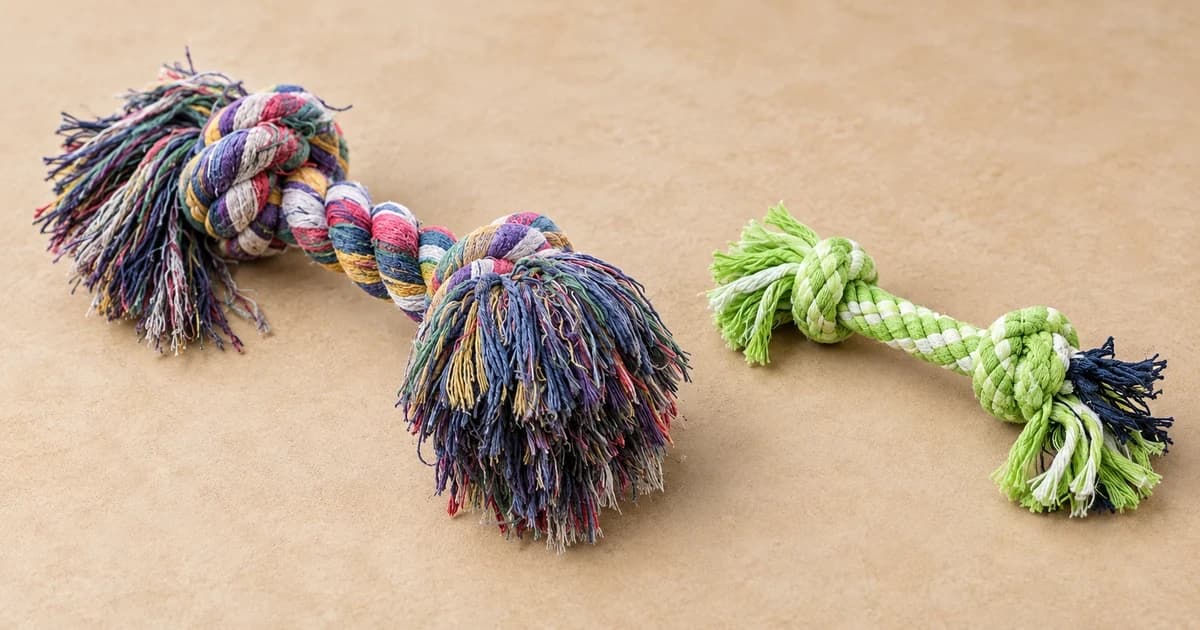
The American Kennel Club's tug guidance recommends a toy with enough length to separate your hand from a dog that changes its grip. It also highlights material appropriate for teeth and gums. A category label does not tell you whether a particular toy suits your dog's mouth or play style.
Check the manufacturer's intended use and size guidance, then inspect the toy before each game. Blue Cross advises checking for small parts that could be chewed off and swallowed. Stop using a damaged toy rather than continuing because the dog still wants it.
Pawlivy's rope and tug toy category groups options for this type of play. A photographed rope is an illustration, not proof of a product's material, condition or suitability for your dog.
Keep the movement low and gentle
Battersea recommends keeping tug toys low and moving them back and forth or from side to side. Avoid sharp upward jolts that encourage jumping and can hurt the neck. Let your dog's feet stay on the ground instead of lifting them by the toy.
Start with light resistance, without twisting your dog's head or repeatedly yanking. The AKC's cited canine fitness expert stresses adjusting pressure to the individual and keeping the spine in a neutral position. If you cannot judge a comfortable position or your dog has an existing injury, ask your veterinarian before trying the game.
A dog holding on firmly does not invite you to add force. Watch the animal rather than trying to win the toy.
Practice a pause and a voluntary release
- Invite the start. Show the toy and use a consistent cue when you are ready for gentle play.
- Pause before excitement becomes difficult to manage. Brief turns give you opportunities to observe and reset.
- Use a practiced release or exchange. Battersea describes asking for a drop or offering another toy. Do not pry open the mouth or wrestle the toy away.
- Restart only when both of you are ready. If your dog struggles to pause, step back to practicing the skill rather than making the game faster or stronger.
Use this quick-reference tug play card to connect the four interaction steps with the immediate stop rules during a session (a reliable drop cue is a way to reset calmly, not permission to pull harder on the next turn):
| Tug sequence stage | Handler and posture action | What to watch in your dog | When to pause or end the session immediately |
|---|---|---|---|
| 1. Invite the start | Inspect the tug toy for loose pieces, hold it low with clear hand distance, and offer a calm start cue | Dog approaches voluntarily with all four feet on the floor | Walk away or switch activities if your dog ignores the toy or turns away |
| 2. Low, gentle tugging | Move the toy smoothly side to side or back and forth at chest/shoulder height (Battersea) keeping the dog's spine neutral (AKC) | Feet remain planted on the ground; body stays loose without upward leaping or head-twisting | Stop immediately if the dog jumps at you, grabs clothing, or mouths your hands |
| 3. Pause and voluntary release / exchange | Freeze the toy quietly and cue a practiced drop or offer an exchange item—never pry the jaws open | Dog releases the toy willingly without guarding or frantic regripping | End the game if excitement stays too high to release or if the toy shows fraying or damage |
| 4. Reset or stop decision | Take a calm breather before inviting another gentle turn, or let your dog carry the toy away as a win (Blue Cross) | Dog settles quickly and chooses whether to re-engage | Stop and consult a veterinarian if your dog hesitates, yelps, or shows any sign of mouth, neck, or back discomfort |
Blue Cross also encourages letting the dog win the toy sometimes. You do not need to take every turn's prize to establish control. An occasional voluntary return to continue playing is more useful than chasing a dog that has carried the toy away.
Know when this game should stop
End the interaction if it shifts to grabbing clothes, mouthing hands or jumping at you. Battersea warns that overexciting games can encourage these behaviors. Take a calm break and work on the missing skill separately; do not continue until somebody gets hurt.
Stop if your dog appears uncomfortable or you suspect pain. The AKC recommends veterinary assessment when there are concerns, including possible neck or spine issues. Choosing another form of play is reasonable while you seek individual advice.
Use your dog's response rather than a stopwatch
A helpful tug session allows voluntary engagement, low and gentle movement, and an easy pause. It does not need a fixed number of rounds or seconds. Observe whether your dog can release, take a break and return comfortably. If those pieces are missing, simplify the interaction or choose another game instead of adding intensity.