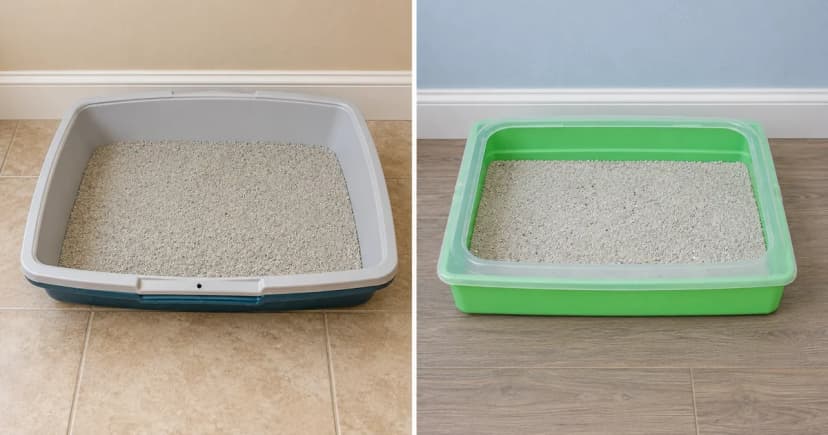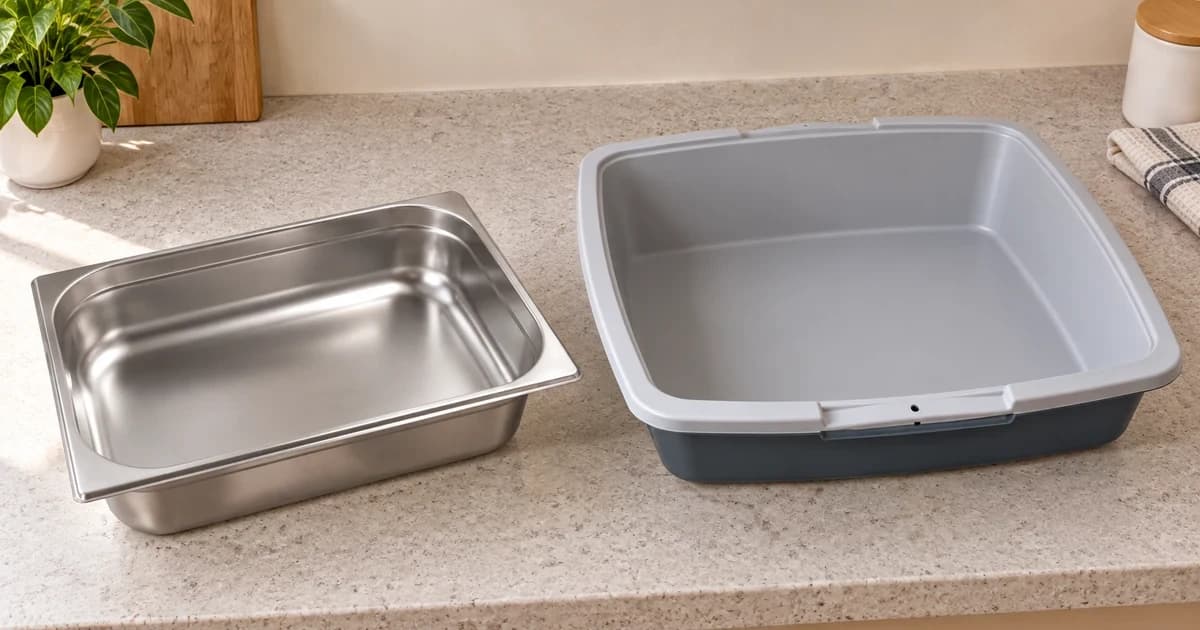
If you are asking are stainless steel litter boxes better than plastic ones, the practical answer is that the base material name alone does not make one box automatically better: you have to compare the entire assembly—the pan, any reusable liner, the hood or splash guard, the entrance height, and the permitted washing method for every part. A stainless steel litter box topped with an Oxford-fabric enclosure has very different cleaning rules from an open metal tray, just as a plastic box fitted with a locked reusable liner cleans differently from a bare plastic pan.
When weighing a stainless steel vs plastic litter box, start with the exact problem you want a replacement to solve—such as hard-to-reach corners, restricted washing methods, a worn liner, or an awkward entry height—without assuming a "stainless steel" headline guarantees zero odour, antibacterial action, or dishwasher permission.
Identify which parts the material label actually describes
Before comparing candidates in our litter-box collection, list every component in the box assembly: the bottom pan, any inner liner, the rim or splash guard, the hood, the swinging flap, the retaining clips, and any included step or mat. A headline material label like "stainless steel" or "plastic" often refers only to the bottom basin while attached canopies, poles, or liners use fabrics or polymers with separate care limits.
For example, Meowant's MW-LB05 user manual (Rev 1.0 PDF) lists three materials across one product: a stainless steel pan, an Oxford-fabric and PVC removable cover, and internal supporting poles and clips, with separate washing instructions for the metal pan and the fabric hood.
Plastic litter boxes are equally specific. Modkat's Modkat Tray materials FAQ states that its base was moulded from ABS plastic for units purchased before July 2022 and from polypropylene (PP) for units purchased after July 2022, paired with a polyethylene (PE) reusable liner and a polypropylene splash guard. Recording both the purchase period and each component's material prevents treating every version of a box as identical.
A shiny metal photo or a generic plastic label cannot verify alloy grade, resin type, or chemical resistance on its own.
Compare the surface you will actually clean and the decisions it supports
Look inside the complete assembled box: does litter rest directly against a bare metal or plastic pan, or inside a removable tarpaulin liner overlapped by a guard? On the Modkat Tray product page, the system combines a Type G reusable liner, an overlapping splash guard, and a front walk-off platform that locks the liner in place. Comparing only its outer plastic shell against an unlined steel pan would miss the actual litter-contact surface.
| Question | Information to record | Decision it supports |
|---|---|---|
| What contacts the litter? | Bare stainless steel pan, bare plastic base, or a removable reusable liner / overlapping splash guard (such as Modkat Tray's Type G PE liner and PP guard). | Identifies the exact surface that takes daily scooping wear and requires washing or periodic liner replacement. |
| What comes off? | Fabric or plastic hood, supporting poles, splash guard, clips, entry flap, and front platform. | Shows how many parts must be unclipped or disassembled to reach seams and corners on wash day. |
| What wash method is permitted? | Component-by-component washing rules and prohibited cleaners/appliances—for example, Meowant MW-LB05 prohibits putting any part in a dishwasher (pan: rinse, short water soak, non-abrasive pad; cover: remove all poles first, then hand-wash or cold gentle cycle and air dry), while Modkat specifies mild dish soap and warm water for its box and reusable liner. | Confirms whether the approved cleaning routine fits your sink, tub, and household supplies before you buy. |
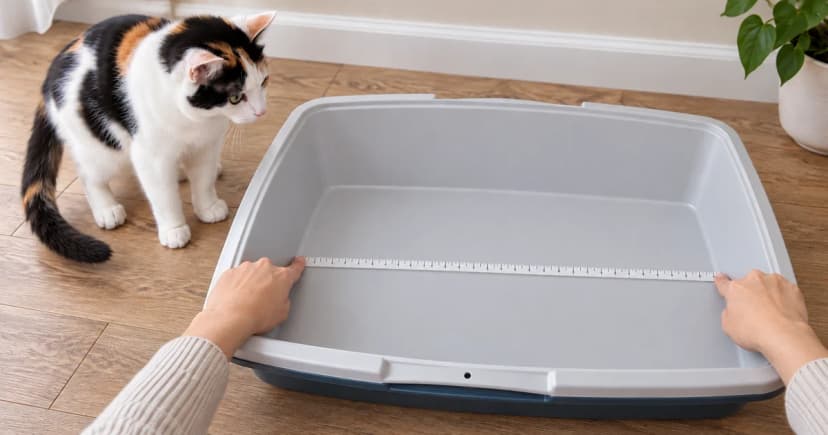
| What dimensions are described? | Usable interior floor space, entry step height, and assembled exterior footprint recorded separately. | Prevents confusing a tall exterior hood measurement with the usable floor area inside the pan. |
| What remains unknown? | Any unstated component material, replacement-liner availability, cleaner restriction, or interior dimension. | Keep the candidate on hold and verify the missing detail in the official manual before treating that feature as a reason to buy. |
Marketing phrases like "easy to clean" do not replace component-specific care instructions, and neither metal nor plastic eliminates routine scooping and washing.
Do not infer dishwasher or abrasive permission from stainless steel
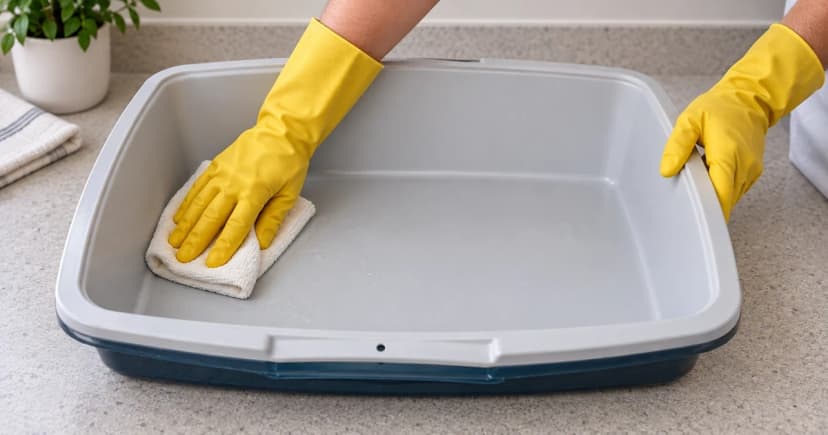
The Meowant MW-LB05 manual explicitly warns against placing any part of the product into a dishwasher, and prohibits bleach, strong detergents, strong acid or alkaline liquids, and abrasive scrubbers. Its stainless steel pan instructions call for rinsing with water and wiping dry, using a brief water soak and a non-abrasive sponge for stuck residue. A stainless steel pan label therefore never grants automatic permission to use scouring pads, harsh chemicals, or a dishwasher.
In that same MW-LB05 manual, the Oxford-fabric cover has its own rule: remove all supporting poles first, then wash with water and air dry (or use a gentle cold-water machine wash inside a laundry bag and air dry). Meanwhile, Modkat's litter box cleaning FAQ directs washing its plastic box and reusable liner with mild dish soap and warm water. Always keep each brand's care rules attached to that specific model.
Keep access and handling in the comparison
Switching materials often changes wall height, rim shape, or hood style at the same time. Compare the usable floor space and entry height directly rather than relying on an "XL" badge. When browsing open boxes, compare the low entry lip against the high side walls; when comparing covered boxes, include the hood clearance and doorway opening in your check.
Think through where you will empty, rinse, and dry each removable piece in your home—especially if a large pan must fit under a bathroom faucet or utility sink.
Choose for a documented need, not an unverified upgrade promise
For any two litter boxes on your shortlist, write down six facts side by side: (1) exact model name, (2) materials of all components (pan, liner, guard, hood), (3) usable interior floor and entry dimensions, (4) permitted washing methods and prohibited cleaners/appliances, (5) detachable and replaceable parts, and (6) any unverified specification along with the specific household problem you want the box to solve.
A stainless steel design belongs on your shortlist when its documented pan depth, cover structure, and hand-washing routine match your cat and sink setup; a plastic or lined design stays in contention on the exact same basis. See our editorial policy for how we compare product manuals and illustrations.