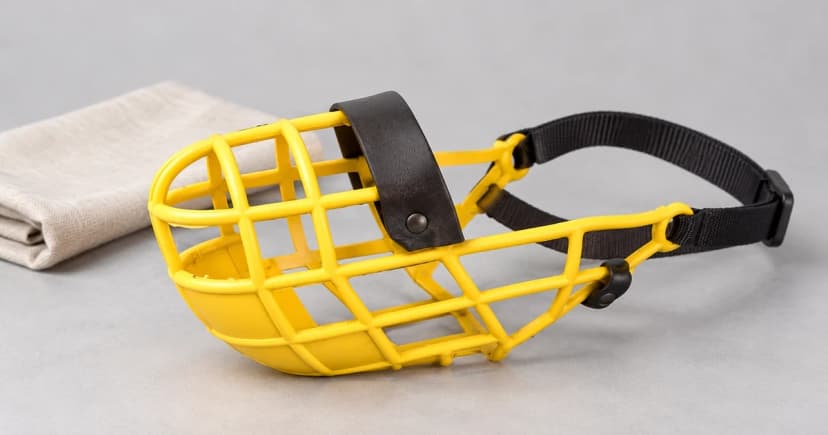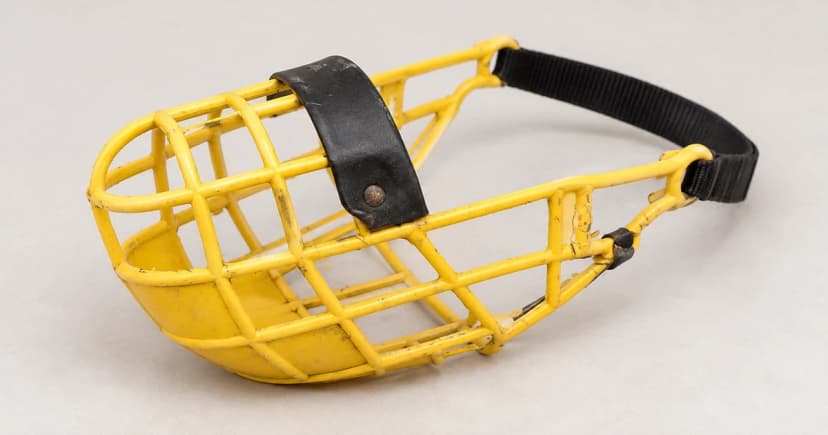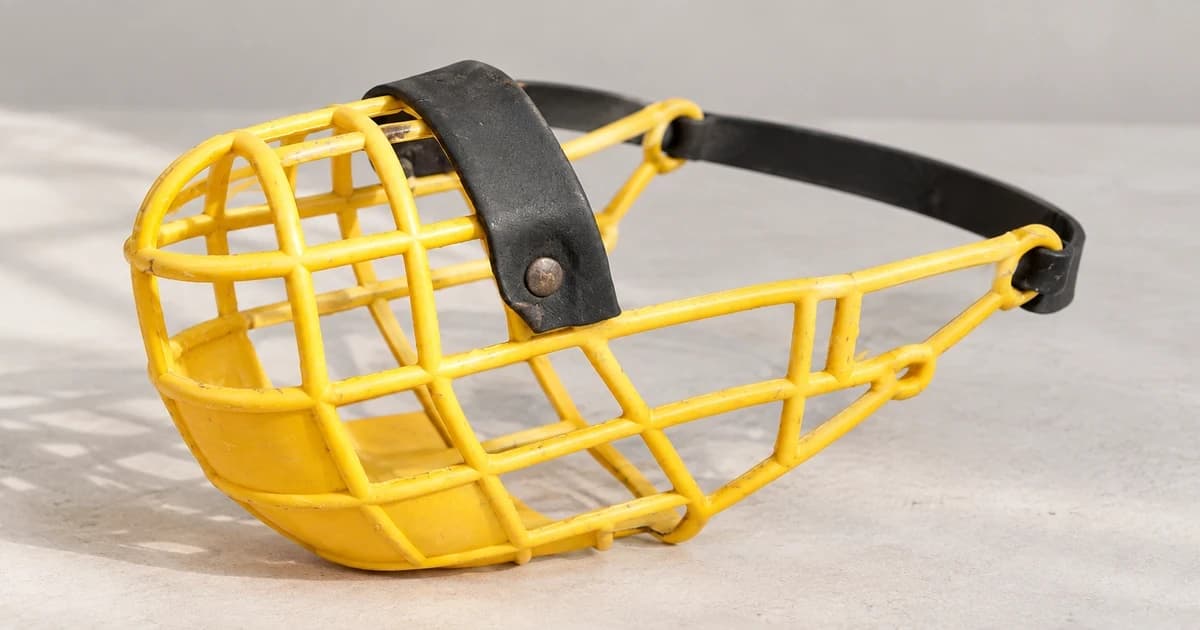
Understanding how should a dog muzzle fit—specifically for a humane basket muzzle for dogs—requires verifying four independent checks on your dog: (1) an open-basket structure rather than a closed fabric sleeve, (2) snout length and circumference measured at the exact landmarks specified by that model's chart, (3) enough vertical interior depth for a full open-mouth pant, drinking water, and taking treats, and (4) secure straps that hold the basket steady without rubbing the nose bridge or riding up into the eyes (Blue Cross; Dogs Trust; Cornell Riney Canine Health Center). A dog happily poking its nose into the basket for a treat is a great training milestone, but willingness alone does not prove the basket is deep or wide enough for real-world wear.
The four independent basket-muzzle fit checks
When evaluating how should a basket muzzle fit, check each of these four elements in order rather than relying on breed labels or S/M/L size numbers:
1. Confirm an open basket mechanism (not a mouth-closing sleeve)
Blue Cross and Dogs Trust both stress choosing a basket-style muzzle that lets the dog pant, drink, and accept treats freely. Tight fabric or mesh grooming sleeves that hold the jaws shut prevent panting (which is how dogs cool themselves) and are unsuitable for walks or everyday wear. Browse our basket-muzzle category to compare open-cage geometries before measuring.
2. Measure at the exact landmarks required by your model's chart
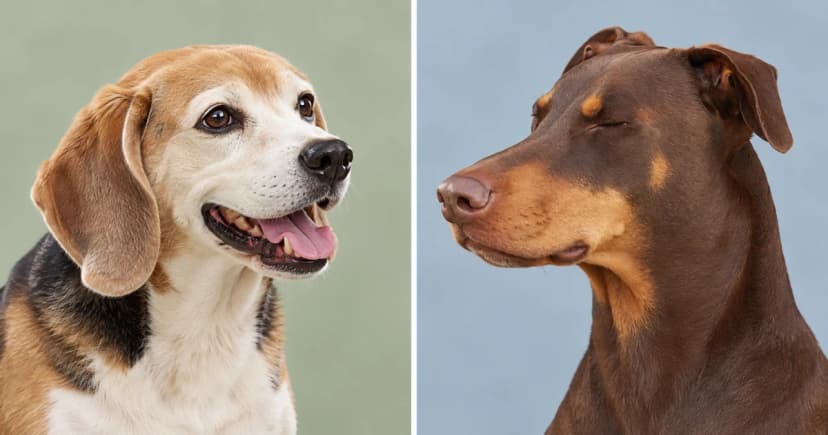
Every manufacturer defines its own measuring points and nose-tip allowance. For instance, Company of Animals' Baskerville Ultra measuring guide specifies measuring snout length from the tip of the nose to the base of the nose just below the eyes, and snout circumference around the widest part of the muzzle (usually just below the eyes) with the mouth closed, then adding an internal nose-tip clearance of roughly 1 cm so the front of the basket does not touch the nose. Keep those rules attached to that specific brand's chart—other basket makers require measuring circumference with the mouth wide open or holding a ball to calculate full pant height.
3. Verify full open-mouth panting, drinking, and eye clearance
Once your dog is comfortable putting its nose inside voluntarily (Battersea), check the basket on the dog's face before and during gentle movement:
- Nose-tip gap: The front grille must sit clear of the wet tip of the nose (~1 cm in the Baskerville guide) without pressing down on top of the nasal bone.
- Sightline and cheek clearance: The upper rim and cheek bars must sit well below the eyes so they never obstruct vision or jab into the lower eyelids when the dog sniffs the ground (Dogs Trust).
- Full vertical pant room: A basket that looks roomy while your dog's mouth is closed is still too shallow if the lower jaw hits the bottom floor of the cage during a wide, warm-weather pant. Your dog must be able to open its jaws fully, lap water from a bowl, and take rewards through the slots.
4. Adjust neck and head straps without over-tightening
Fasten the neck strap (and any optional overhead or collar loop) according to the model's diagram so the basket stays centered without sliding forward over the nose. Company of Animals describes a snug fit that is not tight; because different welfare guides cite different finger-count rules under the neck strap, verify both that the dog can swallow and turn its head naturally and that the basket cannot be pawed off over the ears. Never pull a neck strap tighter to compensate for an ill-fitting basket shape.
Troubleshooting table: separate basket shape, strap adjustment, and training
When something looks off during a fit check, use this table to distinguish a hardware/shape mismatch from a strap tweak or a training step:
| What you observe during the check | Root cause category | Correct next action |
|---|---|---|
| Lower jaw hits the basket floor when panting, or nose tip touches the front grille | Basket size or shape mismatch (strap adjustment cannot fix this) | Switch to a deeper/longer basket size or a different basket profile built for your dog's snout ratio. |
| Top rim rides up near the eyes or cheek bars pinch the sides of the face | Basket geometry / bridge position mismatch | Check whether the nose pad or overhead strap is misadjusted; if eye contact persists, retire that model and select a different basket shape. |
| Basket wobbles or tilts forward when the dog lowers its head, but panting and eye clearance are good | Strap adjustment issue | Adjust the neck strap behind the skull bones (occiput) and use the model's collar-loop or overhead strap per its manual without cranking the strap tight. |
| Dog backs away, freezes, or paws at the muzzle as soon as the strap comes near its ears | Training & acclimation stage (even if basket size is correct) | Do not force the buckle shut; step back to reward-based conditioning and follow our guide to introduce a muzzle gradually (Cornell highlights conditioning the rear strap as its own step). |
| Redness, rubbed fur, sore skin, or distress around head handling / bite history | Veterinary or qualified behaviorist referral | Stop using the muzzle immediately and consult your vet or a qualified behavior professional (Dogs Trust). |
Remember Cornell's safety rule: never leave a muzzled dog unattended, even in a well-fitted basket muzzle.