Clean a basket muzzle by following the exact manufacturer's instructions for your model, keeping the open basket, nose bridge, padding, strap folds, and metal hardware identified separately before applying water or soap. Two basket muzzles that look similar—or even use the same strap material name—can carry opposite rules on whether cleaning agents or dishwashers are allowed.
The manufacturer examples below differ on a fundamental question: whether to use any soap at all. Keep those brand rules separate, record your strap adjustment settings before washing, and never fill an unstated drying or disinfection step with another brand's recipe.
Make an Equipment Record Before Starting
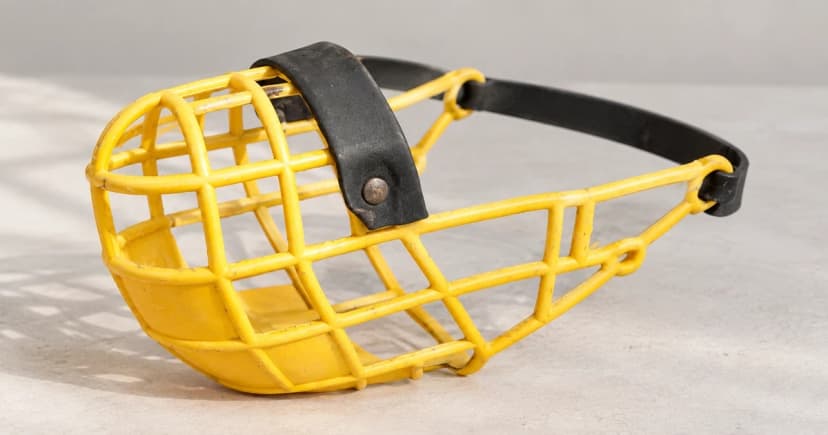
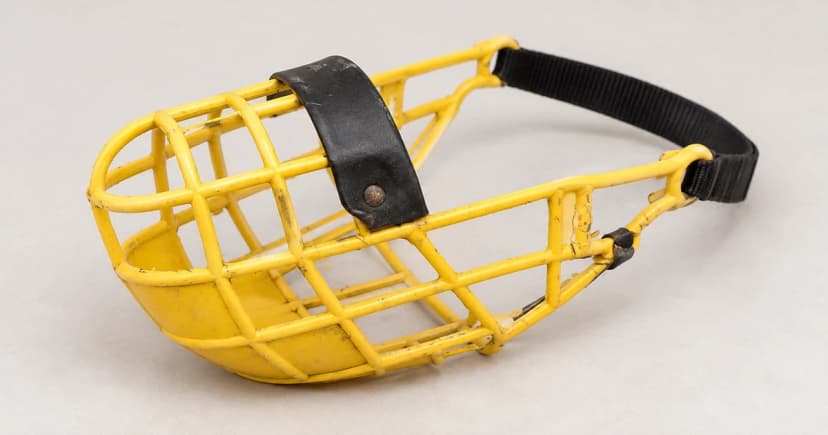
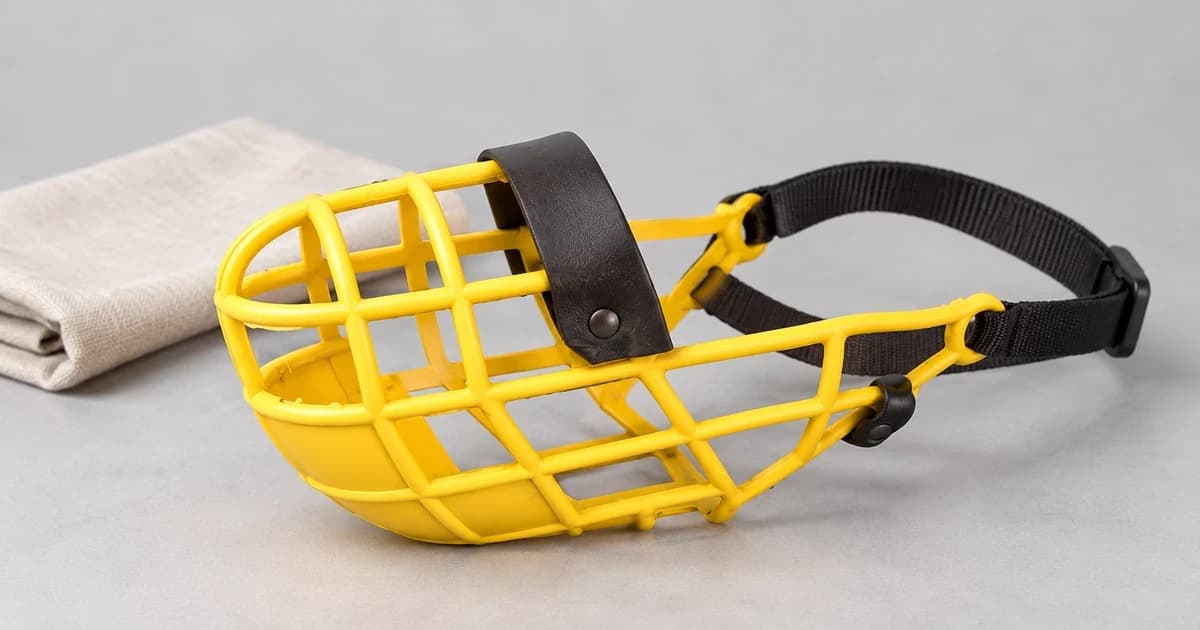
Always clean the muzzle while it is off the dog. Check the model name, material tag, and official care page, noting each attached part (basket lattice, nose-bridge band, neoprened or foam padding, neck straps, and buckles/rivets). Color alone—such as a yellow basket or dark bridge band in a photo—never identifies the brand, polymer formula, or permitted wash method.
Record the current hole or slider positions and take a clear pre-cleaning photo of the strap routing. That photo helps you restore the previous setup per the brand's reassembly instructions, though it never proves that the previous fit was correct—use our guide to how a dog muzzle should fit for a separate fit check. Inspect reachable surfaces without cutting straps, drilling out rivets, or prying apart permanent joints.
Compare the Maker's Actual Care Permissions
Keep these two published BioThane/muzzle care routes strictly separate rather than combining them into a single wash routine:
| Source and Equipment Scope | Published Cleaning Direction | Boundary to Keep With It |
|---|---|---|
| BUMAS: Material and Care | Rinse the BUMAS muzzle under running water; for stubborn dirt, soak in water and scrub with a toothbrush or nail brush. Explicitly states not to use cleaning agents; odor care uses warm water and a brush. | Applies strictly to BUMAS products—not every basket muzzle or every item marketed as BioThane. Timed drying hours are not specified on the page. |
| Trust Your Dog: Care Instructions | For its BioThane gear, wipe with a wet wipe or cloth; for bigger messes, soak with a little dish soap, wipe down, rinse, and dry. Permits dishwasher cleaning of BioThane while excluding sanitizing and high-heat cycles. | This page also mentions vinyl products, but the care paragraph specifically covers Trust Your Dog's BioThane—not vinyl, another brand, or unidentified padding/assemblies. |
Treat these as mutually exclusive brand instructions, not consecutive steps: adding Trust Your Dog's dish soap or dishwasher permission to a BUMAS muzzle directly violates BUMAS's “no cleaning agents” rule. Trust Your Dog also specifies rinsing metal hardware with clean water and letting it dry after saltwater or sand exposure—keep that instruction tied to its gear without soaking unidentified foam pads or oiling rivets.
Keep Cleaning and Disinfecting as Separate Questions
The CDC's pet-supply guidance separates everyday dirt removal (cleaning) from pathogen reduction (disinfecting) and advises following the manufacturer's care instructions first. Because general household disinfectant recipes do not establish chemical compatibility with a muzzle's nose bridge, straps, or padding, never apply bleach or household sanitizers to an unidentified basket muzzle. Always keep dogs away from the sink or cleaning area while washing pet gear.
Resolve Drying and Inaccessible Areas Explicitly
Complete the drying stage specified for your equipment—such as Trust Your Dog's rinse-and-dry rule for both straps and metal hardware. Because an open basket lattice makes the muzzle look clean at a glance, use `Figure 1` below to inspect the five component zones separately so trapped moisture or debris inside concealed contact points is never overlooked:
Check the accessible strap folds, nose-bridge underside, padding edges, and metal fasteners independently from the open lattice bars. Note any fold that stays damp, retains debris, or cannot be reached without disassembly. Never apply external heat, reshape the basket without model-specific instructions, or put a muzzle with damaged straps or loose rivets back into service.
Close the Care Record Without Certifying Fit or Performance
Use this four-field record to confirm that every step—including the concealed zones in Figure 1—has been checked before the next wear session:
| Record Item | What Closes the Question |
|---|---|
| Equipment identity | Exact brand, model/version, and official care page, with basket, bridge padding, and straps listed separately. |
| Cleaning permission | The specific method authorized for that model (e.g., BUMAS water-and-brush only vs. Trust Your Dog BioThane soap/wash rules); any unstated cleaner remains off-limits. |
| Adjustment reference | Pre-clean strap/buckle photo and notes matched against the brand's fastening instructions before re-wearing. |
| Drying and condition (See Figure 1) | Open basket lattice, nose-bridge contact zone, padding, strap folds, and hardware checked and dried separately; any damaged or unreachable assembly held out of use. |
Once cleaning and drying are complete, review our guide to introducing muzzle wear voluntarily so re-wearing stays calm and gradual. You can browse Pawlivy's basket muzzles category for equipment styles and read our editorial policy on how source-documented care rules are kept distinct from product testing.