Choose a dog flying disc by its intended use, documented size and construction, then check the actual rim and your dog's ordinary interaction with it. “Soft” alone does not tell you the diameter, weight, edge shape or permitted style of play. A disc meant for fetching also does not automatically become a chew toy.
Start with a maker's dog-specific product instructions, rather than assuming a recreational flying disc is suitable because it is round or easy to bend. This guide helps you compare equipment for supervised fetch. It does not prescribe a jumping program or certify a disc as tooth-safe, indestructible or suitable for every dog.
Confirm what the disc is designed to do
Look for the intended activity and use restrictions before the color or price. The KONG Flyer, for example, is described as fetching equipment, and its warning specifically excludes use as a chew toy. Its maker also specifies supervised outdoor use in an open area free of obstacles and says to discontinue use if damaged.
Keep those instructions attached to that product. A broad “pet toy” description is incomplete if it leaves the intended use, supervision or damage limits unclear.
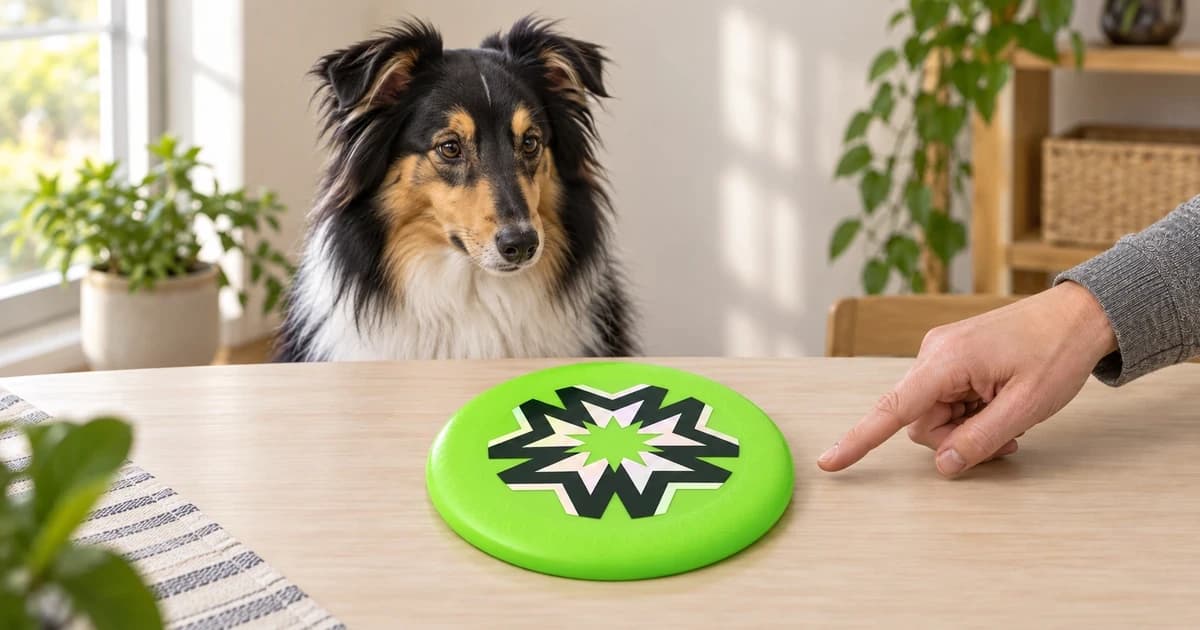
A dog carrying a disc in a photograph does not establish that the disc is suitable for that dog.
Compare size and weight separately from softness
Use the dimensions for the exact variant you are considering. “Small” and “large” are names within a product range, not a standard shared by every manufacturer. Find out whether a supplied measurement is the disc diameter, its overall envelope or packaging dimensions. If the listing does not say, ask rather than selecting the number that looks most plausible.
Then check weight and construction independently. Hyperflite's specifications provide a useful named example: its K-10 Competition Standard, K-10 Jawz and K-10 HyperFlex share an approximate 8.75-inch diameter, while the table lists different rigidity descriptions and weights. The Competition Standard is listed at 115 grams; the other two at 150 grams. Equal diameter therefore does not mean equal handling.
| Property | Question to resolve |
|---|---|
| Size | Is this the documented diameter or another dimension, and which exact variant does it describe? |
| Weight | What does the maker state for that same variant, rather than another disc with the same size name? |
| Flex | How does the maker describe this formulation, and what handling does it permit? |
| Rim and face | Can you inspect the whole edge and the surfaces the dog will contact? |
| Play limits | Does the maker identify fetch, chewing, water use or other restrictions separately? |
There is no mouth-to-disc sizing formula established by the sources reviewed here. Do not force an object into a dog's mouth or assume a larger disc is more suitable. If your dog cannot comfortably pick up or carry equipment during an ordinary voluntary interaction, pause and reassess that choice.
Identify the construction behind “soft”
Different designs can produce different kinds of flex. KONG identifies its Flyer as natural rubber. The Chuckit! Paraflight combines a multilayer nylon interior with a soft rubber edge. A fabric-centered design and a molded rubber disc should not be treated as the same construction simply because both listings use softness language.
Consider the part your dog contacts, not just the central face. Inspect the rim, any fabric joins and the transition between materials. Follow the product's handling instructions when examining it; bending a disc repeatedly to “test durability” is not a substitute for knowing its intended use.
Hyperflite also distinguishes formulations and gives its own relative stiffness and durability scales. Those are that manufacturer's comparisons, not standardized scores you can apply to other brands. Its overview explicitly notes that even its Jawz formulation is not indestructible. A “tough” label is not permission to leave a disc with a dog that is tearing or chewing it.
Resolve ambiguous features before choosing an activity
Check any feature that matters for the place you intend to play. Petmate describes the Paraflight as floating, but that statement belongs to the named product. The shape of another disc, a silicone listing or a photograph near water does not prove flotation. This guide does not establish water-play suitability for your dog.
Dimensions need the same care. The reviewed Paraflight large-variant listing gives a four-component dimension string without clearly identifying a diameter. It is not a reason to select the largest number and publish it as the disc's diameter.
If a seller's description lacks the exact model, variant or use instructions, retain those gaps in your comparison. Manufacturer examples can show why the information matters, but they do not authenticate an unrelated catalog item.
Inspect before use and stop when the equipment changes
With the dog away from the equipment, look around the entire rim and across both faces. Check for a split edge, an exposed piece, a tear or damage that changes the surface. A quick look at only the center misses the part most relevant to a rim check.
Use the maker's removal instruction rather than trying to stretch the life of a damaged toy. KONG's explicit damage-stop warning is a clear example. Do not cut off an edge, tape over a split or trim damaged fabric and then assume the altered disc retains its original use permissions.
During supervised interaction, separate carrying or returning the disc from settling down to chew it. Stop when the activity no longer matches the toy's intended use, or when your dog appears reluctant to engage. No forced grip, high throw or repeated jump is needed to decide whether to reconsider the equipment. Learning fetch is a separate training task.
Keep a short equipment record for comparison
Mark anything absent or contradictory as unresolved. Do not convert a supplier's “safe” or “durable” wording into an independently verified result.
Use the broader dog-toy category if your actual aim is a different interaction, rather than buying a fetch disc to fill every play role. Our editorial policy explains the distinction between source-based guidance and hands-on product testing.
A useful shortlist answers the equipment questions first. The best match is a documented design you can inspect, use within its stated limits and remove when damaged—not a universal winning disc inferred from a size label or a flexible appearance.