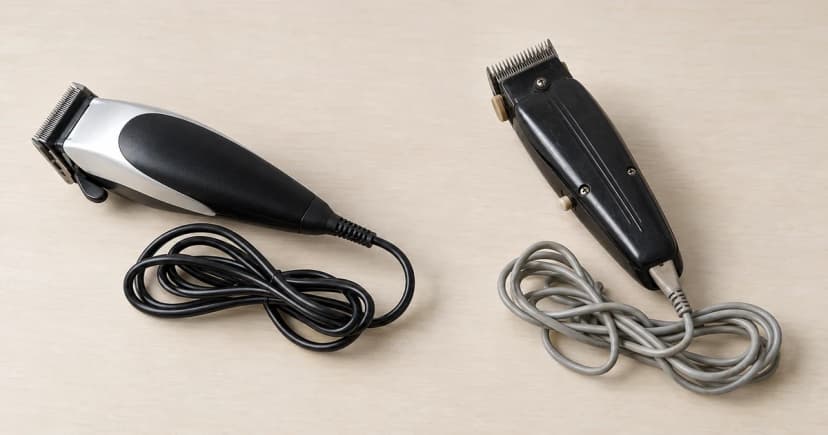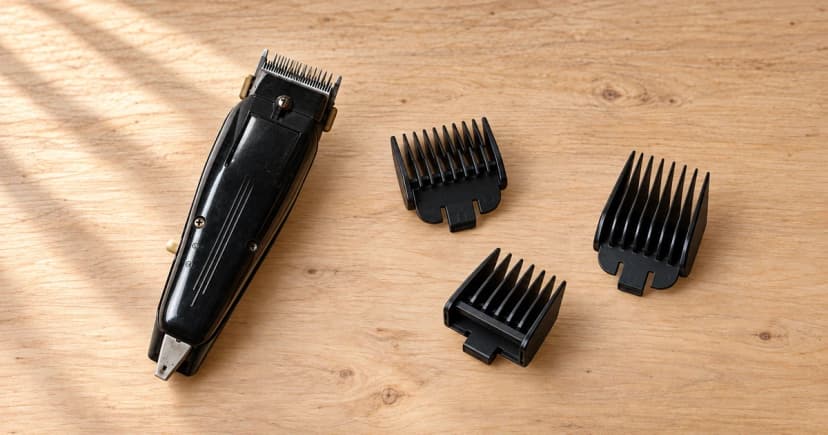
To clean and oil pet clipper blades between uses, start with the manual for the exact clipper body and installed blade system you own, isolate power as directed before touching the cutter, brush away loose hair, and apply the specific blade oil and drop pattern documented for that blade. A quick-release adjustable 5-in-1 blade, a snap-on detachable blade, and a two-screw fixed blade follow different maintenance diagrams—so the first question is never “How many drops of oil does every clipper take?” but “Which care document matches this installed blade?”
Identify the Clipper Body and the Installed Blade Separately
Check the model plate on the clipper housing and the stamped number or family name on the blade itself. Because an aftermarket blade or replacement head can carry its own care sheet, never rely on the clipper handle's brand name alone.
Do not treat “adjustable” and “detachable” as mutually exclusive categories. Wahl's 5-in-1 blade cleaning FAQ covers a blade head that adjusts across five cutting lengths and detaches from the clipper. By contrast, the Wahl UK Multi Cut Pet Clipper manual (Rev. 6) shows a taper-lever adjustable clipper whose blades are held by two screws—those alignment screws are not a between-uses quick-release latch.
If your blade family is unidentified, leave it assembled rather than prying on a hinge or loosening tension screws. When comparing clippers and trimmers or blade accessories, verify that the documentation matches your exact blade series.
Make a Model-Specific Blade Care Plan
Notice how these four official documents assign oiling patterns, water restrictions, and power-state rules by specific blade system rather than across all clippers:
| Document & Blade System Scope | What the Document Establishes | What to Confirm Before Acting |
|---|---|---|
| Wahl 5-in-1 Blade Cleaning FAQ (Figure 1A) | Detachable, adjustable 5-in-1 blade family; removal and brushing sequence; Clini-Clip step followed by three-point oiling with Wahl Blade Oil. | Confirm your installed blade belongs to the named Wahl 5-in-1 family and check your clipper manual's power-off precautions. |
| Wahl Clipper & Trimmer Care Tips Sheet (Figure 1B) | Brush cleaning for removable blades and a five-point oiling diagram using Wahl Blade Oil. | Confirm this sheet applies to your removable blade set; never merge its 5-point pattern with the 5-in-1 FAQ's 3-point pattern. |
| Andis AGC2 Use & Care Manual (Figure 1C) | Detachable blade release, accessible front hair cavity, and named Andis blade-care products and clipper oil (distinct from spray lubricants). | Note the manual's two different power-state statements (general safeguards say unplug before removing/assembling parts; blade section says lock blade on with clipper running). |
| Wahl UK Multi Cut Manual, Rev. 6 | Two-screw retained blades, separate main-clipper and optional battery-trimmer maintenance rules, and no water washing of blades. | Keep the optional trimmer's monthly oil note separate from the main clipper's oiling rule, and never wash these blades in water. |
Brush Away Loose Hair Before Applying Any Liquid
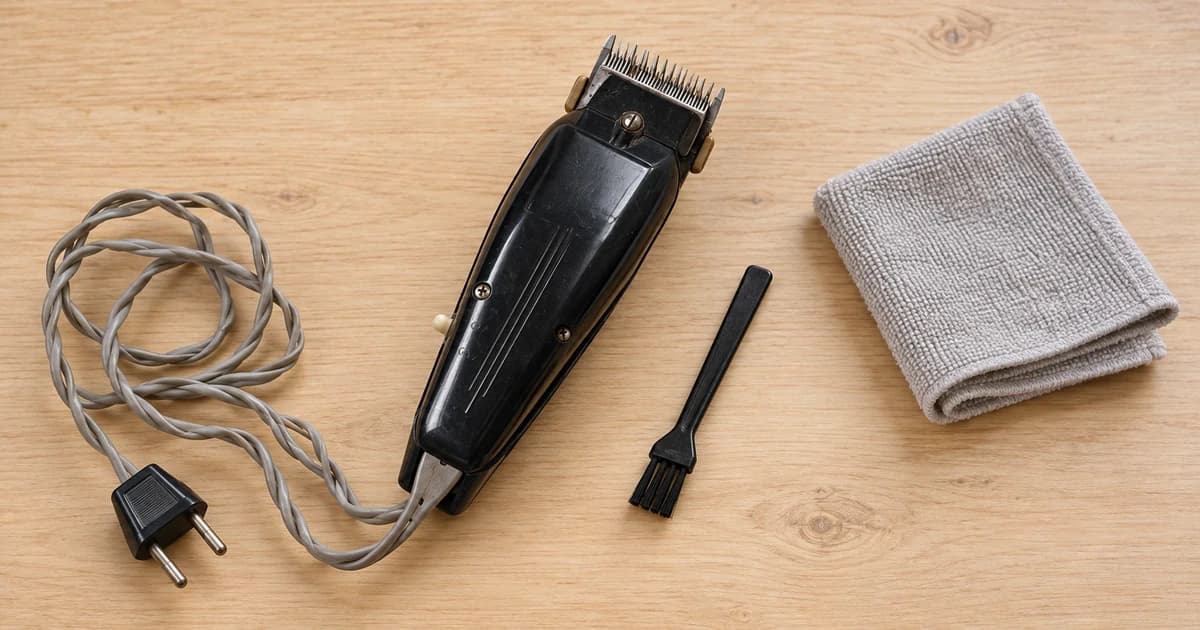
Work on a dry table with the pet out of the room, using the small cleaning brush supplied with the clipper and a soft cloth. Switch the clipper off and disconnect power (or follow cordless battery isolation rules) as your manual directs before brushing or detaching a blade.
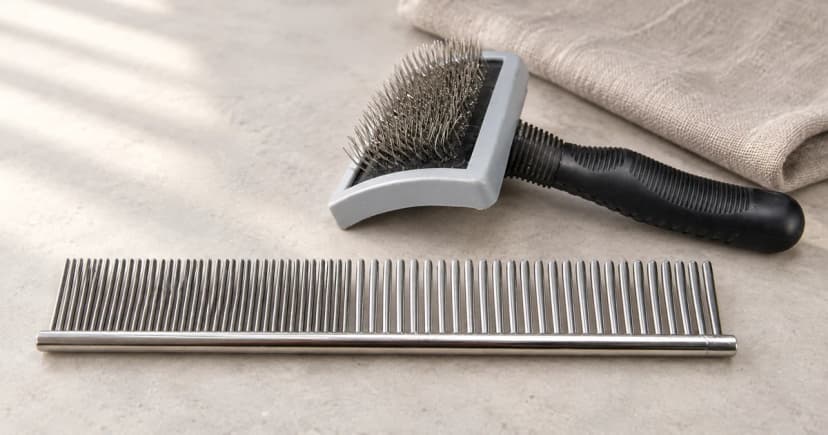
Brush loose clippings from the cutter teeth and only those housing spaces your manual identifies as user-accessible—such as the gap between the blade and clipper on the Wahl Care Tips sheet or the open front drive cavity shown when an Andis AGC2 blade is detached. Never unscrew a motor case, release a blade tension spring, slide the top cutter off a 5-in-1 frame, or confuse a clipper blade brush with coat-grooming tools covered in our guide to cleaning a dog brush.
Keep Cleaning, Disinfecting, Cooling, and Oiling Distinct (3-Point vs. 5-Point Scope)
Read the blade manual alongside the label of every spray or oil bottle. Never substitute household oil, and never assume a cooling spray replaces liquid clipper oil—the Andis AGC2 manual explicitly distinguishes clipper oil from spray coolants/lubricants, and the Wahl UK Multi Cut manual expressly forbids washing its blades in water.
Organize your oiling routine by the exact blade system diagram (`Figure 1A` vs. `Figure 1B`) rather than averaging two documents into a guessed drop count:
Inspect for Broken Teeth and Resolve Power-State Wording Before Reattachment
While the clipper is switched off and disconnected, inspect every cutter and comb tooth under bright light. Both the Andis AGC2 manual and the Wahl UK Multi Cut manual instruct owners not to use blades with broken, nicked, or missing teeth and to replace damaged blades before clipping—oiling never repairs a chipped tooth.
Before reattaching a detachable blade, note the important wording contrast in the linked Andis AGC2 Use & Care manual (`Figure 1C`): its front “Important Safeguards” section instructs users to unplug the appliance before cleaning, removing, or assembling parts, whereas its internal “Replacing or Changing Blade Set” section describes snapping the blade onto the hinge and locking it in place with the clipper switched on. Do not treat that model-specific passage as a general rule to assemble blades with the motor running on other clippers, and pause until your specific unit's manual procedure is verified.
Wipe Excess Oil and Store With a Maintenance Record
Where your blade manual specifies running the clipper briefly to spread oil across the rails, complete all prior safety steps first, switch the unit off afterward, and wipe excess oil from the outer surfaces (using a soft cloth per Wahl's sheets, or a soft, dry cloth per the Andis AGC2 manual). Store the clipper in a dry place with the cord loosely coiled rather than wrapped tightly around the handle (as the Wahl Care Tips sheet advises), and keep a short log with the kit:
- Identity: Clipper body model, installed blade family/number, and manual revision.
- Tooth inspection & power rule: Date checked for broken or nicked teeth, plus the exact power-state instruction followed for removal and reattachment.
- Products & oil pattern: Exact blade cleaner and oil used, matched to the 3-point (`Figure 1A`), 5-point (`Figure 1B`), or model-specific diagram.
- Finishing & storage: Excess oil wiped clean and cord coiled for dry storage.
See Pawlivy's editorial policy for how we cite primary equipment manuals and keep source conflicts transparent.