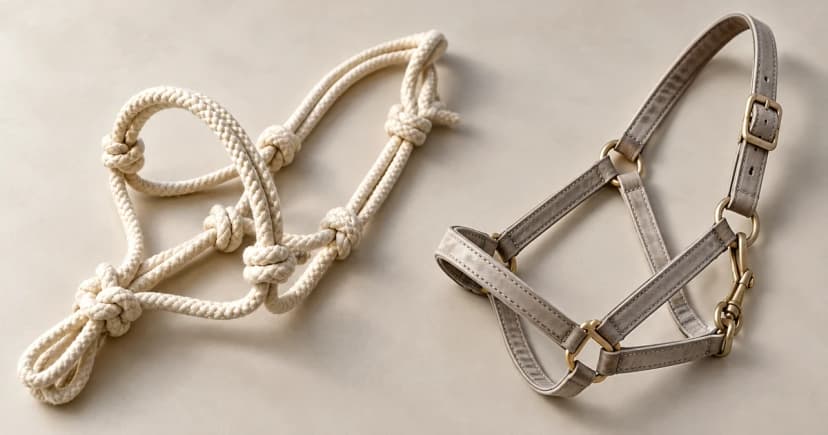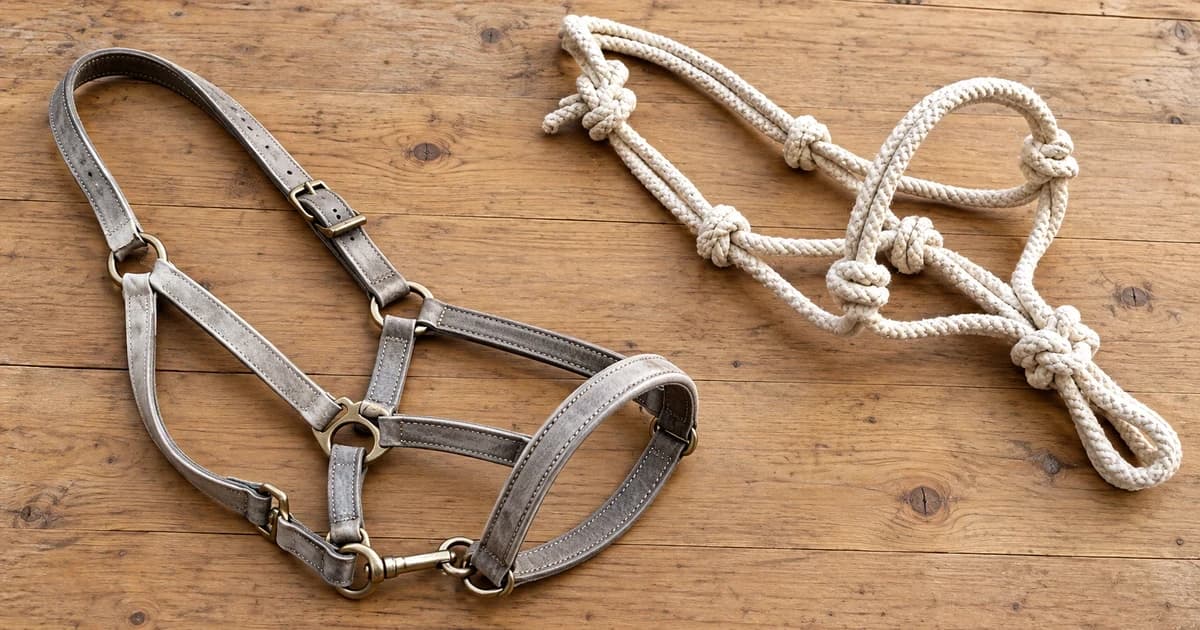
Clean a horse halter by following the instructions for its exact model and components. A rope halter's machine-wash method does not automatically suit a leather halter, and two models from the same brand can need different drying and treatment steps.
Start with the model's care label or maker's instructions, choose the permitted cleaning route, finish its drying steps, and record any damaged or missing components before storage. Washing and a tidy appearance do not establish that damaged equipment has been repaired.
Identify the halter before choosing the method
Keep the model name and care instructions together. Check whether the instructions address the whole item or specify different treatment for rope, straps, padding, leather and metal parts. Record which components the maker identifies as removable; a washing instruction is not permission to dismantle permanent hardware or alter knots.
| Record | Question to answer |
|---|---|
| Model and components | Which exact care instructions apply to this item? |
| Permitted cleaning | Hand wash, a named machine cycle, or a damp wipe? |
| Products and water | What cleaner, amount and water condition does that method specify? |
| Drying and treatment | What happens to the straps, rope and metal areas afterward? |
| Condition and storage | What remains damaged, unclear or unfinished before putting it away? |
Do not fill a gap with another halter's recipe simply because its exterior looks similar.
Keep a rope-halter wash method within its scope
Do Or Do Knot's written alternate washing instructions allow its rope halters to be machine washed in a mesh lingerie bag, with a small amount of mild detergent, cold water and a delicate cycle, then hung to dry. The maker recommends removing the snap and any installed Breakaway Loop before washing.
Its FAQ separately permits hand washing with warm water and mild detergent. Keep warm hand washing and the cold machine method distinct. The same FAQ addresses broken rope, missing or broken snaps and damaged chin rings through model-specific replacement options.
Read nylon and leather model instructions separately
For LeMieux ProSafe Halter Black IT03231, described with twin nylon and metal chain fittings, the maker specifies hand washing in warm, soapy water. Towel dry the chain areas and allow natural air drying. Do not tumble dry; store this model in a clean, dry place.
LeMieux Capella Halter Black IT00859 combines leather, nylon and metal fittings but has a different care sequence: warm water only, a suitable leather cleaner, drying with a soft cloth, suitable leather balm, and clean, dry storage. Do not substitute ProSafe's soapy hand-wash method for these leather-care directions, or treat the word “wash” as an instruction to soak the item.
Respect a leather model's limit on water
Horze Largo Leather Halter 22136, listed as 100% leather, calls for opening the buckles and wiping with a damp sponge. It says not to saturate the halter with water or use chemical cleaners not intended for leather. Leather cleaner and conditioner are permitted for this model.
That page does not give a precise drying or storage procedure. Obtain those details for the model rather than presenting Capella's cloth-and-balm sequence as Horze's instructions.
Finish the drying, condition record and storage
Follow the selected method through its drying and any specified aftercare. If its instructions require a rinse or another finishing step, retain that step with the same method.
Record visible missing or broken components and any part that remains difficult to use. Keep those unresolved issues separate from the cleaning result and seek the maker's repair or replacement guidance. A visual record is not a load test or a professional inspection.
Complete the corresponding model's storage instructions and keep its care record available for the next cleaning. When comparing horse halters, include the required care and component treatment alongside the model details. The useful end point is a completed, documented care process with unresolved damage clearly identified.