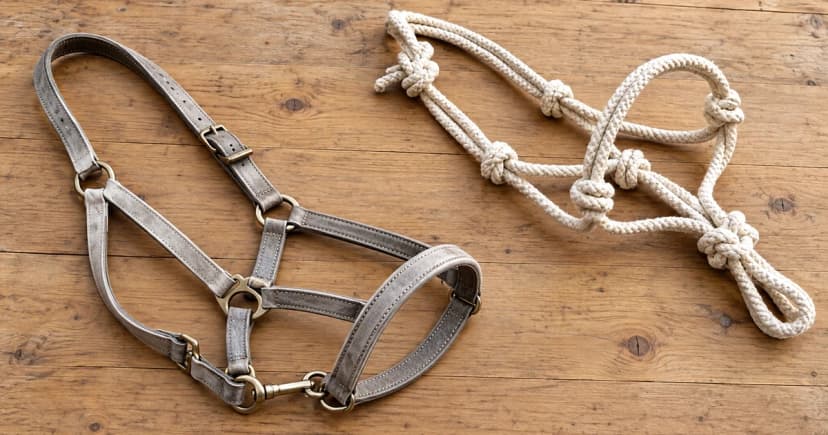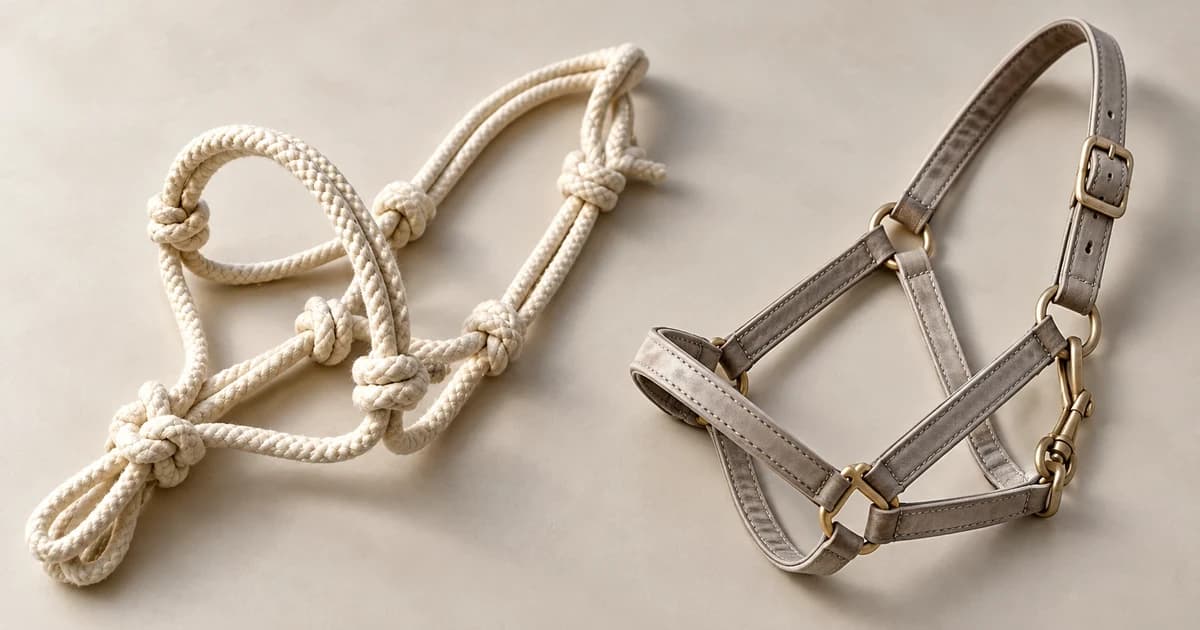
To measure a horse for a halter, start with the exact model's measuring instructions. Record the nose, cheek and crown measurements using that method, compare its size chart, and check the delivered halter against its fitting guidance. A familiar label such as “Horse” or “Cob” is not enough to carry a size choice from one design to another.
The important distinction is what each number measures. A full nose circumference, one nose strap and a route from the nose position over the poll are different measurements, even when a chart uses similar names.
Make a measurement record for the chosen model
Keep the model name, chart link and units beside your measurements. Use the maker's specified tape or string method and endpoints. Record whether you measured the horse or an existing halter; do not compare those values as if the methods were interchangeable.
| Field | What to record | Question to resolve before choosing |
|---|---|---|
| Nose | Position and whether the value is a full circumference or one section | Does the chart use the same route? |
| Cheek | The named start and finish points | Are knots, rings or other hardware included? |
| Crown | The exact route and any adjustment range | Is it an individual strap or a longer route over the poll? |
| Other pieces | Any separate chin or throat measurements the model requires | Have you left a required field unmeasured? |
A precise number measured along the wrong route will not answer the chart's question.
Read flat-halter chart fields separately
For example, Weaver Equine's Original Adjustable Chin and Throat Snap Halter, 1 inch, has separate Crown, Nose, Cheek, Throat and Chin fields. Its Average row lists a crown range of 18.5–22.5 inches, a 10.5-inch Nose field and a 7.5-inch Cheek field.
Preserve those labels. The Nose field is not identified as the horse's full nose circumference. Resolve the measurement endpoints before comparing it with an on-horse circumference or another maker's chart. The separate fields also show why a weight band alone cannot complete the comparison.
Keep rope-halter endpoints with their own chart
Do Or Do Knot's Sizing & Adjusting Halters guide separates noseband circumference, cheekpiece length and crownpiece length for its rope halters. Its table says lengths run from knot to knot, excluding the knots themselves.
The accompanying on-horse instructions call for a soft fabric tape, or string measured afterward, and locate the noseband about two to three finger widths below the cheekbones. They request the full nose circumference and cheekpiece length; an optional crown measurement is described as end to end. Keep those instructions attached to that maker's order rather than silently substituting one endpoint convention for the other.
The guide also explains that its halter can fit larger as knots settle. That is guidance for this rope design, not permission to buy every halter tightly or alter its knots.
Follow the chosen maker's route through the fit check
HalterUp's measuring guide takes the nose measurement around the intended noseband position. Its crown route begins at that position on one side, runs up the cheek and over the poll, then returns to the opposite side. That is not simply an isolated crown strap.
The page and its size image describe the facial position somewhat differently: the text gives a little over halfway to two-thirds between nostrils and eyes, while the chart says halfway. Confirm the intended position for your model instead of treating either fraction as a universal rule. The image also separates Horse and Donkey rows.
For the delivered halter, HalterUp says the noseband should not bind or be too snug. Its throatlatch guidance allows two or three fingers between strap and jaw while avoiding excessive droop. Those checks belong to this guide; they do not certify another halter's fit or safety.
Resolve mismatches before keeping the size
Compare every required field against the same model's chart. Do not replace that answer with a blanket “size up” rule.
When the halter arrives, check the actual model and size, then follow its supplied adjustment and fitting instructions. A chart match is the starting point for that check, not proof of a successful fit.
Use the same model record when comparing horse halters: exact chart, measurement routes, values, and the delivered fit questions still to resolve.