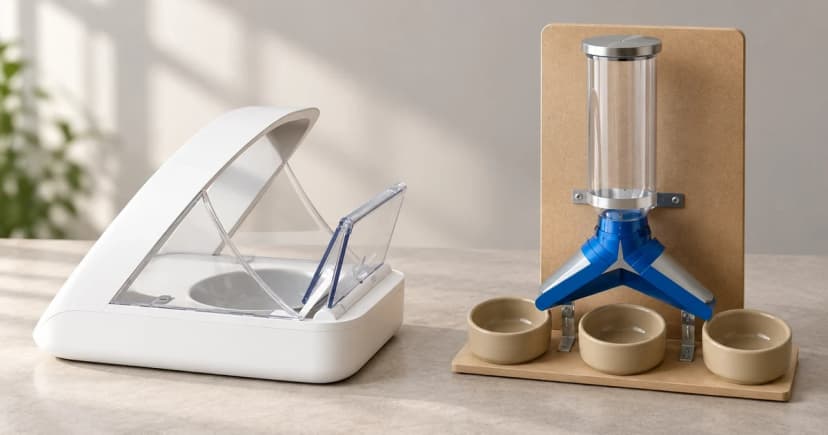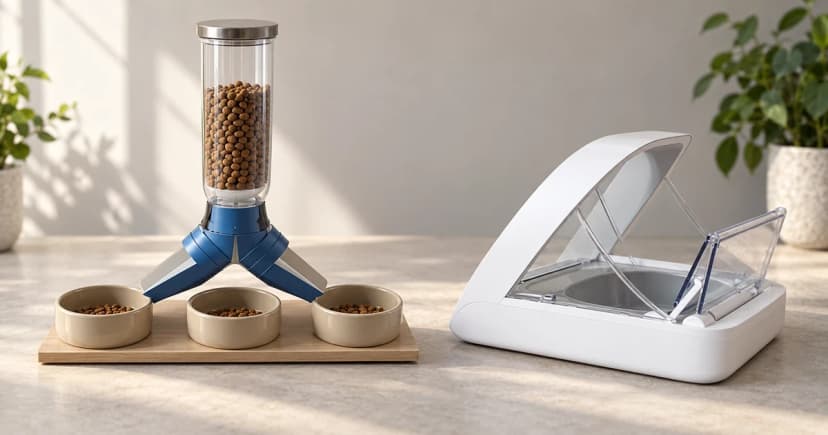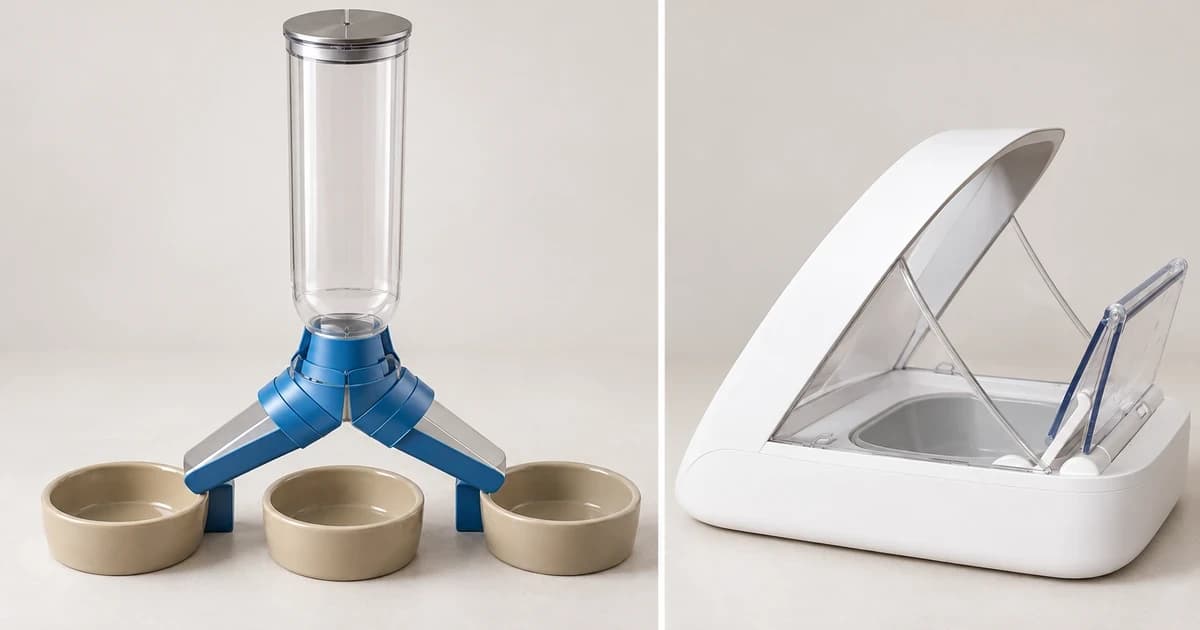
To clean an automatic pet feeder, identify the removable food-contact parts and keep their washing instructions separate from those for the powered base. The hopper, outlet, conveyor, crumb catcher and bowl may not share one method. Emptying the bowl alone also leaves the route from stored food to the bowl unaddressed.
Start with the exact model and its matching care instructions. The examples below distinguish specific components; they are not a recipe for washing any assembled feeder or proof that cleaning restores accurate dispensing.
Map the parts before taking anything apart
Trace the accessible food path on the model's parts drawing: storage container, dispensing component, outlet and receiving bowl. Identify which pieces the maker actually permits you to remove. An opening in the housing does not establish that the whole housing is washable, and the word "base" can describe different components.
Find the complete power-preparation instructions, including any backup supply, before handling the mechanism. Do not treat a paused schedule as electrical isolation or assume that unplugging one cord addresses every power source.
Use the documented release points and stop if a part does not match the drawing. Keep the electrical housing out of the washing group. Do not extend a removable-container procedure into opening the motor enclosure, repairing wiring or forcing an unfamiliar latch.
Keep three named cleaning examples separate
These are three official care articles from two manufacturers. Their differences matter more than whether the feeders look alike.
PetSafe Healthy Pet Simply Feed 12-Meal
PetSafe's Simply Feed cleaning article begins with pause mode, then describes emptying and removing the hopper, conveyor and crumb catcher. That pause instruction is not a statement that every power source has been disconnected.
Its care chart lists the lid, hopper and bowl as dishwasher safe. It separates the conveyor and crumb catcher into a hand-wash-with-water group. Keep those groups with this named feeder; do not place the whole assembly in a dishwasher or add a temperature, cycle or disinfectant that the chart does not specify.
PetSafe Smart Feed
The Smart Feed disassembly and cleaning article starts with unplugging and emptying the feeder. It then describes removing the hopper, conveyor and crumb catcher.
It directs warm soapy water for the removed components, followed by rinsing and thorough drying before reassembly. It explicitly says not to get the feeder base wet and excludes the conveyor and crumb catcher from the dishwasher. Its chart lists the hopper and lid, bowl holder and bowl as dishwasher safe. Those permissions do not make the electrical base washable or provide a universal method for another model.
PETLIBRO Granary Smart Feeder AF103/PLAF103
PETLIBRO's AF103/PLAF103 cleaning article distinguishes the removable tank base from the feeder base. Its sequence includes removing the desiccant bag and emptying the food tank before removal.
The lid, food tank, tank base, stainless-steel bowl and bowl tray are listed for thorough rinsing and air-drying. In contrast, the feeder base must not be rinsed directly or wiped with a wet cloth. Accessories must be completely dry before assembly. Do not transfer a tank-base washing permission to the powered feeder base. The linked video's additional actions are not reproduced here.
Check the outlet and drying stage by component
With only the permitted pieces removed, inspect their accessible food-contact surfaces and the outlet for remaining food or debris. A removable conveyor, separate tank base and fixed chute are not interchangeable designs. Keep cleaning within the access and method described for your own equipment.
Do not extend a washing permission to an adjacent sensor, connector or motor housing. If debris remains somewhere the instructions do not make accessible, describe that location to support rather than dismantling further.
Follow the stated drying method and completion condition. Do not invent a fixed drying time or use heat simply because a container still looks damp. Keep an unresolved drying question separate from an observed crack, missing part or damaged attachment.
Finish with a care record, not a performance claim
Before refitting, account for the removed pieces and consult the matching assembly instructions. Record what you cleaned, the permitted method, whether the specified drying condition was reached and anything still unresolved. An empty, clean-looking bowl does not verify hidden surfaces or the next scheduled release.
Changing the schedule, enrollment or power settings is a different task. If returning the equipment to service leaves a clock or saved-plan question, see checking a feeder after a power interruption. For equipment context, browse automatic pet feeders without assuming a particular model is available.
This guide reports no cleaning, disinfection or dispensing test. Our editorial policy explains how source-based care guidance differs from product testing.