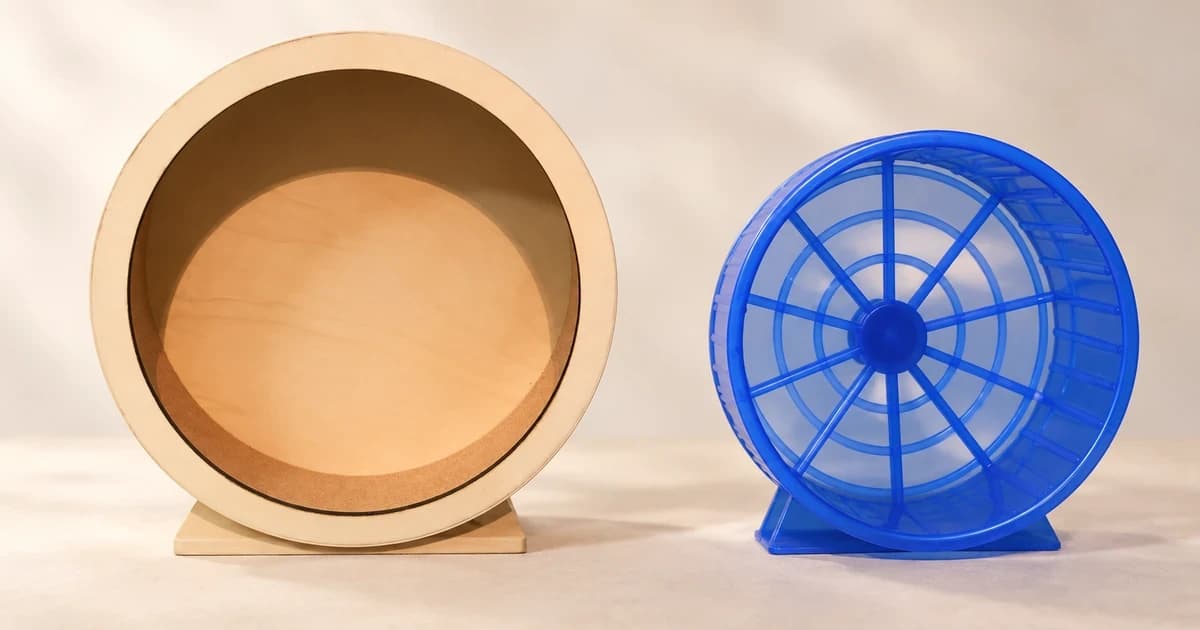
Clean a hamster wheel by matching the actual wheel, its removable parts and its care instructions before choosing a method. Permission to wash a cage base does not automatically cover the running surface, hub, stand or lining. Keep an unresolved material or mechanism question open rather than treating every wheel as washable in the same way.
Identify the part you intend to clean
Find the maker, model and matching instructions. Note the running component, any separate lining, its support and the connection that the manual actually shows. Do not assume that a visible cap is a removable fastener, or that a wooden-looking drum has the same care permission as a plastic one.
Keep wheel instructions separate from cage-base instructions
One concrete example is Kaytee's CritterTrail Extreme Challenge manual, item 100079213, PP1001014. It identifies the Xtreme Wheel as K and its hub as L. Its cleaning section says to pinch the shaft tabs where they emerge at the front, then pull the wheel completely off. Clean that wheel only with soap and water; it specifically prohibits cage cleaners and disinfectants.
The same manual separately permits a named cleaner for base A. That is a different component, not an exception to the wheel restriction.
For the matching wheel's return, use its assembly diagrams: the hub shaft snap-locks into the wheel, support-arm grooves face down, and the base must lock into the roof with the hub correctly positioned. Its nylon wheels, rollers and track must align. A separate small-drop vegetable-oil tip concerns this hub shaft, not every wheel bearing.
This is an example of reading a component-specific procedure, not a recommendation for that habitat or a reason to apply its mechanism to a different wheel. If the actual parts do not match, stop at the identification step.
Check the bearing instructions before returning the wheel
Exotic Nutrition's Silent Runner bearing guidance describes two bearings, warns that wear and corrosion can cause seizing, and calls for regular cleaning followed by thorough drying. It does not supply a universal soaking method or cleaning liquid for other designs. Keep its bearing-drying instruction attached to that series; do not convert it into either "all bearings must stay dry during cleaning" or permission to immerse a complete wheel.
Bearing replacement is a separate job. An ordinary clean is not a reason to start prying out unidentified parts or adding an oil borrowed from another maker's instructions.
Leave unknown wood, cork and lining care unresolved
For a wheel with wood, cork-like material or an attached lining, obtain its own care permission. These sources do not settle how an unidentified finish or adhesive responds to washing. Do not fill those gaps with a soaking time, disinfectant mixture, dishwasher setting or sanding method.
Return resolved equipment, not just a clean-looking shape
The RSPCA's hamster environment guidance calls for clean, dry conditions, cleaning while hamsters are awake, and cleaning or replacing soiled objects. That supplies care context, not approval of a cleaner for your wheel.
Before return, check the actual parts against their instructions and record the drying status and any missing, mismatched or uncertain connection. A successful-looking reassembly is not a fit or cleaning-effectiveness test.
For a larger habitat job, use our separate hamster-cage cleaning guide. For dimensions and voluntary running posture, see wheel sizing.