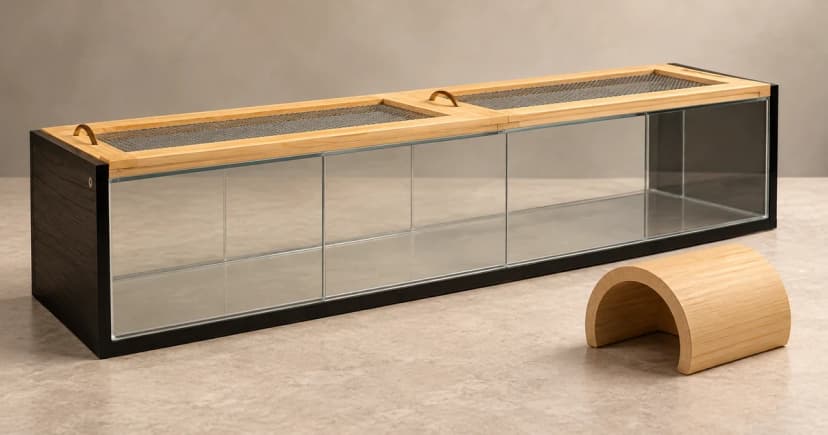
Clean a hamster cage by separating small, condition-led spot jobs from a larger clean. Remove wet or soiled material and unwanted food remains, but do not assume that every clean requires discarding all suitable familiar bedding and rearranging the entire habitat.
Plan a larger job for when the hamster is awake. Use an appropriate temporary carrier or supervised playpen, follow the enclosure and accessories' care directions, and return only suitable dry equipment and unsoiled bedding. This is a habitat-care process, not an instruction to wash the hamster.
Use the condition of the habitat, not one borrowed calendar
The three welfare guides below distinguish spot work from a fuller clean. Their examples are not identical, and none should become a reason to leave a wet patch until a scheduled date.
| Source | Spot-clean example | Larger-clean example and context |
|---|---|---|
| PDSA | Daily removal of wet or soiled bedding and uneaten food, with care of food and water containers. | Small cages may need a weekly full clean; larger arrangements may need it every few weeks. |
| Blue Cross | Remove soiled bedding and uneaten food every few days. | Usually once or twice per month, depending on cage size and whether a particular area is used for toileting. |
| RSPCA | Every-few-days removal of soiled bedding, food remains and droppings. | In most cases, once or twice per month, with the same cage-size and toileting-context qualification. |
“Once or twice per month” is not “once every one or two months.” Keep the source's unit and context intact. Review the particular habitat's condition and instructions rather than averaging these examples into a new schedule.
PDSA's guide is dated December 2024. Blue Cross displays a March 2023 review date and a March 2026 next-review date; the latter does not establish that a new review took place. Read the linked pages for their full procedures.
Decide what should come out
Inspect the accessible bedding and equipment when the hamster is awake. Separate three categories in your cleaning note:
- Wet, soiled or smelly material: remove it rather than retaining it for its familiar smell.
- Food remains that need removal: check accessible stores as well as the visible surface. Do not preserve spoiled contents as part of a nest.
- Dry, unsoiled familiar bedding or nesting material: consider retaining some for a larger clean, as the welfare guides describe.
A spot clean addresses the affected areas. It does not require emptying every compartment or changing all the accessories merely to make the habitat look newly arranged. If an item is damaged or its condition cannot be assessed, set it aside for the appropriate replacement or maker guidance.
Prepare a larger clean while the hamster is awake
Blue Cross describes using a pet carrier or playpen during the job. Use equipment suitable for your hamster, follow its instructions and supervise any playpen time. Do not wake the animal simply to fit a convenient cleaning slot, or place it in an unfinished, open habitat while you work.
Note the existing positions of the nest, hide and other equipment before removing them. A quick sketch or photograph of the emptying sequence can help you return the familiar arrangement. This is your household record, not a pass photograph or a measurement of the hamster's response.
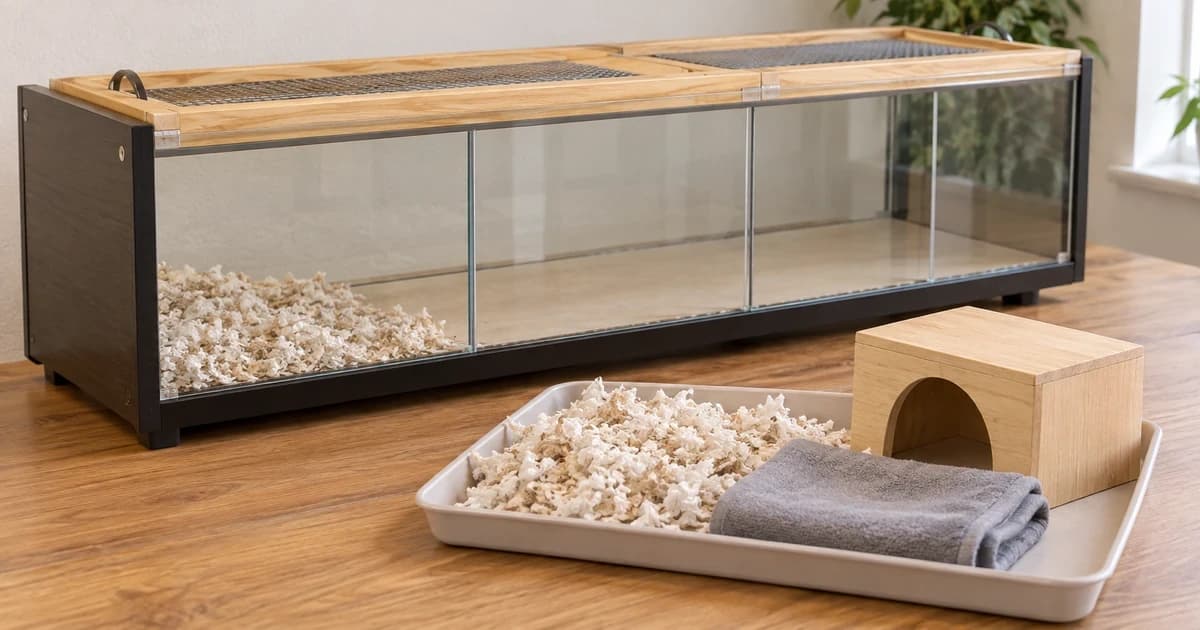
Put the selected unsoiled material in a separate suitable container, away from the waste and cleaning products. Blue Cross gives about a third of the bedding as an example; PDSA and the RSPCA describe keeping a small, unspecified amount. None authorizes saving contaminated material to satisfy a fraction.
Use care instructions for the actual materials
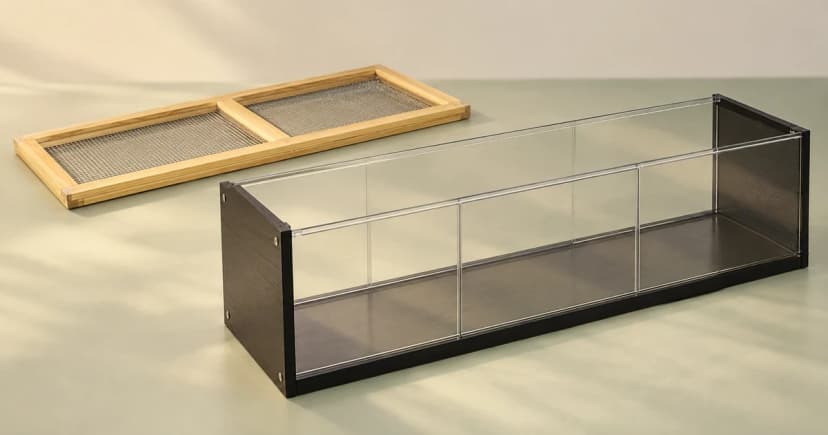
Identify the removable base, panels, hide, wheel and other accessories before choosing a cleaning method. A wooden hide and a washable plastic tray can have different restrictions. Do not assume that every item may be soaked because the enclosure can be wiped.
The guides discuss pet-safe cleaning products, rinsing and thorough drying. Their general wording does not identify a particular cleaner, concentration or contact time for your material.
Keep waste separate from retained bedding. Clean the permitted components and let them dry as their instructions require. Do not mix cleaning products or add a bleach recipe from a forum. This guide does not claim disinfection, a tested chemical residue level or approval of a specific Pawlivy product.
Return the dry equipment and familiar layout
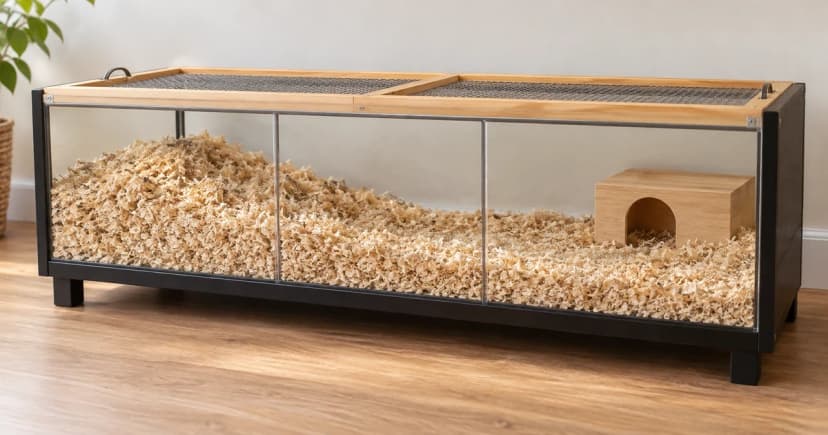
Check the permitted cleaned parts, joints and thicker surfaces before reassembly. Refill with the appropriate bedding, incorporating only the selected dry, unsoiled familiar material. PDSA advises returning nests, toys and bowls to their original positions.
Restore the intended access routes and secure the enclosure as instructed. Check the actual food and water equipment before returning the hamster through your usual suitable handling routine. Do not use a photograph of an apparently closed lid as proof that its fittings are secure.
Record the date, reason for the clean, material removed, material retained, products used according to their directions, drying status and any unresolved equipment question. A repeated wet area calls for investigation of the particular setup; changes that concern you about the hamster itself belong with your veterinarian.
When comparing hamster habitats, look for accessible parts and explicit care directions alongside dimensions. Wheel choice is a separate task covered in our wheel-sizing guide.
Our editorial policy explains the limits of source-based guidance.