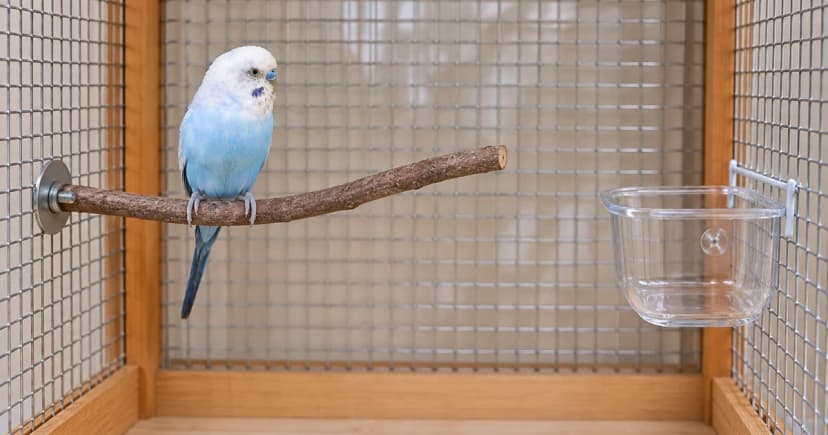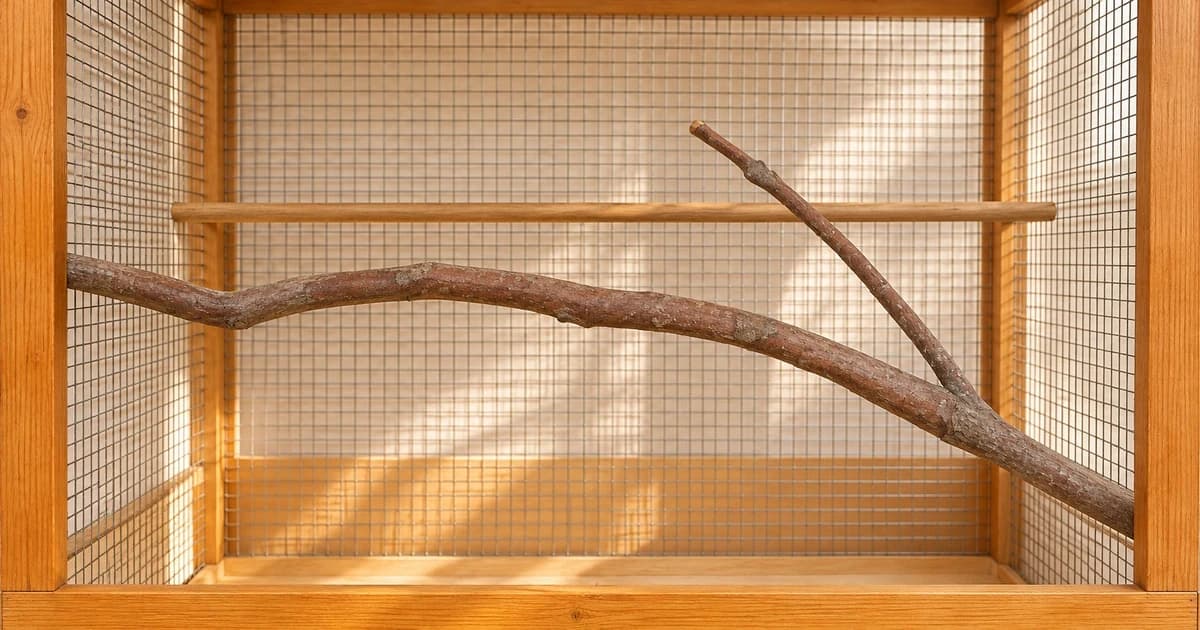
To clean bird perches safely, verify two permissions before touching the perch with water or a brush: (1) what cleaning method the exact perch's care sheet permits, and (2) which perch surfaces the cleaning tool's label permits. Both permissions must agree—a perch cleaner marketed for “wood and cement perches” never overrides a specific wooden perch whose own instructions allow damp-cloth wiping only, and a sand-coated perch remains excluded from sand-restricted tools even if it has a wooden core inside.
Identify the Perch and Record Its Position Before Removal
Check the brand name, model number, and care label for the exact perch in your cage, including the branch material, surface coating, and metal mounting hardware. Natural hardwood branches, sand-coated dowels, cement conditioning perches, and cotton-rope perches require completely different care.
Before loosening any wing nut, photograph or sketch the perch's height, angle, and bolt arrangement so you can restore the familiar setup afterward without blocking food bowls or flight space. When you plan an intentional layout change rather than routine cleaning, use our bird-perch layout guide.
Keep Wiping-Only and Brush-Washing Permissions Separate
Even among natural wood bird perches, manufacturers specify very different moisture limits:
1. Prevue 9-Inch Branch Coffeawood Bird Perch, Model 1040 (Damp-Cloth Wipe Scope): Prevue identifies model 1040 as coffeawood with stainless-steel hardware. Its care instructions specify cleaning as needed with a damp soft cloth, followed by complete drying before reuse, plus regular inspection and retirement if worn or damaged. Those instructions do not authorize soaking, scrubbing under running water, or dishwashers.
2. parrotJOY Natural Perches and Toys FAQ (Brush-Wash Scope): By contrast, parrotJOY's FAQ permits washing its own natural wood perches and toys with hot water, dish soap, and a vegetable brush, while advising against prolonged soaking and directing owners to blot moisture with an absorbent towel before air-drying completely. Keep that soap-and-brush method attached strictly to parrotJOY's own products—it never overrides Prevue 1040's damp-cloth rule.
Verify the Dual-Permission Rule: Perch Care Sheet + Cleaning Tool Label
Petmate's JW Bird Perch Cleaner (SKU 31321) has its own published surface rules: dampen the perch with warm water, move the cleaner gently across the perch, and use it only on wood and cement perches—its instructions explicitly exclude sand perches.
Before combining any cleaning tool with a perch, check both boxes in the verification card below—if either box is No or unverified, do not proceed with that tool or wet method:
| Candidate Perch & Surface | Check 1: Does the Perch Permit This Treatment? | Check 2: Does the Tool (e.g., JW SKU 31321) Permit This Surface? | Combined Decision (Both Must Agree) |
|---|---|---|---|
| Prevue Coffeawood Perch Model 1040 + JW Bird Perch Cleaner (warm-water dampen & scrape/brush) | ☐ No / Not stated: Prevue 1040 specifies cleaning with a damp soft cloth only and complete drying. | ☑ Yes (surface category only): JW lists wood and cement surfaces. | STOP for JW tool on Prevue 1040: Tool permission for “wood” does not override Prevue 1040's damp-soft-cloth restriction. Use a damp soft cloth only. |
| Sand-Coated Perch (even with a wooden core) + JW Bird Perch Cleaner SKU 31321 | Depends on exact sand-perch label. | ☐ No (Explicitly Excluded): JW SKU 31321 expressly excludes sand perches. | STOP: Never use JW Bird Perch Cleaner on a sand-coated surface, regardless of what core material sits underneath the sand coating. |
| parrotJOY Natural Wood Perch + Vegetable Brush, Dish Soap & Hot Water | ☑ Yes: parrotJOY FAQ permits hot water, dish soap, and a vegetable brush (no long soaking). | ☑ Yes: Vegetable brush is the tool specified by parrotJOY's own FAQ. | PROCEED within parrotJOY scope: Wash, blot with absorbent towel, and air-dry completely before returning to cage. |
Finish Drying and Inspect Before Returning the Perch
Keep the perch out of the cage until its full drying stage is complete—blotting surface water with a towel is only the first step, not proof that wood grain or bolt joints are dry. Inspect the branch, bark, end grain, and mounting washers/wing nuts for splits, looseness, or rust, and retire any worn or damaged perch as Prevue's instructions direct.
Restore the Instructed Attachment and Original Position
Reinstall the dry, intact perch using its original washers and fastener sequence, matching your pre-clean photo so the branch sits at its familiar angle without overhanging food or water dishes. Log the perch model, cleaning method, drying completion, and whether the perch was returned to use or retired due to wear.
For full cage maintenance, see our whole bird-cage cleaning guide and bird-toy care guide, and check the care and mounting rules on each product sheet when browsing natural wood perches.