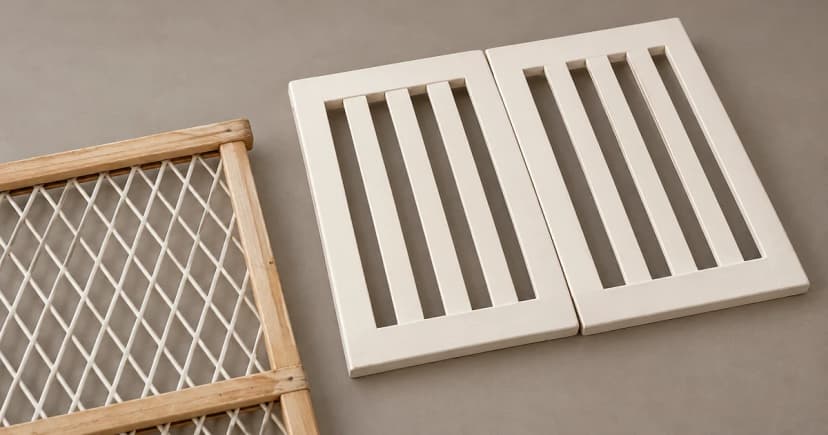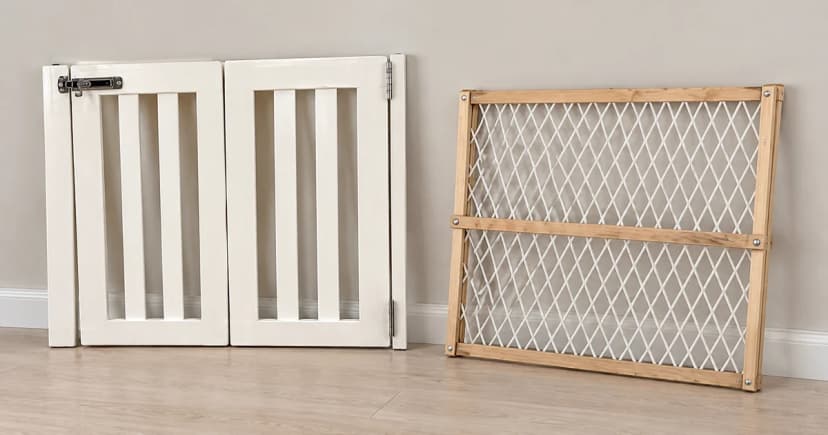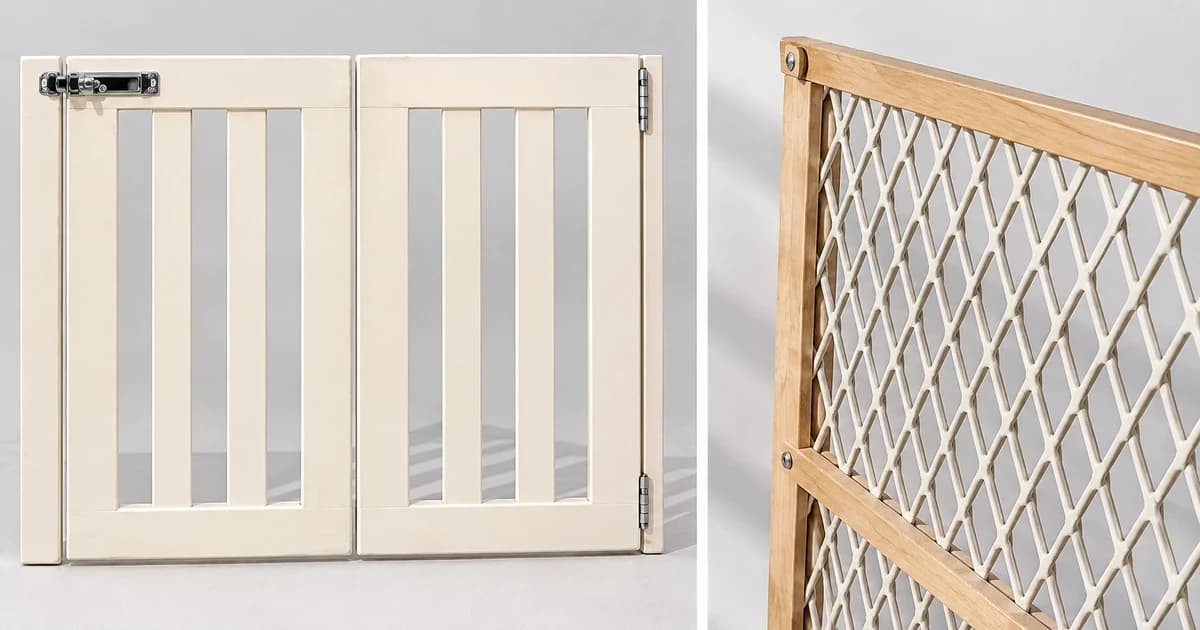
If your dog spends half the afternoon resting his chin on the kitchen doorway gate waiting for dinner scraps, you already know what the bars look like by Friday: a sticky glaze of dried drool, muddy front-paw smudges, and tufts of shed undercoat twisted around the floor spindles. When it comes to how to clean a pet gate without wrecking the latch or making the wall cups slip, the rule is simple: vacuum dry fur out of the hinges first, wipe the bars or mesh down with a soft sponge dipped in lukewarm water and mild dish soap, and towel-dry every metal spindle and rubber foot before tightening the gate back against the wall.
Where people accidentally ruin a perfectly good gate is by using the wrong cleaner for the material—like spraying bleach or kitchen degreaser onto a wooden frame, or trying to unbolt a retractable mesh roll to soak it in the bathtub. Here is how we clean the three main styles of pet gates in our own home, backed by the exact care limits from Carlson, Regalo, and Richell.
Match Your Cleaner to Your Gate Material
Not every pet barrier can handle a wet sponge the same way. A cleaner that wipes dried mud right off powder-coated steel can strip the clear coat off a hardwood barrier or cloud up a retractable vinyl screen. Compare how three major gate makers handle cleaning in their instruction manuals:
| Gate Style & Example Model | What You Can Safely Use | What Will Damage the Gate |
|---|---|---|
| Powder-coated steel walk-through gate (Carlson Extra Wide 0930) | Warm water and mild detergent on a soft sponge or microfiber cloth, followed by wiping or air-drying completely. | Bleach, scouring powders, or abrasive scrub pads that scratch the painted steel and let rust creep into the welds. |
| Retractable roll-up mesh gate (Regalo Retractable 1850) | Pull the mesh out across the doorway, lock the latch, and sponge it in place with warm water and mild soap; let it dry fully before retracting. | Never try to unscrew the spring-loaded side cassette to machine-wash the mesh, and never roll a wet screen back into the dark housing where it will mildew. |
| Hardwood & wire freestanding barrier (Richell Freestanding Gate) | Wipe gently with a soft cloth wrung out in diluted mild detergent, then rub dry immediately with a dry towel or air-dry in the shade. | Rubbing alcohol, paint thinner, benzene, stiff scrub brushes, or leaving wet wood out in direct blazing sunlight (which warps and cracks the frame). |
How We Tackle the Three Worst Pet Gate Messes
Between deep cleanings, you usually only need ten minutes to fix the three spots that collect 90% of the grime:
1. Crusty Nose Prints and Dried Slobber on Vertical Bars
Dried dog saliva acts like glue on painted metal and hardwood slats. Instead of scraping at it with a fingernail or green scouring pad, wrap a warm, damp microfiber cloth around the bar for thirty seconds to soften the crust. Once it loosens, wipe downward with a drop of mild, unscented dish soap, then follow immediately with a clean damp towel so no slippery soap film stays behind where your dog licks the bars.
2. Pet Hair Packed Into Pressure-Mount Spindles and Bottom Hinges
If you use a walk-through pressure gate in a hallway, shed fur drifts into the lower hinge pin and wraps tightly around the threaded tension rods at the four corners. Every couple of weeks, run a vacuum crevice brush around the bottom pivot pin and pull out any hairballs before wiping the rod down. Keep heavy grease and oil away from the threaded tension wheels—pressure gates rely on dry friction to hold their setting, and lubricated threads will slowly vibrate loose every time you slam the gate door shut.
3. Slippery Wall Cups and Rubber Pressure Pads
Have you ever noticed a pressure-mounted gate starting to slide sideways against the doorframe even when the tension knobs are cranked tight? Usually, a microscopic layer of floor wax, dust, and airborne kitchen grease has coated the rubber pads. Wipe both the rubber spindle feet and the inside of the wall cups with warm soapy water, rinse clean, and dry them completely before re-tensioning the gate. Never remount wet rubber pads against painted drywall—trapped moisture will peel a circle of paint right off your trim the next time you move the gate.
Do a 30-Second Safety Check While the Gate Is Clean
Both Carlson and Regalo emphasize the same rule in their manuals: cleaning day is when you catch loose hardware before your dog does. Before walking away, give the top rail a firm tug to make sure the pressure spindles haven't backed off, check that the walk-through latch clicks shut on the first swing, and inspect the bottom small-pet door (if your gate has one) for cracked plastic pins. If you are moving the gate to a new doorway after cleaning, review our guide on checking pet gate openings and mounting requirements, or browse our pet gates and playpens if you need a taller barrier for a jumper.