Some dogs may benefit from a raincoat, but there is no rule that every dog needs one whenever it rains. Decide what you want the garment to do, consider the individual dog and outing, then check whether that particular coat allows comfortable movement. A rain layer and a warm coat solve different problems.
If your dog already walks comfortably in mild rain, a coat might mainly help manage wet fur afterward. If warmth is the concern, evaluate insulation separately. Neither purchase makes unsuitable weather safe or replaces veterinary advice about a dog's health.
Start with the problem you want to solve
Write down your reason for considering a coat before comparing colors or features. Is the difficulty wet fur, a cold outing, clothing discomfort or reluctance to go outside? Those situations need different checks.
PDSA's winter-coat advice distinguishes a rain layer from a garment with added warmth. It also explains that the need for clothing depends on factors such as a dog's fur, age, health and the climate. Apply that advice to the actual conditions you are considering, rather than treating a raincoat as a universal requirement.
| Your concern | What to investigate | What the label cannot establish |
|---|---|---|
| Rain reaching the covered body area | The exact garment's intended use, coverage and construction | That every part of the dog will stay dry |
| Cold during an outing | Individual care needs, insulation and the outing plan | That a rain shell supplies enough warmth |
| Dog dislikes wearing clothes | Fit, movement and a gradual introduction | That extra practice will make an unsuitable coat comfortable |
| Dog avoids going outside | The weather, environment and any change from usual behavior | That a raincoat will resolve the reason |
Consider the individual dog and the planned outing
Use your dog's usual response as a starting point, and notice changes. A short trip into the yard and a long exposed walk involve different conditions. Consider rain, wind, temperature, activity and access to shelter together. There is no temperature or rain-duration threshold in this guide that applies to every dog.
PDSA identifies fine or thin fur and age or health circumstances as reasons some dogs need more help with warmth. That is a reason to assess their needs, not to choose clothing solely from a breed list. For a dog with a health condition or unusual sensitivity, ask your veterinarian how to plan wet or cold outings.
During cold weather, PDSA advises bringing a dog into warmth if they shiver or slow down. Do not use a coat as permission to continue an outing when the dog is not coping. Shorten or change the plan according to the conditions and your dog's response.
Check the exact garment instead of assuming from its name
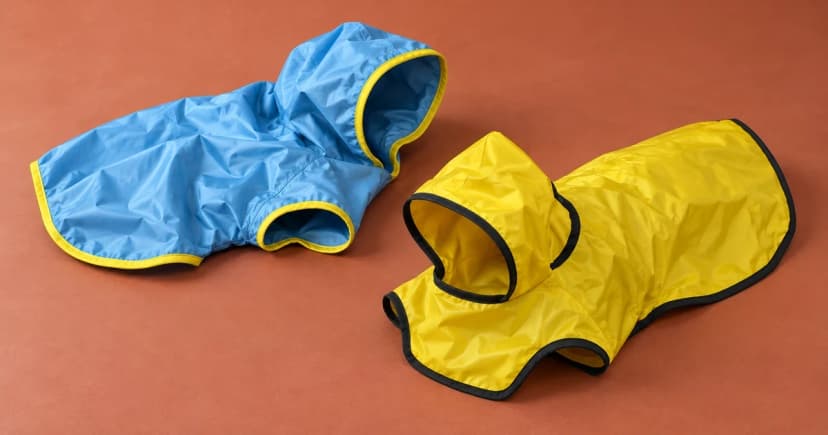
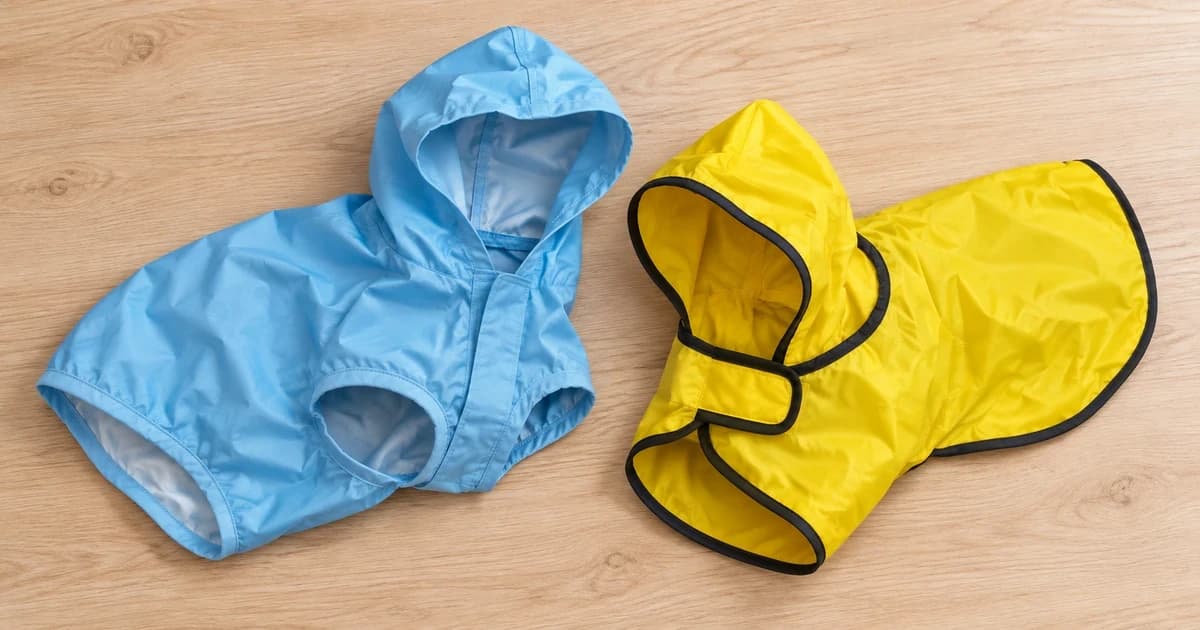
Two items sold as raincoats can differ in lining, body coverage, openings and fastening design. Read the description and instructions for the actual model.
For a concrete construction example, Ruffwear describes its Sun Shower with a storm collar, extended vest coverage and a leash portal for use over a harness. Those are features of that named garment. They do not verify the fit or weather performance of another coat, and a leash opening is not itself a leash attachment point.
Compare the manufacturer's required body measurements with its own chart. The American Kennel Club's raincoat guide explains why weight alone does not describe clothing fit: dogs with the same weight can have different proportions. Use the model's stated landmarks, units and fitting instructions, and clarify any unclear size information before ordering.
When you try the coat, watch ordinary standing, walking and turning. Check whether the garment pulls, shifts into an opening or interferes with toileting. Inspect the closures and harness access together if both items are used. An attractive coat that changes how your dog moves needs a fit reassessment.
You can browse dog raincoats once you know the purpose and measurements you need to compare.
Give your dog a choice during the introduction
A coat that fits on paper may still feel unfamiliar. Dogs Trust recommends a gradual introduction: first let the dog investigate the garment, then build up the experience of the opening, contact with the body and movement while wearing it.
Work through the steps that match your coat's design. Reward voluntary interest and keep the experience manageable. If the dog retreats or appears uncomfortable, remove the coat and return to an easier stage another time. Comfortable progress matters more than finishing the sequence before a rainy walk.
When wearing the coat becomes easier, observe a few ordinary movements in a calm setting. Allow the dog to stop and investigate. Acceptance is something to assess as you go; it is not established by holding the dog still until the fastening closes.
Make a short decision record
Keep these notes with the garment information:
- The purpose you need: rain coverage, added warmth or both.
- The weather and type of outing you considered.
- The exact model, confirmed purpose, required measurements and size.
- Your dog's response to introduction and normal movement.
- Any unresolved fit, care or health question.
Revisit the decision when the weather, dog or garment changes. Check the label before maintaining the coat; our dog raincoat cleaning guide explains how model-specific care instructions differ.
A useful raincoat addresses a specific need and remains acceptable for your dog to wear. If either part is unresolved, answer that question before relying on the garment for an outing.