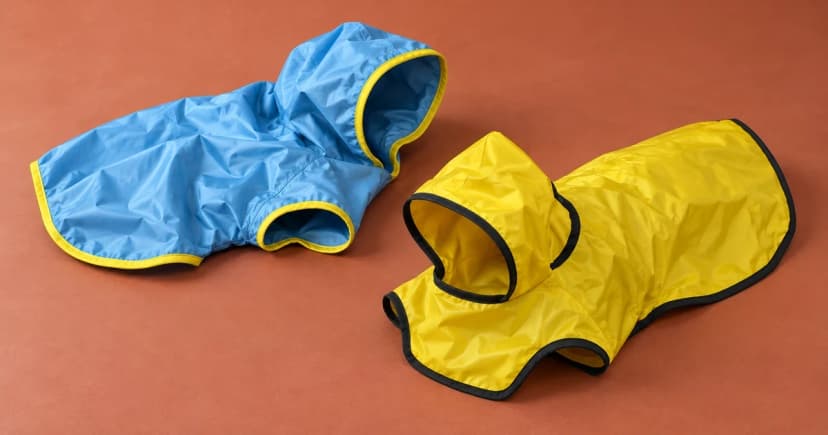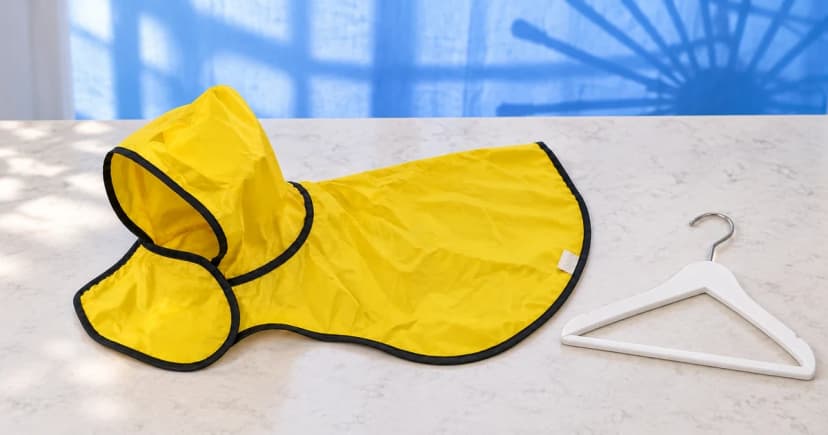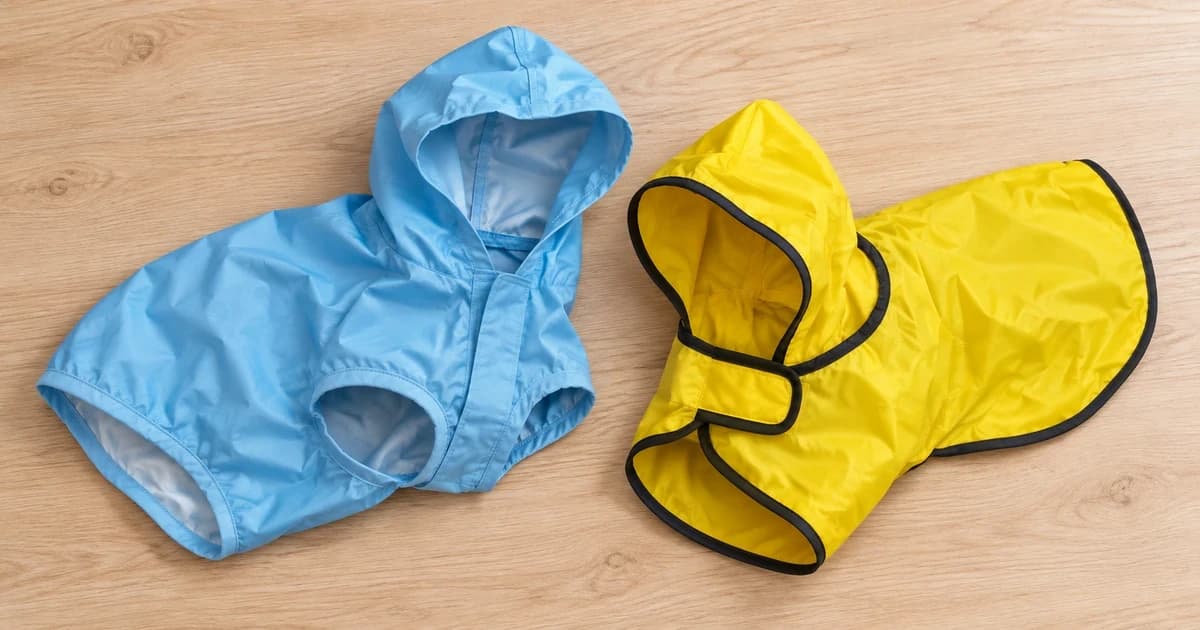
When owners ask do dogs need raincoats—or wonder does my dog need a raincoat for everyday wet walks—the direct answer is that some dogs benefit from a rain layer, but there is no blanket rule for every dog. Making a practical decision comes down to three checks: whether you need surface rain coverage or cold-weather warmth, how the exact dog raincoat fits your dog's proportions, and whether your dog moves freely and willingly while wearing it.
If your dog already walks comfortably in light rain, a shell mainly reduces wet fur indoors afterward. If chilly wind or low temperature is the real concern, evaluate thermal insulation separately. Neither garment makes hazardous weather safe or replaces veterinary guidance for an individual dog.
Start with the problem you want to solve
Write down the specific difficulty you want the coat to address before comparing colors or fabric names. Managing damp coat hair, keeping a fine-coated dog warm, overcoming reluctance to step outside, and fitting a harness underneath a shell require different checks.
PDSA's veterinary winter-coat Q&A separates an unlined waterproof shell from a coat built for warmth, noting that clothing needs vary by coat thickness, age, health, and local weather. Use the table below to match your concern to what a garment can and cannot do:
| Your concern | What to investigate | What a raincoat label cannot establish |
|---|---|---|
| Rain soaking the back and chest | The exact garment's coverage panels, belly wrap, and seam construction | That legs, paws, head, and tail will stay completely dry |
| Cold during a wet outing | Your dog's coat type, age/health needs, and whether the garment includes thermal lining | That a thin rain shell provides winter insulation |
| Dog dislikes wearing clothing | Cut, strap placement, movement clearance, and a gradual reward-based introduction | That extra wear time will make a pinching or restrictive coat comfortable |
| Dog hesitates to go outside in rain | Weather intensity, footing, noise, and any change from normal health or behavior | That putting on a coat will remove the underlying hesitation |
Consider the individual dog and the planned outing
A quick potty break in a sheltered yard and a long exposed walk in wind-driven rain place very different demands on a dog. PDSA notes that dogs with thin or fine fur, senior dogs, very young puppies, and dogs with certain medical conditions may need extra protection in cold, wet weather—whether you are choosing a raincoat for small dogs or a raincoat for large dogs.
During cold or wet outings, PDSA advises bringing a dog indoors to warm up if they start shivering or slowing down. Never treat a coat as permission to extend a walk when your dog shows signs of cold stress or discomfort.
Check the exact garment and body measurements
Two products sold as dog raincoats can differ completely in lining thickness, chest coverage, leg straps, and harness access. Always check whether a listing specifies an unlined rain shell or an insulated coat rather than guessing warmth from product photos.
For a concrete construction example, Ruffwear's Sun Shower Dog Raincoat documents an oversized storm collar, non-insulated waterproof shell fabric, side-release buckles, leg loops, and a back leash portal for wearing over a harness. Those features belong specifically to the Sun Shower design; they do not establish the coverage of other coats, and a fabric leash portal is a pass-through opening rather than a load-bearing leash ring.
Compare the brand's required body landmarks with its own size chart. As the American Kennel Club's raincoat guide notes, body weight alone cannot determine coat fit because two dogs of the same weight can have very different ribcage depths and back lengths. Follow our step-by-step guide to measure chest and back for the selected coat, then match those numbers to the manufacturer's exact model chart and measurement endpoints before ordering.
Use a try-on and movement observation checklist
Even when measurements match on paper, test fit and voluntary acceptance indoors first. Dogs Trust recommends a gradual coat introduction that lets the dog sniff the garment, step or place their head through the opening with rewards, and build up wear time in short, comfortable stages. If your dog retreats, freezes, or shows discomfort, take the coat off and return to an easier stage later.
| Try-On Observation Point | What to Watch Indoors Before an Outing | Action If Restricted or Misaligned |
|---|---|---|
| Standing & shoulder clearance | Check collar neck opening, chest strap tension, and shoulder blade freedom while standing naturally. | Adjust straps within documented range or stop use if the neckline presses on the throat or shoulders bind. |
| Walking & turning gait | Cue several normal steps and turns in both directions; watch for shortened stride or body stiffness. | Remove the coat if fabric pulls across the forelegs or leg loops rub during movement. |
| Toileting clearance | Verify that belly panels, abdominal straps, and rear hem clear both urination and defecation postures. | Do not use outdoors if the belly wrap or tail cutout obstructs normal toileting. |
| Harness portal & closure alignment | If worn over a harness, confirm the leash portal sits directly over the harness D-ring without twisting the coat. | Re-check harness and coat sizing together; never clip a leash directly to a raincoat's fabric portal. |
Make a short decision record
Keep these notes together when evaluating dog raincoats:
- The primary goal: unlined rain protection, added thermal insulation, or both.
- The weather conditions and walk duration you plan to cover.
- The exact garment model, chest/neck/back measurements, and size chart match.
- Your dog's voluntary response during gradual introduction and the four movement checks above.
- The model's specific washing and reproofing rules (see our dog raincoat cleaning guide for care boundaries).