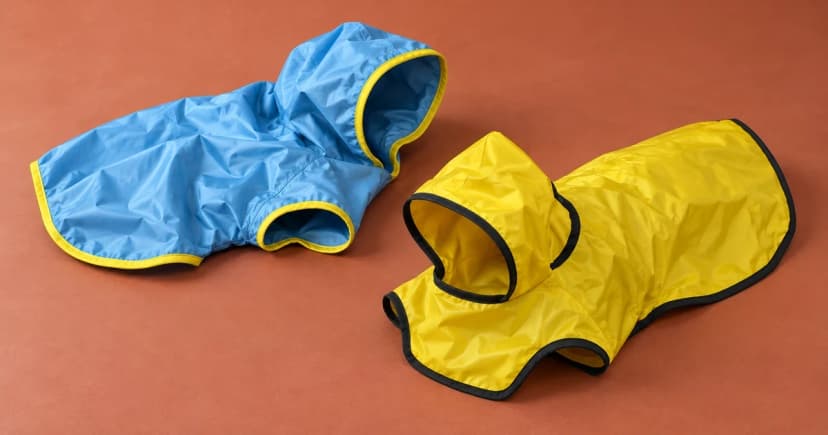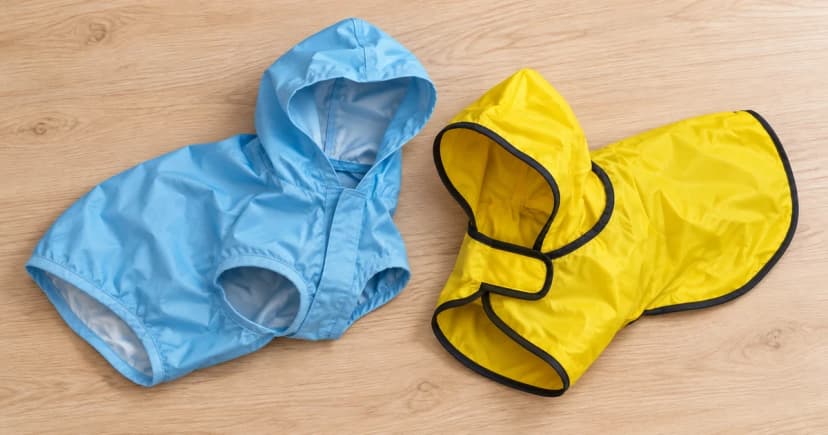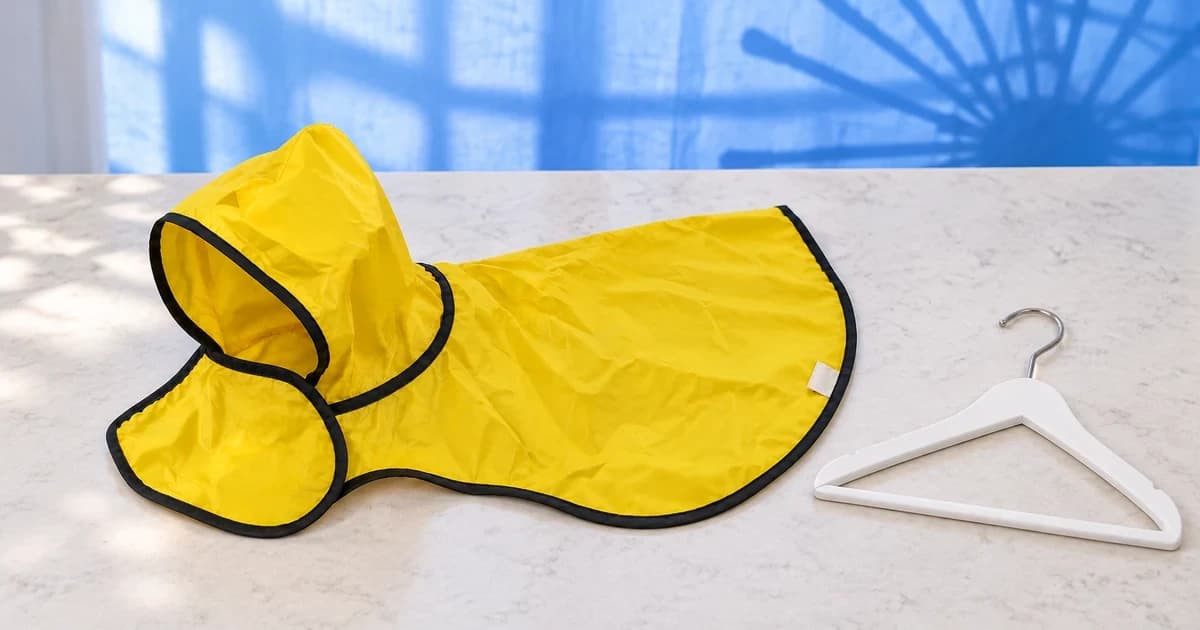
Knowing how to wash a dog raincoat starts with reading the sewn-in care label on that exact garment to separate two decisions before adding water: whether the coat requires hand washing or permits a cold, gentle machine cycle, and how the shell and lining must be supported while drying. Once you confirm the label rules for your specific dog raincoat, follow a consistent sequence—brush off loose mud and hair, fasten all buckles and hook-and-loop closures, wash with the specified mild detergent and water temperature, air dry away from heat, and check interior seams and linings before storage.
1. Compare model-specific wash, detergent, and drying rules
Two waterproof coats that look similar on the outside can carry opposite laundry rules. Save a clear photo of your coat's sewn-in care tag before it fades, and compare how published manufacturer instructions differ across specific garments:
| Model or brand care guide | Permitted wash method & temperature | Detergent & prohibited treatments | Permitted drying method & support | Published source scope |
|---|---|---|---|---|
| Ruffwear Sun Shower Dog Raincoat | Machine wash in cold water on a gentle cycle after securing all fasteners | Mild detergent; do not bleach, do not iron, and do not dry clean | Hang to air dry completely before storing (Ruffwear cleaning tips) | Current Ruffwear Sun Shower product care listing & apparel care guide |
| Kurgo Halifax Rain Shell | Hand wash only (water temperature is not listed on the web page—check the garment's sewn-in tag) | Use the sewn-in garment label to confirm detergent rules rather than copying a machine-wash recipe | Follow the sewn-in garment tag for drying orientation and support | Inspected Kurgo Halifax Rain Shell product specification |
| Hurtta Apparel Care Guide | Varies by product label: some coats are hand-wash only, while others permit machine washing at the temperature and spin speed printed on the tag | Follow the individual care tag; brush off sand and mud first to reduce unnecessary washing | Air dry in a ventilated space on a hanger or clothesline; never hang wet coats by elastic leg loops or drawstrings, and check thermal-foil rules before turning inside out | Hurtta published care and repair guide |
This table summarizes published care rules from Ruffwear, Kurgo, and Hurtta rather than hands-on laundry testing. Whenever a product page lists only "hand wash" without temperature or detergent specifics, check the physical tag stitched inside the coat before laundering.
2. Prepare the outer shell, inner lining, and closures
Open the coat flat and inspect both sides before placing it in water:
- Brush off dry debris first: Following Hurtta's preparation advice, shake or wipe away loose hair, dried mud, and sand from the belly panel, collar folds, and seams so grit does not abrade the waterproof membrane during washing.
- Check removable vs. fixed parts: If a liner or hood unbuttons or unzips by design, check whether it has separate care instructions. Never unpick stitching or force fixed hardware apart.
- Fasten all closures: Close buckles, zippers, and hook-and-loop (Velcro) straps as directed by Ruffwear and Hurtta so rough hooks do not snag the inner lining or mesh during the wash.
- Separate dirt from seam damage: Note any lifted seam tape, torn webbing, or cracked buckles before washing. Laundering cleans fabric, but it cannot repair a damaged closure or restore worn waterproof coatings.
3. Wash according to the garment's exact route
Keep hand-wash-only coats out of the washing machine—even a washer cycle labeled "delicate" or "hand wash" uses mechanical agitation and spin speeds that may violate a hand-wash-only shell label. For machine-washable coats like the Ruffwear Sun Shower, match the washer's water temperature (cold), agitation (gentle), and mild detergent to the label without adding bleach or fabric softeners. For hand-wash coats, gently clean soiled panels and rinse thoroughly without wringing or twisting the waterproof membrane.
4. Support the coat properly while air drying and recheck before storage
Support the weight of the wet coat along its main body on a smooth hanger or clothesline rather than suspending it by thin leg loops or elastic drawstrings. Check your coat's label before turning a lined raincoat inside out to dry, especially if the interior uses a specialized foil or mesh layer.
Before folding or hanging the coat in a closet, feel inside the chest panel, collar seams, and pocket folds around the buckles to verify the entire garment is bone-dry. Once dry, test the buckles and straps. If the raincoat pulls tightly across the shoulders or shifts to one side on your dog, review our dog clothing measurement and fit guide—extra washing cannot fix a sizing mismatch across dog clothing. See our editorial policy for how manufacturer care specifications are documented.