To fold and store a pet stroller, use its exact model’s sequence from compartment preparation through frame release to the documented storage position. Keep the stroller empty and the pet clear of moving parts. A canopy closure, handle adjustment and frame release may be different operations, even when their controls are close together.
The three Pet Gear manuals below show why a generic “press the button and push down” instruction is incomplete. They describe different mechanisms from one manufacturer, not three independently tested products. Use the matching manual and its diagrams beside your actual stroller.
Locate the full folding section before moving the frame
Match the model label to the manual, including the illustrated control layout. Read through the whole folding section and any continuation page before starting. Identify what happens to the compartment and canopy first, which controls release the frame and what the final illustration shows.
An unfamiliar lever is not a reason to try every moving part or borrow directions from a similar-looking stroller.
Remove the pet and loose belongings before beginning this empty-equipment task. The manuals warn to keep the pet’s body clear of moving parts during adjustments. Arrange for the pet to remain elsewhere with appropriate supervision while you concentrate on the stroller.
Compare the documented sequences, without combining them
PG8650NZ: handlebar buttons, then the side latch
On page 8 of the No-Zip Excursion PG8650NZ manual, the sequence begins by folding the handlebar down using the buttons at its ends. Next, lift the hooked part of the side latch until it releases. The manual then shows the sides folding inward and the stroller being pushed forward; use Figures P–R for the actual positions.
This folding page does not add a storage-catch locking step. Do not import one from the other examples.
PG8250: canopy preparation and coordinated C/D controls
Pages 5–6 of the Special Edition PG8250 manual start by unzipping the stroller and opening the canopy. Slide the secondary frame release labeled C to the right and rotate the folding mechanism forward while squeezing the main release labeled D, until the stroller releases and the handle lowers.
The prose says almost 180 degrees; the continuation diagram labels the rotation as 180 degrees. Read both pages together, using the identified controls and endpoint. This is not a rotation target or a one-button recipe for another model.
PG8030NZ: separate compartment preparation from frame folding
Page 7 of the Happy Trails Lite No-Zip PG8030NZ manual first shows the compartment stage: unlock its latch, open the canopy and unwrap the hook-and-loop flaps around the tubes on both sides. Then lift to unclip the compartment from the frame and lift the compartment as illustrated. At that stage, the latch remains unlocked, the canopy open and both flaps unwrapped.
Page 8 gives the later frame-folding stage: lock the brakes, close the canopy, stand behind the stroller, lift both side latches, fold as illustrated and engage the locking latch. Its storage note places the wheels astride the frame; they must not press against the frame because that can damage the tires.
“Open” and “closed” refer to different stages here. The sequence does not authorize removing the compartment completely or skipping from its release directly to a guessed collapsed position.
Keep a stage note beside the matching diagrams
A useful personal note preserves the order instead of reducing the procedure to a single canopy position. Write it from your own manual; leave an unclear field unresolved.
| Stage to identify | Record for your exact unit | Reason to pause |
|---|---|---|
| Compartment or fabric preparation | Manual page, relevant closures and the specified starting arrangement. | Fabric or an attachment remains where the next movement needs to occur. |
| Frame release and movement | The labeled controls, coordinated actions and matching drawing. | A control does not match or the frame does not follow the shown movement. |
| Completion | The illustrated final position and any expressly required latch or wheel arrangement. | You would need to add a tie, force a catch or guess a different resting position. |
This note does not turn a partial manual into a complete procedure. For example, remembering an initial release while missing the continuation page can leave the owner without an identified endpoint. Return to the whole sequence instead of pressing harder. Do not lubricate or alter a mechanism to make a guessed movement work; seek the maker’s instructions if the correct sequence still cannot be completed.
Choose the storage space as carefully as the fold
The care sections of all three manuals specify a clean, dry storage place and say not to place heavy items on top of the stroller. Those are storage directions, not permission to treat any folded frame as a shelf.
Plan where the documented folded arrangement will fit without adding a new storage method. A narrow gap that requires changing the wheel position or propping the stroller upright is still an unresolved arrangement unless its own instructions allow it. Do not assume the handle is a carrying point or add a strap to hold a fold the manual does not explain.
Keep cleaning and maintenance separate from folding. Follow the unit’s component-specific care instructions before storage; this guide supplies no universal washing, lubrication, repair or wheel-removal procedure.
Opening it again is another task. Our pet stroller unfolding guide covers the frame, compartment and wheel checks before loading. It should not be treated as permission simply to reverse every folding movement.
When comparing pet strollers, look for an identifiable model and usable folding and storage instructions. The broader dog travel categories cover other equipment tasks; no listing or photograph here confirms stock, exact mechanism, capacity or transport suitability.
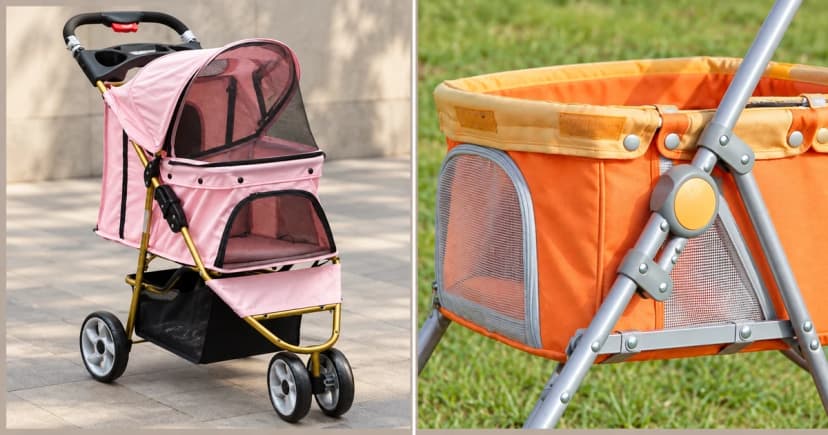
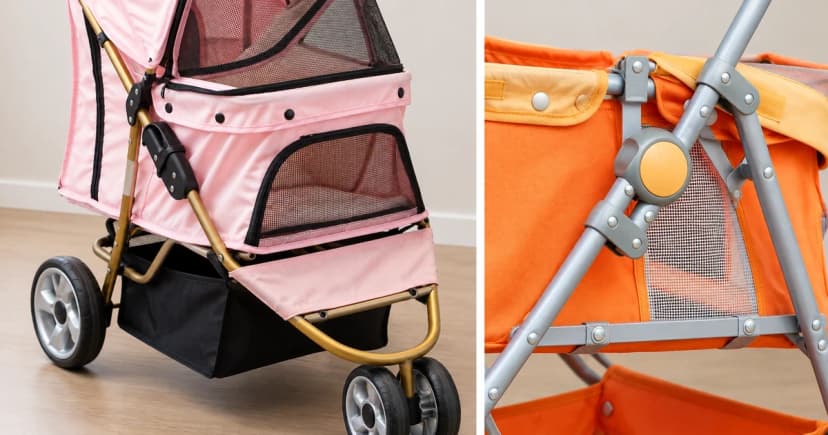
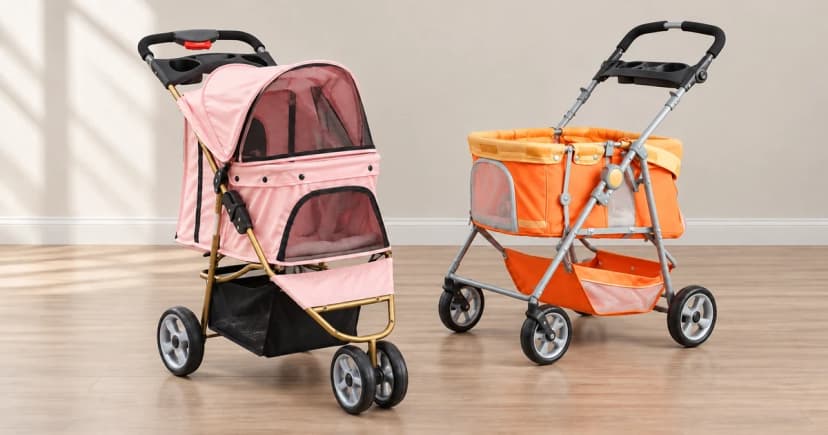
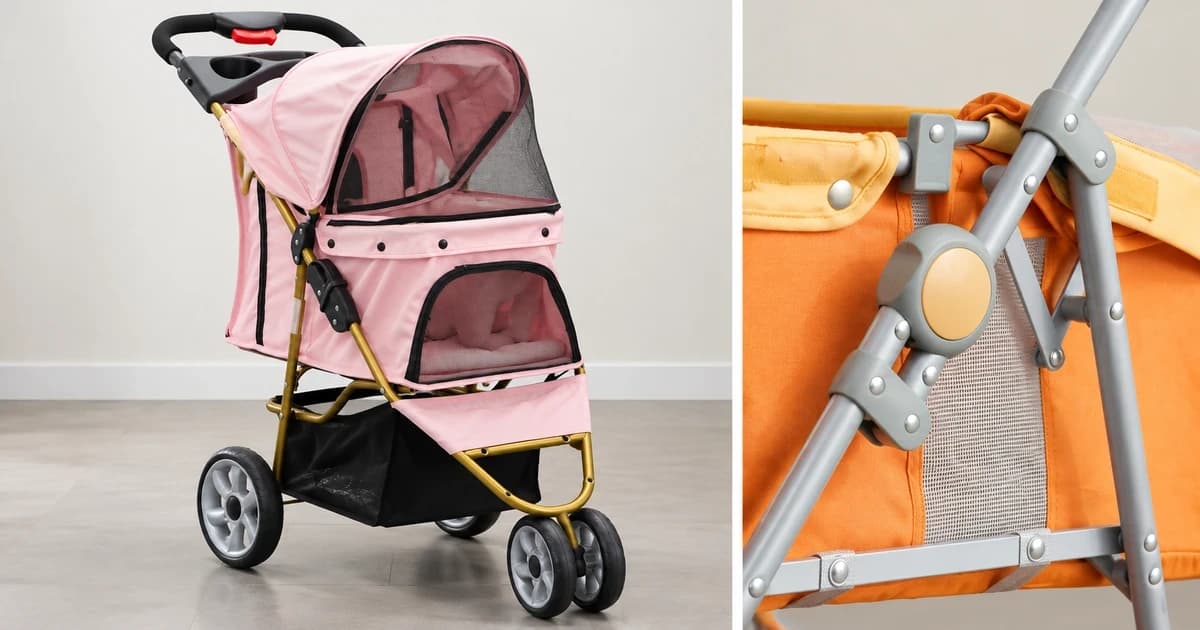
The main illustration reconstructs empty stroller appearance and a separate frame detail from two licensed photographs; neither is identified as a named Pet Gear model or demonstrates a verified fold. See our editorial policy.