Clean a pet stroller according to the care instructions for its fabric, frame and wheel assembly separately. If those instructions conflict, resolve the method with the maker before applying a cleaning agent. A removable-looking panel or an already folded frame does not supply permission to wash the whole unit.
Start with the exact model and the component you intend to clean. The Pet Gear examples below show a real ambiguity worth resolving, rather than a universal detergent, washing cycle or maintenance routine.
Identify the component before choosing a cleaner
Match the stroller's model label to its instructions, then find the care section. Distinguish the fabric compartment or liner from the supporting frame, wheels and nearby brake or swivel controls. A single dirty area can span several of those parts without giving them the same care requirements.
Look for a care label or separate instructions for the actual fabric piece. Do not substitute a general baby-stroller guide or another pet stroller's removable-cover instructions.
Arrange the task with the stroller empty and the pet elsewhere under appropriate supervision. Cleaning, adjustments and an animal occupying the compartment are separate activities.
Read both care sections: these manuals contain a conflict
The care pages in Pet Gear's PG8650NZ manual, page 9, PG8250 manual, page 6, and PG8030NZ manual, page 9 use common wording. They describe wiping the frame with a lightly oiled cloth and excluding detergents or abrasives. Their wheel-maintenance sections later describe warm soapy water for the rear wheel assembly and the rest of the frame, followed by rinsing and thorough drying.
The same pages limit fabric care to spot cleaning and exclude brake components and swivel locks from lubrication. They do not provide blanket permission to machine-wash a compartment, soak an assembled stroller or remove fabric for laundry.
These are three manuals from one manufacturer with repeated care text, not three independent confirmations that reconcile the difference. We cannot decide from those passages which frame-cleaning instruction takes priority for your unit.
Send the model number and identify the affected component, with a private photograph if useful. Mention neighboring fabric, brake or swivel components so the answer can address the actual arrangement.
A useful request would be: “I need to clean this frame section on this model. The two care sections appear to give different methods. Which instruction applies here, and are there components that must be kept clear of the agent?” Keep the answer tied to that unit and task instead of turning it into a rule for every stroller.
If the reply still leaves the component, agent or method unclear, resolve that point before starting. Choosing one paragraph because it sounds gentler, mixing the two or adding a household cleaning recipe would not answer the underlying question.
Fabric access and fabric washing are different permissions
Do not pull apart an unidentified compartment just because its fabric looks detachable. First establish whether the actual piece has its own removal and care instructions.
Likewise, opening a closure during folding does not establish that the whole cover is meant to come away for laundry. Our pet stroller folding guide handles the separate model-specific stages. Use it for that task rather than treat a folding action as a cleaning instruction.
Keep a fabric question narrow: identify the piece, the care label and the permitted cleaning method. Do not extend a spot-cleaning instruction to the entire compartment, or assume that an appearance change proves the inside is dry, disinfected or ready for use.
Keep wheel cleaning separate from dismantling and lubrication
If access to the area seems to require removing a wheel or opening a joint, pause the cleaning task until you have the matching instructions. A release control or retention part described for another model is not a substitute. This guide supplies no wheel-removal, reattachment or repair sequence.
A stiff wheel also does not establish that it needs oil, or identify where a product may be applied. Keep lubrication and repair questions separate from the proposed cleaning method. Do not spray a whole assembly to make an unresolved cleaning or movement problem disappear.
Before the stroller is offered for use again, follow its own applicable reassembly and use checks. Our unfolding and pre-loading guide explains those separate decisions; a clean-looking surface cannot complete them.
Use equipment information without treating a photograph as proof
When browsing pet strollers or other dog travel equipment, look for an identifiable model and accessible component care instructions. A listing does not establish which cleaning agent is permitted, whether stock is available or whether a photographed item matches the named manual.
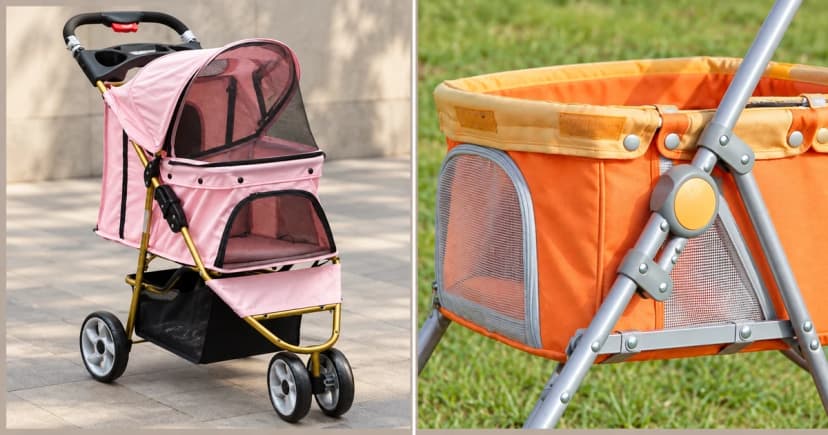
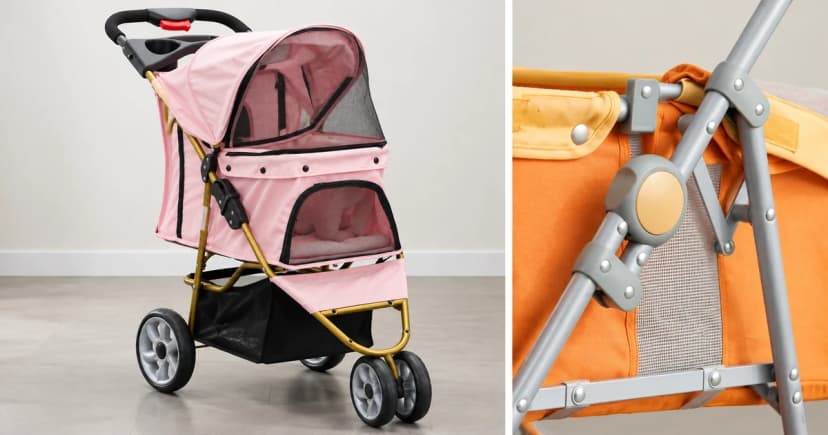
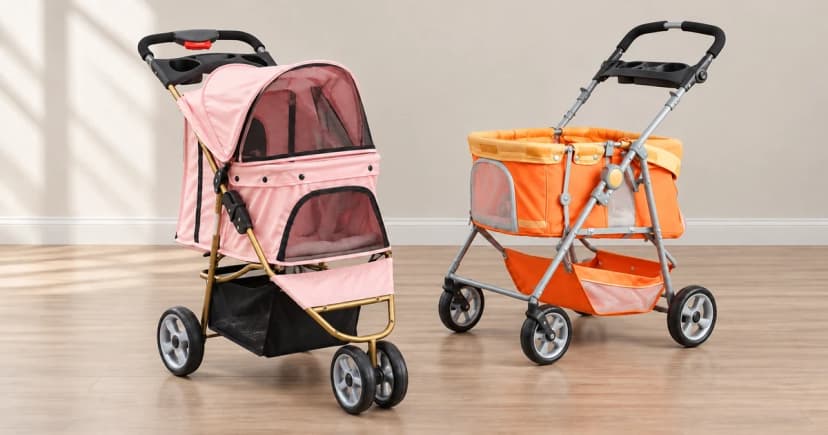
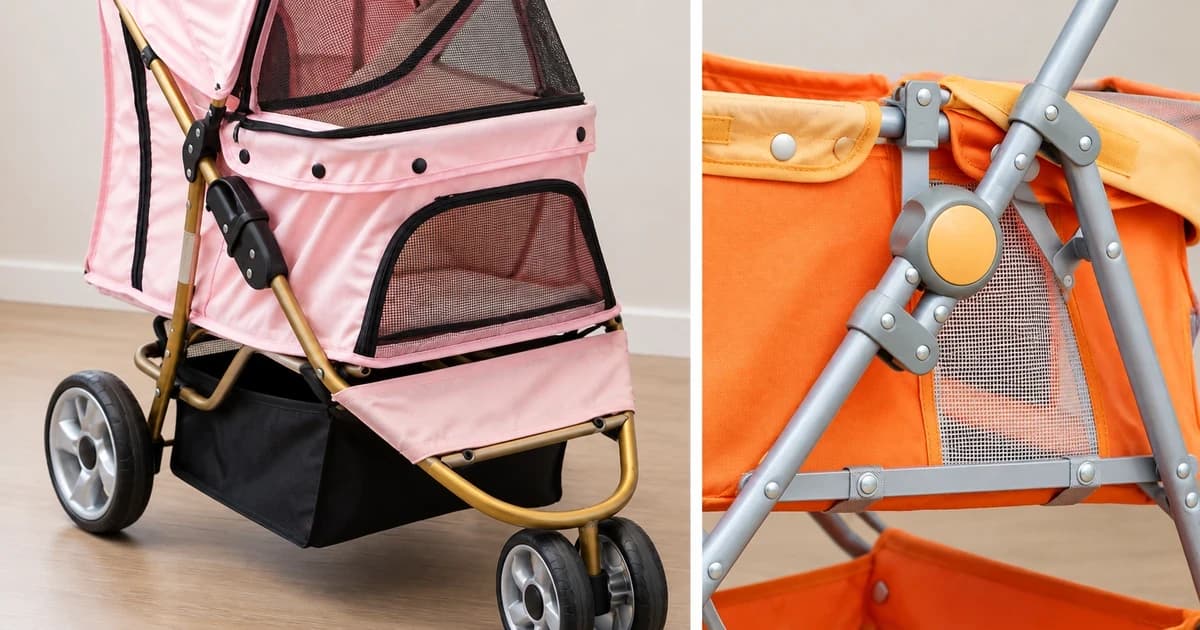
The edited illustration uses two different unidentified strollers as appearance references. It demonstrates no washing, lubricant application, disassembly or successful cleaning result. Our editorial policy explains how source instructions and reconstructed illustrations are distinguished.