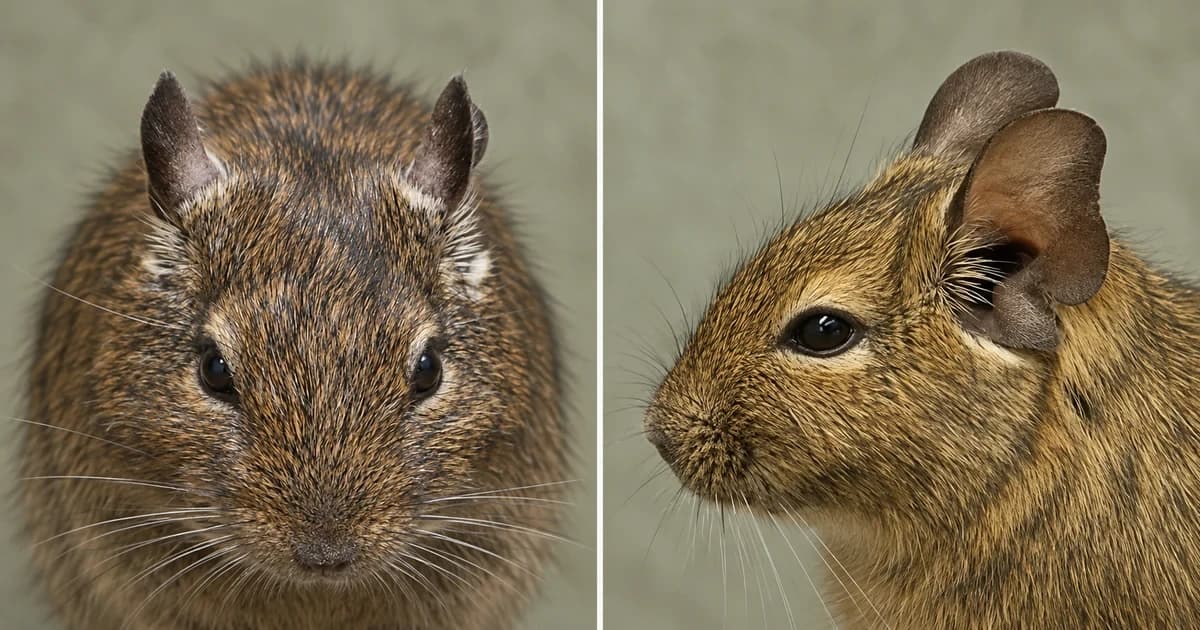
To give a degu a dust bath (or sand bath), prepare a shallow, heavy, removable bowl large enough for rolling, fill it with suitable bathing sand, offer it for a limited session so the degu can enter and leave voluntarily, and remove the bowl afterward rather than leaving bathing sand in the enclosure permanently. Keeping the sand bath removable follows the named RSPCA and PDSA routines below to help prevent urine and droppings contamination and overly dry skin.
| Degu setup element | Removable sand bath routine | Enclosure digging substrate (separate task) |
|---|---|---|
| Purpose and placement | Offered temporarily in a heavy, shallow bowl so the degu can roll voluntarily, then lifted out after the session. | Remains inside the living area for everyday burrowing and foraging alongside accessible hiding places. |
| Material and depth | Suitable bathing sand (RSPCA and PDSA name chinchilla sand; RSPCA specifies about 4 cm deep in the bathing bowl). | Follow dedicated housing substrate guidance; a 4 cm bowl depth is not a depth rule for the enclosure's digging layer. |
| Access and removal | RSPCA's routine offers access two or three times weekly for about 20 minutes before removing the bowl to limit soiling and dry skin. | Maintained through your ongoing degu enclosure cleaning schedule rather than removed after 20 minutes. |
Prepare the bowl and sand
The RSPCA housing guide recommends a shallow, heavy bowl, large enough for rolling, with suitable bathing sand about 4cm deep. It names chinchilla sand as an option.
The PDSA degu guide also describes a shallow tray with chinchilla or hamster sand.
Check the actual material's intended use when planning how to give a degu a sand bath. A depth in a bathing bowl is not a recommendation for the enclosure's digging layer.
Offer limited access
For this routine, follow RSPCA's access two or three times weekly for about 20 minutes. Keep the bath removable when arranging its position.
Keep hiding places accessible and let the animal withdraw at any point. Quiet, gentle treatment matters; do not hold a degu in the bowl to make it roll.
The session is an opportunity, not a performance to complete. An animal that leaves has not failed a bathing test.
Remove and review
The RSPCA behaviour guide says to remove the bath after each use to reduce contamination with urine and faeces.
PDSA warns against leaving sand available all the time because skin may become overly dry.
Use the bathing product and container's printed care directions for sand replacement, reuse and bowl washing; these welfare guides do not give a universal cleaning recipe.
Changed behaviour or recurring fear or stress warrants advice from a vet or clinical animal behaviourist. More bath time is not a substitute.
For the wider home routine, see degu enclosure cleaning.