

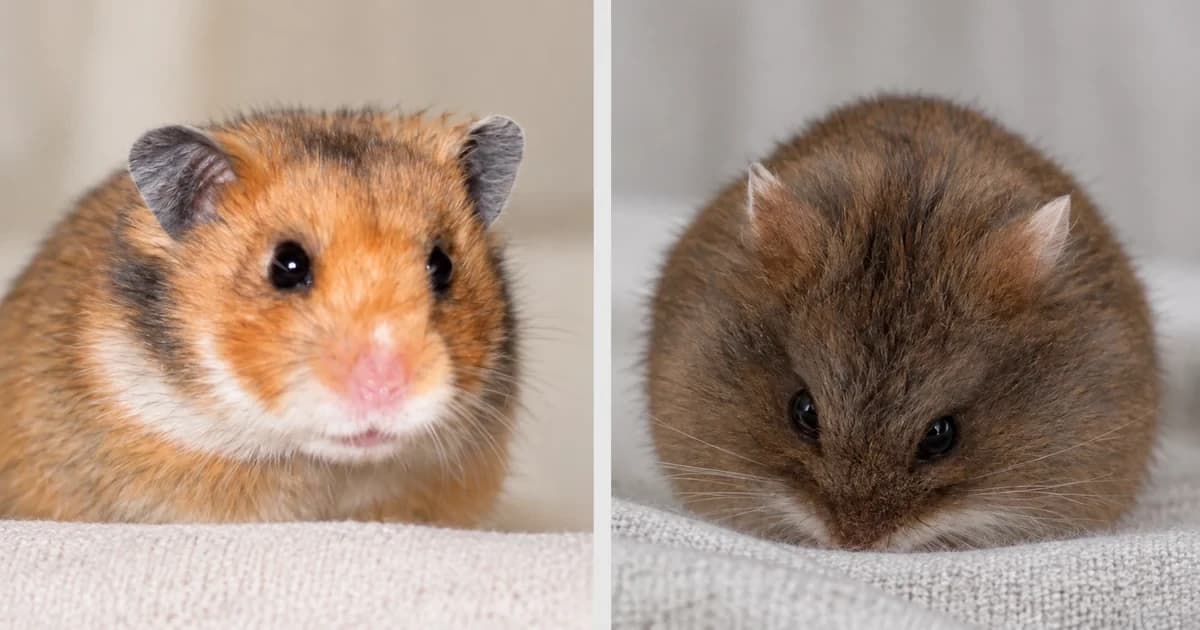
To handle a hamster, begin only when the animal is awake and active, let it investigate your hands at its own pace with room to retreat, and move to gentle two-palm cupping at a low height only when the hamster is willing and a lift is needed—quiet observation or cage-side contact is already a complete endpoint.
Choose an awake starting point
Handle only an awake, active hamster.
The Blue Cross care guide warns against putting a hand into the hamster's bed, where it may be sleeping.
Decide where the interaction can finish before beginning. Keep the hamster's home accessible; arranging a return should not become a new problem once the animal is in your hands. Habitat preparation belongs in our hamster-cage setup guide.
Let the hamster investigate your hands
The RSPCA behaviour guide says to allow investigation at the hamster's own pace.
Blue Cross starts with hand sniffing in the cage, then gentle stroking; a nervous hamster can investigate without being touched.
An approach is an opportunity to investigate, not a request for a lift. Pause if it retreats.
Use two supporting palms at a low height
When the hamster is comfortable and lifting is required, cup both hands on either side and gently scoop the hamster, supporting it on the joined palms. Keep it close to a stable surface.
PDSA advises sitting on the ground and holding the hamster close to your body.
Stay low rather than lifting to standing height. Do not squeeze the hamster or substitute a grip for palm support.
| Step | What the Handler Does | Exit / Endpoint Rule |
|---|---|---|
| Step 1: Awake hand investigation | Wait until the hamster is awake outside its bed (Blue Cross), then rest your hand calmly in the cage for sniffing at the hamster's pace (RSPCA / Blue Cross). | Complete endpoint or pause: Stop here for a nervous hamster, or withdraw your hand if the hamster retreats. |
| Step 2: Voluntary cage-side contact | Offer gentle stroking or a treat in the cage (the preferred interaction for supervised children per PDSA). | Complete endpoint: No lift is required after a successful cage-side session; pause if the hamster moves away. |
| Step 3: Optional low two-palm scoop | Only when willing and needed, sit on the ground and scoop with both hands cupped beneath the body, keeping joined palms close to a surface and your body (PDSA / Blue Cross / RSPCA). | Immediate supported return: If frightened or unsettled, lower the hamster back into its accessible cage right away (PDSA). |
Return and pause when the hamster is frightened
PDSA advises returning a frightened hamster to its cage; keep the return low and supported.
The RSPCA favours a regular routine over occasional long weekend interactions.
Choose observation or help when needed
PDSA favours children stroking or giving treats in the cage under supervision, rather than holding.
Watching voluntary activity is a useful alternative to another lift. Our hamster exploration guide covers that separate task.
Contact your vet if you notice changes in the hamster's behaviour or appearance.
If essential care requires moving an animal you cannot handle with support, ask your vet to demonstrate an appropriate method. Do not improvise restraint or delay necessary veterinary care while trying to finish a handling exercise.