

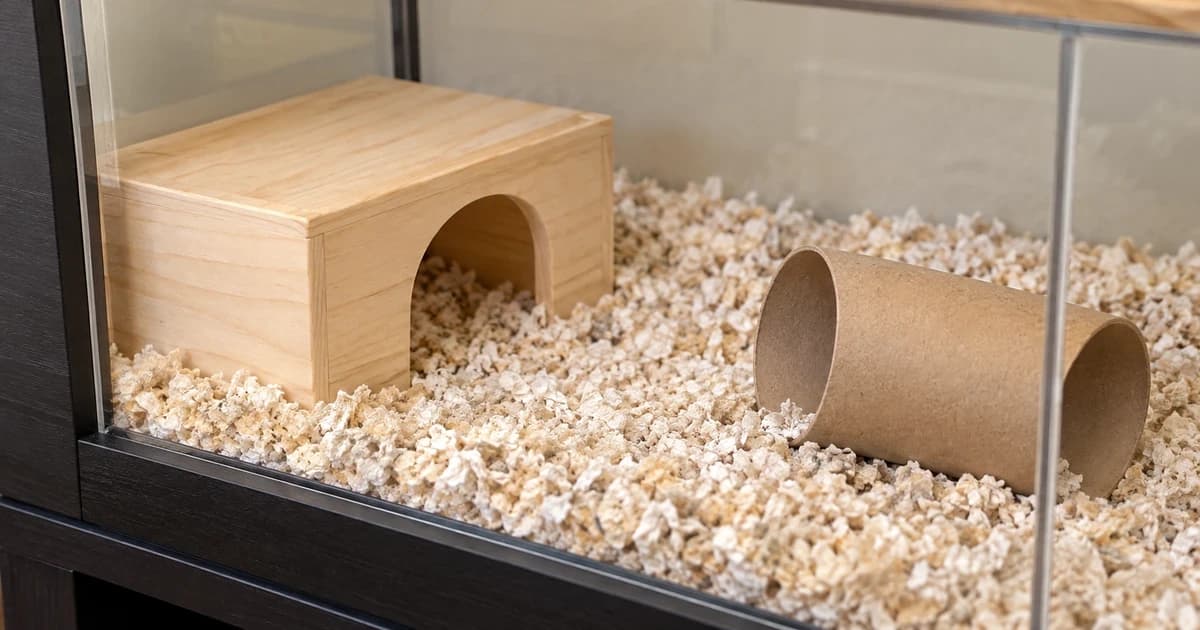
To keep a hamster entertained, provide suitable opportunities to explore, burrow, and hide while the animal is naturally awake. Start with an accessible choice and a clear route back to a familiar retreat. More objects do not automatically make a habitat more useful, and a toy label alone does not show whether your hamster can safely enter and use the item.
This guide focuses on non-edible equipment and voluntary exploration. It does not prescribe treats, a feeding game, or a health result. Your useful observation is what the hamster actually chooses to do while awake, rather than whether a product is advertised as a boredom buster.
Choose an opportunity before choosing an object
PDSA's hamster guide describes generous floor space, deep bedding, and simple items such as boxes and tunnels. Blue Cross discusses exploring, nesting, and tunnelling, with wide tunnels and low wooden objects among its examples.
Use those ideas to identify the action you want to make available. An object can support one opportunity while obstructing another if its placement fills the route through the habitat.
| Opportunity | Item or Arrangement | Opening, Stability & Retreat Conditions to Check Together |
|---|---|---|
| Retreat and nesting | An appropriate enclosed low hide or documented suitable box | Can this hamster enter and leave readily with pouches full? Is there adequate resting room inside and an unobstructed route that stays open? |
| Exploring a route | A broad ground-level tunnel or a low object to investigate | Are both ends open and accessible? Does the internal usable opening suit this hamster's species/build, and does the tunnel sit stably without rolling or pinching? |
| Burrowing | The main deep-bedding area or a suitable digging box | What substrate material and depth does your housing guidance call for, and does the container sit stably on a solid base without blocking the main hide? |
The table is a selection aid, not a tested toy ranking. A tunnel's outside diameter does not tell you its usable internal opening, and a photograph of a hamster beside a box does not establish fit or material suitability.
Keep a retreat and usable movement space
The RSPCA's hamster-environment page describes a suitable nest box, thick bedding, and a solid floor. Resting space remains essential when you add opportunities to explore. Do not block the existing hide's doorway or pack every open patch of bedding with accessories.
Look at the complete pathway before adding an item. A tunnel can have a wide enough opening on its own yet lead into a dead-end corner once a wheel, nest box, and food dish are placed around it. Check the whole arrangement rather than approving each object in isolation:
| Pathway Feature | Layout A: Crowded Dead-End Arrangement (Avoid) | Layout B: Open Two-Way Route to Familiar Retreat (Preferred) |
|---|---|---|
| Tunnel End 1 (Entry) | Open toward the middle of the cage floor. | Open toward the main foraging floor with clear approach space. |
| Tunnel End 2 (Exit) | Blocked: Pushed flush against the food dish and wheel stand, creating a narrow dead-end trap where the hamster must back out or squeeze past hardware. | Clear: Aimed toward an open bedding lane with unrestricted exit space at the far end. |
| Route to familiar hide / nest | Cut off by the tunnel body wedged between the wheel base and the hide doorway. | Direct, unobstructed path from both tunnel ends back to the familiar enclosed hide doorway. |
A running wheel is one piece of activity equipment, not a substitute for burrowing and hiding choices. Checking wheel diameter and posture is covered in our hamster-wheel guide; this page does not repeat a species wheel-size chart.
Check materials and openings before offering an item
For any purchased hide or tunnel, check its exact material, intended species, and care instructions. Terms like “natural,” “small animal,” or “boredom buster” in a store title do not verify a product's wood species, adhesives, internal opening diameter, or safety.
Even a plain cardboard item needs inspection. Household packaging can carry tape, staples, glossy coatings, or scented glue residue. Choose clean, documented options rather than assuming every discarded tube is identical, and never hang ground-level boxes from strings or elevate heavy items over soft bedding.
Blue Cross's mention of low wooden objects does not approve unidentified garden branches or every wooden ornament. Follow reliable item-specific material information rather than inventing a home baking or washing formula for unknown wood.
Our small-pet digging-box category offers equipment options to compare, though each listing still needs its usable opening, footprint, and material verified for your individual hamster.
Introduce a manageable choice while the hamster is awake
Wait until your hamster is naturally awake and active. Blue Cross advises against waking a sleeping hamster for playpen time and emphasizes supervision whenever a hamster is outside their normal enclosure. Apply that same respect inside the habitat: your schedule should never force a sleeping animal out of their nest.
Set a single new tunnel or box where your hamster can approach or bypass it without losing the path to their familiar hide. Observe quietly from a distance rather than lifting the hamster onto the object or blocking an exit to stage a reaction.
A hamster may inspect the addition right away, explore it later in the night, or ignore it completely. Record what happened objectively without treating a single ignored item as proof that you must buy more toys.
Observe the route and recheck the item
Keep a short note of the opportunity offered, the item's placement, when the hamster was naturally awake, and how they used the route—such as sniffing an opening, passing cleanly through both ends, returning to the nest, or avoiding a narrow gap.
If an item shifts or blocks a path, reposition it or remove it. If chewing exposes sharp edges, loose fasteners, or damage you cannot assess, take the item out immediately. Change only one optional feature at a time while keeping the core nest untouched, and consult a veterinarian if you notice a change in your hamster's energy, gait, or health.
PDSA's source is dated December 2024; Blue Cross shows a March 2023 review with a March 2026 next-review date, which does not confirm a completed newer review. These sources support practical habitat choices rather than measured entertainment or clinical outcomes.
Browse Pawlivy's hamster-habitat category for enclosure options, and see our editorial policy for how we cite welfare sources.