Knowing how to leash train a cat—starting with how to harness train a cat indoors—depends on progressing by your cat's voluntary body language rather than a multi-day calendar. Sniffing the unworn harness, accepting a brief indoor fitting, walking freely around a room, and moving with a slack leash attached are four separate stages. If any stage triggers crouching, tail flicking, or retreat, pause or step back immediately—and remember that calm indoor wear never proves a cat is suited to outdoor walks or that a harness is escape-proof.
1. Weigh whether harness walking suits your individual cat
Welfare and conservation organizations view cat harnesses from different angles, and neither treats neighborhood walks as mandatory:
- Stress and choice come first: Cats Protection's outdoor safety guidance notes that many cats find wearing a harness stressful, and its dedicated article on walking cats on a harness and lead generally discourages lead walks because cats rely on being able to retreat to familiar hiding spots when startled.
- Contained outdoor options: American Bird Conservancy lists harness training alongside catios and enclosed porches as ways to protect wildlife while giving indoor cats supervised outdoor time.
Because individual temperament decides whether harness wear is enjoyable or stressful, stopping the introduction and focusing on indoor enrichment is always a valid outcome.
2. Check harness structure, sizing, and fastener sequence before starting
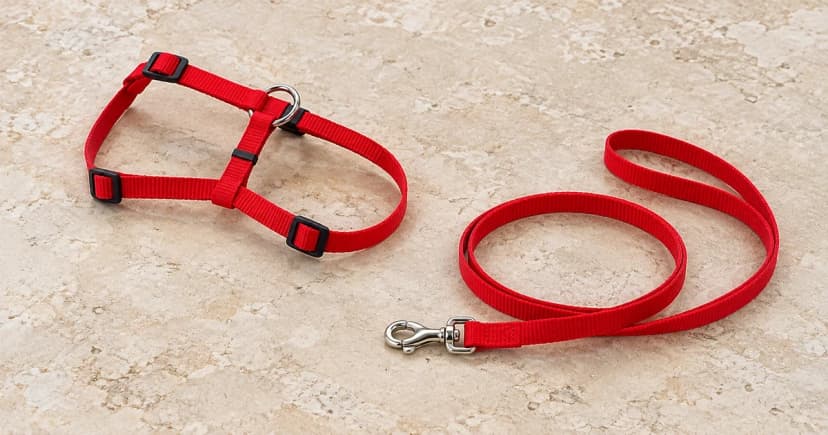
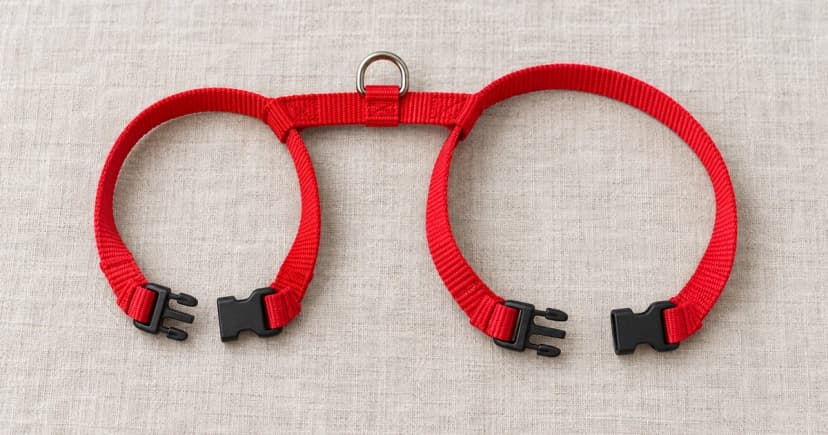
Practise in a quiet room where your cat has unobstructed hiding spots and closed exterior doors. Before inviting your cat over, inspect the unworn equipment in your hands: know which loop goes around the neck versus the chest, how each buckle or slide adjusts, and how to release the harness quickly.
To understand how H-style, vest-style, and bungee-lead designs differ in strap layout and adjustment points when browsing cat harnesses and leashes, read our guide to compare cat harness and leash structures, and follow our step-by-step guide on how to put a harness on a cat for measuring girth and checking two-finger strap clearance.
3. Follow the four-stage indoor table by response, not by calendar days
PetSafe's Come With Me Kitty harness guide describes pairing short indoor sessions with rewards from your cat's normal daily ration, moving at your cat's pace, never yanking the leash, and stopping whenever you see tail flicking, a hunched back, or freezing. Use this unified stage table to link each indoor step to what you observe and your next decision:
| Indoor stage | Equipment setup | Relaxed response needed before advancing | Action if your cat retreats, crouches, or freezes |
|---|---|---|---|
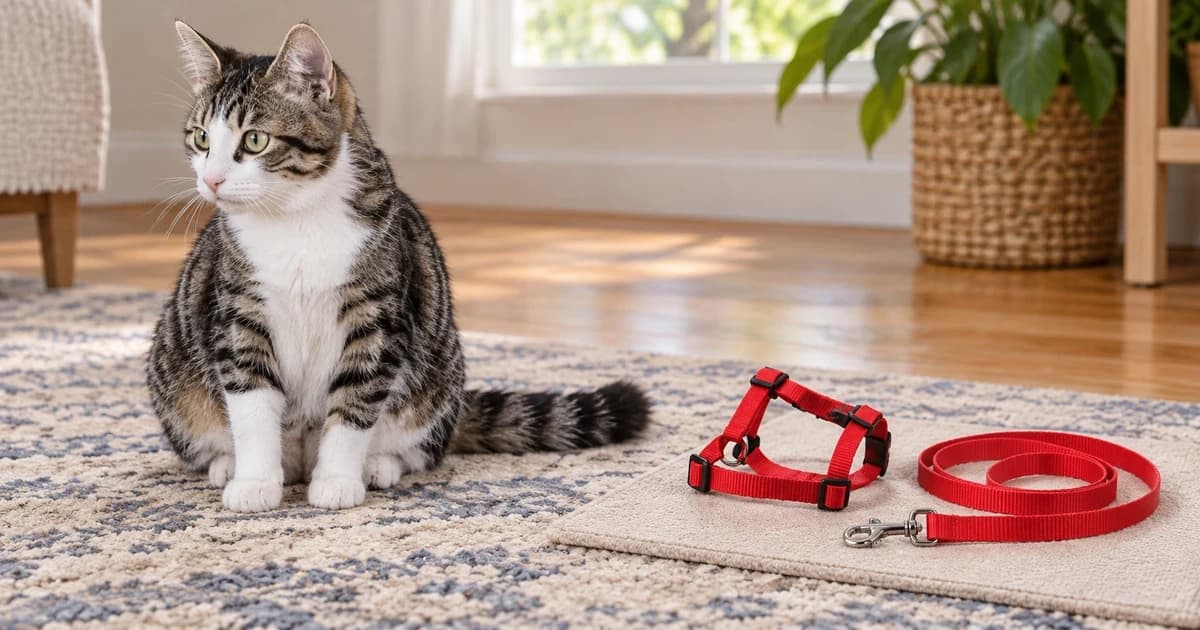
| Stage 1: Unworn equipment nearby | Harness and disconnected leash placed flat on the floor near a familiar resting mat; treats from the daily ration offered nearby. | Cat approaches voluntarily, sniffs or steps near the harness with relaxed posture, and stays free to walk away. | Leave the harness on the floor without calling or following your cat; never bring the harness toward a retreating cat. |
| Stage 2: Brief indoor fitting & removal | Slip on and fasten the properly sized harness indoors according to its manual, offer a reward, and remove it smoothly while the cat is still calm. | Cat accepts fastening without flattening ears, thrashing, or dropping flat to the floor. | Unfasten and remove the harness immediately; recheck strap sizing and return to Stage 1—never leave the harness on to "wait out" a freeze. |
| Stage 3: Supervised indoor movement (no leash) | Harness fastened with proper clearance during a short indoor play or treat session. | Cat walks, eats treats, or plays normally across the room with natural tail and back carriage. | Remove the harness right away if you see a hunched back, tail lashing, or frantic grooming at the straps. |
| Stage 4: Slack-leash indoor following | Attach the leash to the designated back ring and walk behind your cat indoors, keeping the lead completely slack. | Cat explores the room at its own pace without tension on the line. | Drop tension immediately if the line tightens, unclip the leash, and return to shorter Stage 3 sessions or discontinue training. |
4. Keep indoor acceptance separate from going outdoors
Walking calmly down a quiet hallway with a slack leash does not guarantee your cat will feel safe around outdoor traffic, dogs, or sudden noises, nor can any harness guarantee a startled cat will not back out of its straps. Always remove the harness as soon as each supervised session ends—both PetSafe and Cats Protection warn against leaving a walking harness on an unattended cat. See our editorial policy for how welfare and manufacturer sources are documented.